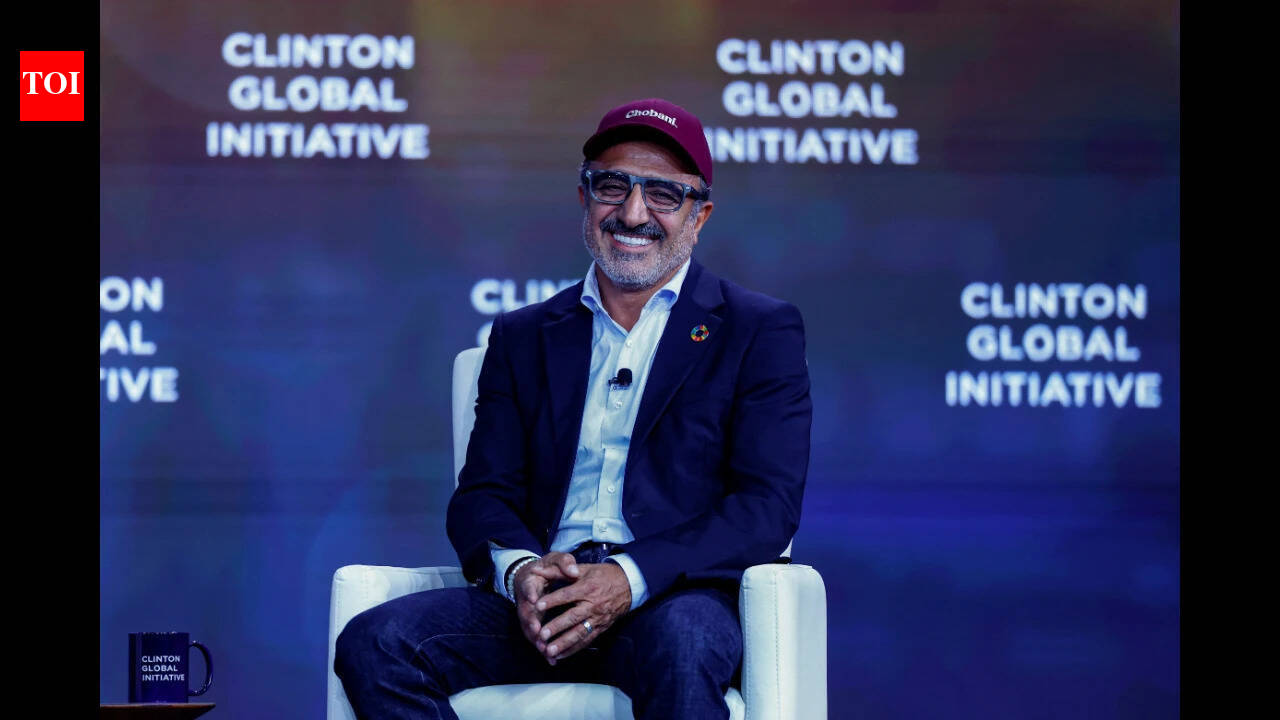
When Hamdi Ulukaya arrived in the United States in 1994, he was a young student from Turkey who spoke no English and knew no one.
asserted
who → arrive → one
Years later, after buying a shuttered yogurt factory and building Chobani into a major business, he began hiring refugees and migrants, helping hundreds find work in the company’s plants.
asserted
hundreds → buy → plants
That experience inspired Tent, a business network Ulukaya founded in 2016 to encourage employers to hire refugees.
asserted
Ulukaya → inspire → refugees
The UN Refugee Agency, UNHCR, says Tent now connects with more than 400 companies across the Americas and Europe.
asserted
Tent → say → Americas
Its work includes training, hiring guides and job fairs designed to help newcomers overcome barriers to employment.
asserted
newcomers → include → employment
Ulukaya’s own journey, reported by CBS News, helps explain why he sees a first job as a vital step towards belonging.
asserted
he → report → belonging
Starting over in a new country
asserted
Starting → start → country
Ulukaya arrived in the US at 22, with little money and no English, according to a CBS News profile.
uncertain
Ulukaya → arrive → profile
He had left Turkey after facing questioning over his writing in support of Kurdish rights.
asserted
He → leave → rights
In upstate New York, he spent years studying, working on a dairy farm and learning how to build a life in a place where he had no family or friends.
asserted
he → spend → family
His path into business began with a modest feta cheese company.
asserted
path → begin → company
Then he noticed an advertisement for a shuttered yogurt factory in New Berlin, New York.
asserted
he → notice → Berlin
The plant had once employed about 200 people, but Kraft Foods had closed it.
asserted
Foods → employ → it
Ulukaya saw more than an old industrial building.
asserted
Ulukaya → see → building
He saw a chance to revive a workplace and bring jobs back to a community.
asserted
He → see → community
He secured financing with support from a regional bank and the Small Business Administration, then reopened the factory as Chobani.
asserted
He → secure → Chobani
His first hires included former employees of the closed plant.
asserted
hires → include → plant
As the business grew, the company needed more workers, more milk from local dairy farms and additional production capacity.
asserted
company → grow → farms
Hiring beyond language barriers
Chobani’s expansion brought Ulukaya into contact with a refugee resettlement centre in Utica, about 40 miles from the New Berlin factory.
asserted
expansion → hire → factory
Staff told him that refugees were struggling to find work, in part because of language and transportation barriers.
asserted
refugees → tell → barriers
His response was practical: Chobani would provide interpreters and transport so people could get to the plant and do the job.
uncertain
people → provide → job
The company went on to hire hundreds of refugees and migrants.
asserted
company → go → refugees
UNHCR says Chobani has also offered English-language classes and access to translators who speak multiple languages.
asserted
who → say → languages
Those measures helped workers settle into a new workplace while allowing the company to draw on a wider pool of employees.
asserted
company → help → employees
In the CBS News report, Ulukaya described refugees as hardworking and loyal employees.
asserted
Ulukaya → describe → employees
He argued that a job could help newcomers become part of society after losing homes, family connections and familiar routines.
uncertain
newcomers → argue → homes
Employment, in his view, was not only about earning wages.
asserted
Employment → earn → wages
It could be a first step towards rebuilding a life.
uncertain
It → rebuild → life
The approach grew out of the company’s needs, but it also reflected Ulukaya’s own experience as a newcomer.
asserted
it → grow → newcomer
He knew what it meant to arrive without language or connections.
asserted
it → know → language
At Chobani, he had the ability to change some of the conditions that might otherwise keep people from entering the workforce.
uncertain
that → have → workforce
Turning one company’s experience into Tent
asserted
Turning → turn → Tent
In 2016, Ulukaya founded the Tent Partnership for Refugees, seeking to encourage other employers to follow the hiring model he had developed at Chobani.
asserted
he → found → Chobani
The idea was to move refugee employment beyond the actions of a single company by mobilising businesses with the scale to create many more opportunities.
asserted
idea → move → opportunities
UNHCR describes Tent as a network of more than 400 major companies committed to helping refugees enter local labour markets across a dozen countries in the Americas and Europe.
asserted
refugees → describe → Americas
The organisation works with employers on job-readiness and recruitment, while helping companies understand barriers such as limited access to job listings, vocational training, language services and work permits.
asserted
companies → work → listings
Tent’s work includes practical tools for businesses.
asserted
work → include → businesses
UNHCR says the partnership has produced hiring guides for countries including Spain, Mexico and France, and organised job fairs that connect refugees with employers.
asserted
that → say → employers
The organisations have also advocated for policy changes that could make formal employment more accessible.
uncertain
employment → advocate → changes
In 2023, Tent and its partners made a pledge on economic inclusion and social protection at the Global Refugee Forum.
asserted
Tent → make → Forum
…and 25 more, not listed.
 The Aporia