How high-tech drones reveal ancient Blue Mountains Indigenous sites

Read the original at The Sydney Morning Herald ↗
The Sydney Morning Herald · collected 2026-10-13 · by Julie Power, Wolter Peeters

Quick Summary

University of Sydney researchers used LiDAR technology to discover three new Aboriginal rock shelters within a small section of the Greater Blue Mountains World Heritage Site, covering 1.03 million hectares. The drone-generated 3D map helped identify sites with red hand stencils and stone artifacts, indicating long-term Indigenous occupation. Dr Jacob Bongers, the project’s digital archaeologist, emphasizes that LiDAR can reveal ancient sites hidden under dense vegetation, potentially uncovering hundreds or thousands more across the vast UNESCO site.
Written locally by qwen2.5:14b on 2026-10-13, using this article's own text rather than the other coverage of the same event (that is the story summary below).

AI analysis runs on qwen2.5:14b, locally

Story summary

Dr Jacob Bongers from the University of Sydney used LiDAR technology with drones to uncover three previously unrecorded ancient Indigenous shelters within the Greater Blue Mountains World Heritage site in Australia. The vast UNESCO site, which covers an area about the same size as Lebanon, spans 1.03 million hectares. This breakthrough has raised hopes that hundreds or even thousands of additional ancient sites could be identified across this expansive region using similar technology. LiDAR's ability to penetrate dense vegetation and create accurate 3D maps down to the centimeter level enabled researchers to locate shelters deep in the bush, some adorned with red hand stencils and stone artifacts indicative of long-term Indigenous occupation. Wayne Brennan, a Gomeroi man and rock cave expert from the University of Sydney, expressed amazement at the findings, calling it "whitefella magic."

Written for “Drones Uncover Ancient Sites” on 2026-10-13, grounded in this article and the 1 other(s) covering the same event.

Story

📰 Drones Uncover Ancient Sites
Science · 2 article(s) covering the same event. See how they differ ↓

Compared with similar articles

This article reads unscored and hedges 11% of its claims. Each row says how that neighbour differs.
The Sydney Morning Herald
⚖️ leaning not scored 🔴 0% hedged 0 of 2 📰 publisher trust 61
“Both articles describe the use of LiDAR-equipped drones by Dr Jacob Bongers from the University of Sydney to uncover three unrecorded ancient Indigenous shelters in Australia's Blue Mountains.”

Cite this article

Power, J., & Peeters, W. (2026, October 13). How high-tech drones reveal ancient Blue Mountains Indigenous sites. The Sydney Morning Herald. https://www.smh.com.au/national/nsw/how-high-tech-drones-reveal-ancient-blue-mountains-indigenous-sites-20261014-p60zj3.html?ref=rss&utm_medium=rss&utm_source=rss_feed

Dated from the outlet's own feed. Check the original for its byline.

How this article was measured signals, leaning charts, publisher record, byline, topics and claims

Signals How these are calculated →

Claims extracted
37
sentences that state something as happening or true
Uncertain
11%
4 of 37 hedged ("reportedly", "may", "according to")
Leaning
not political
takes no side on a contested political question
Publisher signals
61/100
The Sydney Morning Herald's corrections and hedging, across everything collected from it. Not a measure of accuracy.
Outlets on this story
2
Science
Same framing elsewhere
1
articles that frame the event the way this one does
Analyzed 2026-10-13 · how these are computed

How this is being covered How these are calculated →

Article leaning vs. publisher reliability
Source leaning vs. consistency

Publisher

The Sydney Morning Herald · 3511 article(s) · 10 correction(s) detected
Running correction rate · 10 correction(s)

Who wrote this

Julie Power
9 article(s) here · 1 carrying a prediction
🔮 The discoveries by the University of Sydney’s digital archaeologist Dr Jacob Bongers have raised hopes that hundreds – maybe thousands – of ancient sites could be identified across the vast UNESCO site, which is about the same size as Lebanon.
🔮 Overture, dim the lights: billionaire Gretel Packer will bring glamour back to Sydney’s Kings Cross and Potts Point, announcing detailed plans on Monday to revitalise the heritage-listed art deco Metro/Minerva Theatre.
🔮 Inspired by the influential Italian movement Memphis design, which was started by Ettore Sottsass in the 1980s – and has nothing but exuberance in common with Elvis Presley’s Memphis, Tennessee – Capra’s home and art will be celebrated in talks and a new exhibition, Memphis Fairfield, opening in November.
🔮 Samarasinghe was refused bail and will face court on Sunday.
🔮 “There are potentially thousands of children [like Joiner] born of war who have been neglected by the United States and Australia,” said historian Dr Victoria Grieves Williams, who developed an Australian Research Council project looking into such cases.
🔮 Only someone standing right next to the windows could see “the full drama of Sydney Harbour in front of them”, Morel said.
🔮 His parting message – and he wouldn’t let me use his name – was telling me about research that proved what he had discovered in a lifetime in the profession.
Also by Julie Power
Nothing else under this byline is closely related to this article, so these are simply their most recent.
All 9 articles by Julie Power →
Wolter Peeters
1 article(s) here · 1 carrying a prediction
🔮 The discoveries by the University of Sydney’s digital archaeologist Dr Jacob Bongers have raised hopes that hundreds – maybe thousands – of ancient sites could be identified across the vast UNESCO site, which is about the same size as Lebanon.
The only article under this byline in the corpus.

Topics

Aboriginal Indigenous Lebanon UNESCO the University of Sydney’s

Subjects

Bongers PERSON · 5× Indigenous NORP · 4× Way PERSON · 3× Australia GPE · 2× Brennan PERSON · 2× UNESCO ORG · 2× Aboriginal NORP · 1× Jacob Bongers PERSON · 1× Lebanon GPE · 1× the University of Sydney’s ORG · 1×

Narrative

A research paper published this week in the journal Remote Sensing by Bongers, with co-authors Brennan, Way and Erin Wilkins, said the results proved the technology can locate unregistered archaeological rock shelters within, and beyond, Australia.
framing: assertive · carried by 1 article(s) · first seen 2026-10-13
🔮 The discoveries by the University of Sydney’s digital archaeologist Dr Jacob Bongers have raised hopes that hundreds – maybe thousands – of ancient sites could be identified across the vast UNESCO site, which is about the same size as Lebanon.
2026-10-13 · The Sydney Morning Herald
How high-tech drones reveal ancient Blue Mountains Indigenous sites · assertive framing

Claims (37 extracted, 4 hedged)

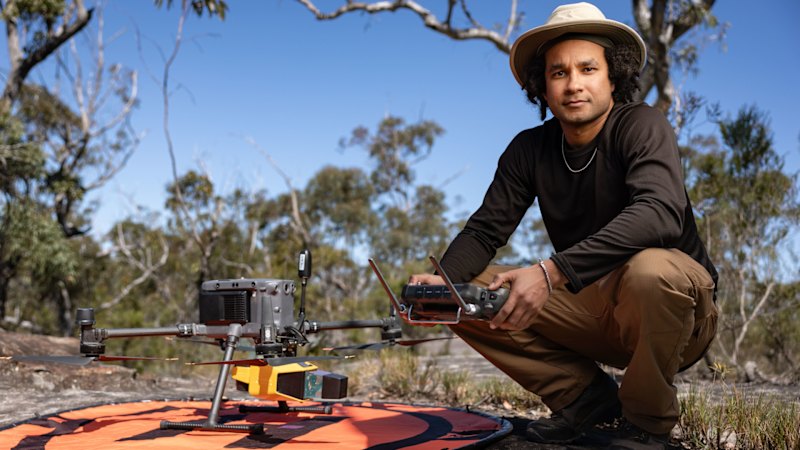
A drone shooting laser light beams that can “disappear” dense bush to reveal what lies beneath has located three new Aboriginal rock shelters within a minuscule part of the Greater Blue Mountains’ world heritage site’s 1.03 million hectares. asserted
what → shoot → hectares
The discoveries by the University of Sydney’s digital archaeologist Dr Jacob Bongers have raised hopes that hundreds – maybe thousands – of ancient sites could be identified across the vast UNESCO site, which is about the same size as Lebanon. uncertain
which → raise → Lebanon
The drone used light detection and ranging (LiDAR) technology to create a 3D map of the terrain that is accurate down to centimetres. asserted
that → use → centimetres
“What’s great about LiDAR’s lasers is that you can remove the tree canopy and see what’s underneath, allowing us to find shelters deep in the bush,” Bongers said. asserted
Bongers → ’ → bush
The newly located sites, some with red hand stencils and stone artefacts, show signs of continuous Indigenous occupation going back millennia. asserted
sites → locate → occupation
Wayne Brennan, a Gomeroi man, rock cave expert and archaeologist from the university, said he was blown away when he first saw it: “I couldn’t believe it. asserted
I → say → it
I thought it was whitefella magic.” asserted
it → think → ?
Brennan said LiDAR would help identify undisturbed rock art and cultural sites that could bolster the case to extend the Blue Mountains’ UNESCO listing to include its Indigenous culture. uncertain
that → say → culture
“The main trump card we’ve got is that this is undisturbed landscape with cultural heritage in it, and that doesn’t exist in many places in the world. asserted
that → get → world
That’s our punchline … our right hook. asserted
That → ’ → ?
Its existing listing recognises its biodiversity, including its exceptional eucalyptus landscape, and its prehistoric species, such as the Wollemi pine, against a backdrop of 300-metre sandstone cliffs. asserted
listing → exist → cliffs
The research project is called Gulumada, meaning “place of koalas”. asserted
project → call → koalas
It is also the proposed dual language name for the mountains. asserted
It → propose → mountains
Explorer George Bass described the Blue Mountains as the “horrible perpendicular mountains” and predicted others would find it impossible to cross. asserted
it → describe → mountains
Yet for thousands of years Indigenous peoples traversed the mountains, stopping for cultural business and staying overnight in shelters. asserted
peoples → traverse → shelters
Because of its difficult terrain, which is close to impassable by foot, only 10 per cent of the entire Blue Mountains has been surveyed, with 200 Indigenous rock shelters recorded containing cultural and archaeological evidence. asserted
shelters → survey → evidence
The researchers analysed the LiDAR data, generated detections of potential rock shelters and then verified (or “ground-truthed”) these results by walking through the rugged terrain. asserted
researchers → analyse → terrain
They found three unrecorded sites within a 4.16-square-kilometre area. asserted
They → find → area
Using the new technology, a shelter “popped right off the model”, said Bongers. asserted
Bongers → use → model
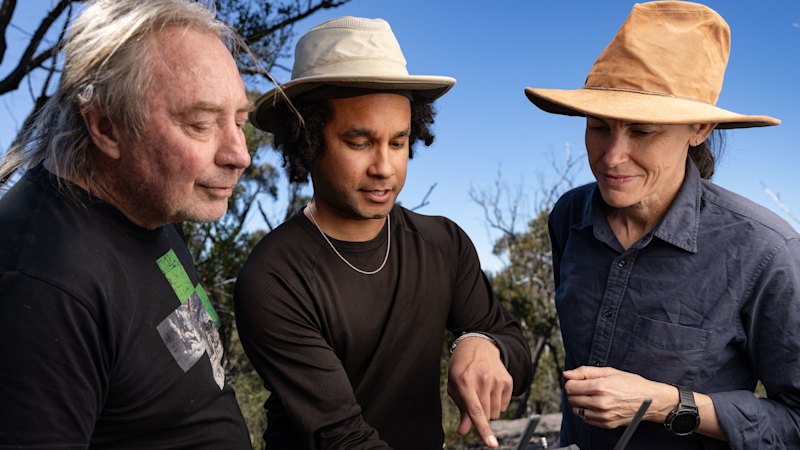
Within seconds of arriving at the site, Bongers and the University of Sydney research archeologist Dr Amy Mosig Way spotted multiple flaked stone artefacts made of tuff (tuffaceous sandstone) in the sandy floor. asserted
Bongers → arrive → floor
It was evidence of tool marking, said Way, who also works with the Australian Museum. asserted
who → say → Museum
“You only have to look for a second and you can see multiple artefacts.” asserted
you → have → artefacts
Even within the small pilot project site, about 10 per cent of the GBM heritage listed area, the new technology would likely add 30 to 50 rock shelters, many with cultural material, Way said. asserted
Way → list → material
A research paper published this week in the journal Remote Sensing by Bongers, with co-authors Brennan, Way and Erin Wilkins, said the results proved the technology can locate unregistered archaeological rock shelters within, and beyond, Australia. asserted
technology → publish → Australia
We did the research here, the data is from here, but it is bigger than Australia. asserted
it → do → Australia
This approach could be used in any other rugged environment or challenging terrain,” Bongers said. uncertain
Bongers → use → environment
Bongers is among a new wave of digital archaeologists using drones to do research in areas humans find difficult to access. asserted
humans → use → areas
In Peru he “drone-mapped” more than 5200 precisely aligned holes in the Andes – known as the Band of Holes – to discover it was a kind of Indigenous marketplace. asserted
it → map → marketplace
The unregistered rock shelters were not listed in any online databases. asserted
shelters → list → databases
This methodology can become a tool that Aboriginal communities can use with existing knowledge to locate other sites in rugged environments.” asserted
communities → become → environments
To show why identifying and protecting these sites was important, Way, Bongers and Brennan visited a known cultural site where bushfire had erased rock carvings like Bic’s Wite-Out blanks text. asserted
bushfire → show → text
“All this white stuff is what fire can do,” Brennan said. asserted
Brennan → do → what
The area spared included engravings of an emu, and a kangaroo that had been speared twice, part of stories that connect sites across the ranges. asserted
that → spar → ranges
Brennan said it was important to get the best possible record we can at this particular moment “because the fire can destroy it. asserted
fire → say → it
Way, Brennan and members of the Dharug Custodian Aboriginal Corporation “ground-truthed” the detections by walking to the site to make an archaeological survey. asserted
Way → truthe → survey
Way said, “One of the main issues we had initially had [was] that it would find caves that are on cliff faces. asserted
that → say → faces
So, yes, it is a rock shelter but there’s no way a human could ever have got into it.” uncertain
human → ’ → it

💬Give feedback
🕘History 🎫Support