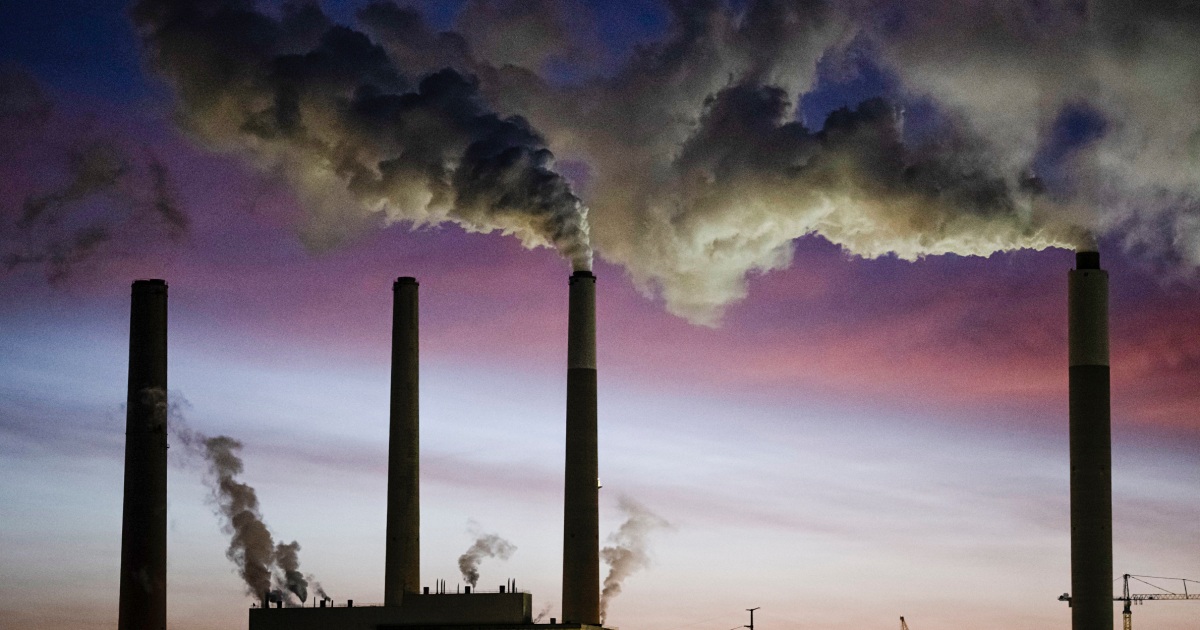
The Trump administration is poised to loosen environmental restrictions on oil and gas wells that produce very little energy but release vast amounts of methane, a highly potent greenhouse gas.
asserted
that → poise → methane
The Environmental Protection Agency is proposing to drastically weaken requirements for leak inspections and equipment upgrades at more than 700,000 low-producing “stripper wells,” according to a draft rule being reviewed by the White House and seen by ProPublica.
uncertain
Agency → propose → ProPublica
These wells — which tend to be old, poorly maintained and thus prone to leaking — produce just 6% of the country’s oil and natural gas but are responsible for roughly half the sector’s methane pollution, studies show.
asserted
studies → tend → pollution
The EPA acknowledged similar figures in the draft.
asserted
EPA → acknowledge → draft
But it said that the cost of complying with existing regulations would force the lowest-producing wells to shut down and that this was “unreasonable” — even though it would eliminate just 0.4% of U.S. oil and gas production, according to an industry estimate cited in the proposed rule.
uncertain
it → say → rule
The proposal, which would also weaken methane controls in the wider oil industry, is expected to save companies $42 billion through 2050.
asserted
which → weaken → 2050
An attached memo says the rollback will help to “unleash” American energy, one of President Donald Trump’s favorite slogans.
asserted
rollback → attach → slogans
Environmental advocates said deregulating stripper wells will do little to boost energy output while significantly increasing climate pollution.
asserted
deregulating → say → pollution
“This is not about energy dominance,” said Darin Schroeder of the Clean Air Task Force, a climate advocacy group.
asserted
Schroeder → say → Force
“It’s about padding the pockets of oil and gas operators and saddling society with the costs.
asserted
It → ’ → costs
The proposed changes are the culmination of a campaign by a previously low-profile faction of the oil industry that has gained unprecedented influence during the second Trump administration.
asserted
that → propose → administration
In the draft, the EPA said it is deregulating stripper wells — defined as those that produce up to 15 barrels a day — in response to petitions from the Independent Petroleum Association of America and the National Stripper Well Association, among other groups.
asserted
that → say → groups
As ProPublica reported in June, the IPAA has long enjoyed the support of a little-known oil billionaire named Jeffery Hildebrand.
asserted
IPAA → report → billionaire
He is the founder and owner of Hilcorp, a privately held company known for buying up old, poorly maintained stripper wells — a business that was threatened when the Biden administration imposed aggressive restrictions on methane pollution in 2024.
asserted
administration → hold → 2024
In response, Hildebrand became one of the oil industry’s biggest Trump donors.
asserted
Hildebrand → become → donors
Trump, back in office, promptly appointed a former Hilcorp lobbyist named Aaron Szabo to a top post at the EPA, putting him in charge of the effort to unravel the new methane rules.
asserted
Trump → appoint → rules
Szabo had previously helped to draft a letter on behalf of the American Exploration and Production Council — which has Hilcorp’s CEO on its board — opposing those rules.
asserted
which → help → rules
He also gave advice on climate regulations for Project 2025, the deregulatory roadmap for the current administration.
asserted
He → give → administration
Among Project 2025’s recommendations: eliminate an EPA program that would track “super-emitter” events — enormous methane releases that have long plagued the oil industry — and would oblige companies to respond to them.
asserted
that → eliminate → them
The AXPC and the IPAA have also called for an end to the program.
asserted
AXPC → call → program
And the current proposal from Trump’s EPA aims to do just that.
asserted
proposal → aim → that
An IPAA spokesperson declined to comment on the group’s influence in the Trump administration but said in an emailed statement that its lobbying “has focused on ensuring regulations are workable for low-production and marginal wells.”
The NSWA and AXPC didn’t respond to emailed requests for comment.
asserted
NSWA → decline → comment
NSWA representatives previously told ProPublica that they had asked the EPA to soften restrictions on stripper wells because many of their members couldn’t afford the compliance costs.
asserted
many → tell → costs
AXPC CEO Anne Bradbury previously told ProPublica that the group’s members were “committed to building on a legacy of world-leading methane emission reductions.”
asserted
members → tell → reductions
Hilcorp spokesperson Nick Piatek didn’t provide a comment either but previously told ProPublica that the company was “proud” of recent efforts to reduce its emissions.
asserted
company → provide → emissions
While Szabo didn’t respond to emails from ProPublica, the EPA’s press office said in a statement that he “had not done any work for AXPC for well over a year before he started working for the federal government” and that he had reviewed federal ethics rules with the agency’s ethics staff upon joining.
asserted
he → respond → staff
The agency declined to comment on the substance of the methane rule revisions except to confirm that they were being reviewed by the White House Office of Management and Budget.
asserted
they → decline → Management
The OMB’s press office didn’t respond to an emailed request for comment.
asserted
office → respond → comment
The rules now being rolled back were a key component of former President Joe Biden’s ambitious climate agenda.
asserted
rules → roll → agenda
They would have cut methane pollution from the oil industry by 80%, the EPA said at the time.
asserted
EPA → cut → time
Because methane breaks down relatively quickly — in about a dozen years — cutting these emissions is one of the few known ways to reduce global warming in our lifetimes.
asserted
cutting → break → lifetimes
Methane accounts for one-third of the rise in temperatures since the Industrial Revolution, according to the United Nations Environment Programme.
uncertain
Methane → account → Programme
Since methane is the main component of natural gas, the rules would also have prevented useful energy from being lost to the atmosphere in the form of leaks and other releases.
asserted
rules → prevent → leaks
All told, Biden’s EPA had valued the rules’ climate, health and energy benefits at more than $7 billion a year, even after accounting for increased compliance costs.
asserted
EPA → tell → costs
Breaking with precedent, Trump’s EPA didn’t include calculations of the environmental and health impacts of the new proposal.
asserted
EPA → break → proposal
But if it goes into effect, much of the public benefit will evaporate while oil and gas producers see increased profits.
asserted
producers → go → profits
 The Aporia