Britons travelling to Europe told not to apply for delayed Etias visa waiver

Read the original at The Guardian ↗
The Guardian · collected 2026-10-13 · by Gwyn Topham Transport correspondent

Quick Summary

Britons traveling to Europe are advised not to apply for the delayed Etias visa waiver, as its introduction has been postponed due to issues with the EU’s entry-exit system (EES). More than 150 unofficial websites offer this service despite it being suspended, while the official website is yet to be activated. The travel association Abta warns that applying through these sites could lead to data theft and financial loss, emphasizing that travelers should wait until the official launch date, which has not been set.
Written locally by qwen2.5:14b on 2026-10-13, using this article's own text rather than the other coverage of the same event (that is the story summary below).

AI analysis runs on qwen2.5:14b, locally

Story summary

Britons travelling to Europe have been advised not to apply for the delayed Etias visa waiver, despite more than 150 websites claiming to offer the service. The European travel information and authorisation system (Etias) requires non-EU citizens, including UK travellers from visa-exempt countries like the US, Australia, and Canada, to pay €20 (£17) for an electronic waiver to enter the Schengen zone. Both Etias and its parallel border scheme, the entry-exit system (EES), were scheduled to begin operations this year but have been repeatedly postponed due to persistent technical issues following the rollout of EES. The travel association Abta's director of public affairs, Luke Petherbridge, has urged that Etias should not be implemented until EES is fully operational and functioning properly. This delay is crucial given that authorities believe there are over 150 fraudulent websites currently offering Etias services, while only one official site exists.

Written for “EU Travel Requirements Britons” on 2026-10-13, grounded in this article and the 0 other(s) covering the same event.
Why this leaning score
This article does not take a side on a contested political question, so it has no leaning score. That is an answer rather than a gap: a match report or a rescue can be warmly or critically written without being left or right, and scoring it anyway is how approval of a subject gets recorded as a political position.
No political leaning scored for article 76829 · logged 2026-10-13

Story

📰 EU Travel Requirements Britons
Politics · 1 article(s) covering the same event.

Compared with similar articles

Nothing to compare against. No article is close enough to this one for the pipeline to have linked or judged the pair.

Cite this article

correspondent, G. T. T. (2026, October 13). Britons travelling to Europe told not to apply for delayed Etias visa waiver. The Guardian. https://www.theguardian.com/world/2026/oct/13/britons-travelling-to-europe-told-not-to-apply-for-delayed-etias-visa-waiver

Dated from the outlet's own feed. Check the original for its byline.

How this article was measured signals, leaning charts, publisher record, byline, topics and claims

Signals How these are calculated →

Claims extracted
16
sentences that state something as happening or true
Uncertain
0%
0 of 16 hedged ("reportedly", "may", "according to")
Leaning
not political
takes no side on a contested political question
Publisher signals
69/100
The Guardian's corrections and hedging, across everything collected from it. Not a measure of accuracy.
Outlets on this story
1
Politics
Same framing elsewhere
1
articles that frame the event the way this one does
Analyzed 2026-10-13 · how these are computed

How this is being covered How these are calculated →

Article leaning vs. publisher reliability
Source leaning vs. consistency

Publisher

The Guardian · 1764 article(s) · 4 correction(s) detected
Running correction rate · 4 correction(s)

Who wrote this

Gwyn Topham Transport correspondent
8 article(s) here · 1 carrying a prediction
🔮 Non-EU citizens, including UK travellers and those from other visa-exempt countries including the US, Australia and Canada, will soon need to pay €20 (£17) for an electronic waiver to enter the Schengen zone under the European travel information and authorisation system (Etias).
🔮 Flash interiors, fancy food and maybe even a bar: Virgin has unveiled a mock-up of its future cross-Channel train, with a pledge to create “something genuinely new”.
🔮 Heidi Alexander told the Labour conference on Monday that if Great British Railways owning trains would best serve taxpayers and passengers, then we should do it”.
🔮 A publicly owned company, Buses for London, will start running services in the capital next year, Transport for London has announced.
🔮 The Department for Transport (DfT) said the move would bring more reliable services, with plans to end what it termed the “daily frustration” of overcrowding.
🔮 The transport secretary, Heidi Alexander, said the industry regulator the Civil Aviation Authority (CAA) would now “check their findings” and investigate Nats’ plans.
🔮 Often there’s plant, there’s machinery, the surface may already been treated.
🔮 Travellers to the EU could face renewed border queues as flexibility measures for the bloc’s entry-exit system officially come to an end – although numerous sources have indicated that some member states will not enforce biometric checks.
Also by Gwyn Topham Transport correspondent
Nothing else under this byline is closely related to this article, so these are simply their most recent.
All 8 articles by Gwyn Topham Transport correspondent →

Topics

Abta Britons Etias European Non-EU

Subjects

Abta ORG · 4× European NORP · 2× Australia GPE · 1× Britons NORP · 1× Canada GPE · 1× EES ORG · 1× French NORP · 1× Luke Petherbridge PERSON · 1× Non-EU NORP · 1× pan-European NORP · 1×

Narrative

Non-EU citizens, including UK travellers and those from other visa-exempt countries including the US, Australia and Canada, will soon need to pay €20 (£17) for an electronic waiver to enter the Schengen zone under the European travel information and authorisation system (Etias).
framing: assertive · carried by 1 article(s) · first seen 2026-10-13
🔮 Non-EU citizens, including UK travellers and those from other visa-exempt countries including the US, Australia and Canada, will soon need to pay €20 (£17) for an electronic waiver to enter the Schengen zone under the European travel information and authorisation system (Etias).

Claims (16 extracted, 0 hedged)

Britons travelling to Europe have told not to apply for an Etias visa waiver, with more than 150 websites touting the service despite its introduction being delayed. asserted
introduction → travel → service
Non-EU citizens, including UK travellers and those from other visa-exempt countries including the US, Australia and Canada, will soon need to pay €20 (£17) for an electronic waiver to enter the Schengen zone under the European travel information and authorisation system (Etias). asserted
citizens → include → system
The system was scheduled to be come into effect soon after the rollout of the EU’s parallel border scheme, the entry-exit system (EES). asserted
system → schedule → scheme
Both, however, have been repeatedly postponed, and the persistent problems after the introduction of EES, including the software at French entry points, have meant Etias remains suspended. asserted
problems → postpone → points
The director of public affairs at the travel association Abta, Luke Petherbridge, said: “While Etias was due to come into force this year, it is now back on hold. asserted
it → say → hold
Abta believes it shouldn’t be brought in until EES is fully operational and working properly. asserted
EES → believe → ?
“This is particularly important when you consider that European authorities believe over 150 websites offering Etias already exist, but there is only one official site people should apply through when live.” asserted
people → consider → Etias
Abta research found awareness was growing of the impending border requirements – up from 41% in 2024 to 56% now. asserted
awareness → find → %
The price to apply has risen from €7 to €20 – over-70s and under-18s do not need to pay – but no date has been set for launch. The pan-European border agency, Frontex, warned about the existence of scam websites long before Etias was to have been introduced. asserted
Etias → apply → websites
Commercial sites can legitimately apply for the waivers on behalf of clients, but the agency said the risk posed by third parties ranged from data protection and identity theft to extortionate fees. asserted
risk → apply → fees
It found that some unofficial websites were also providing inaccurate information over who needed an Etias while mimicking the layout of the official website and using convincing domain names. asserted
who → find → names
“If you use one of these sites, not only will you lose money, you are also putting your personal data at risk as well,” Petherbridge said. asserted
Petherbridge → use → risk
“What I can’t stress is enough that you can’t – and shouldn’t - apply for an Etias now.” asserted
you → stress → Etias
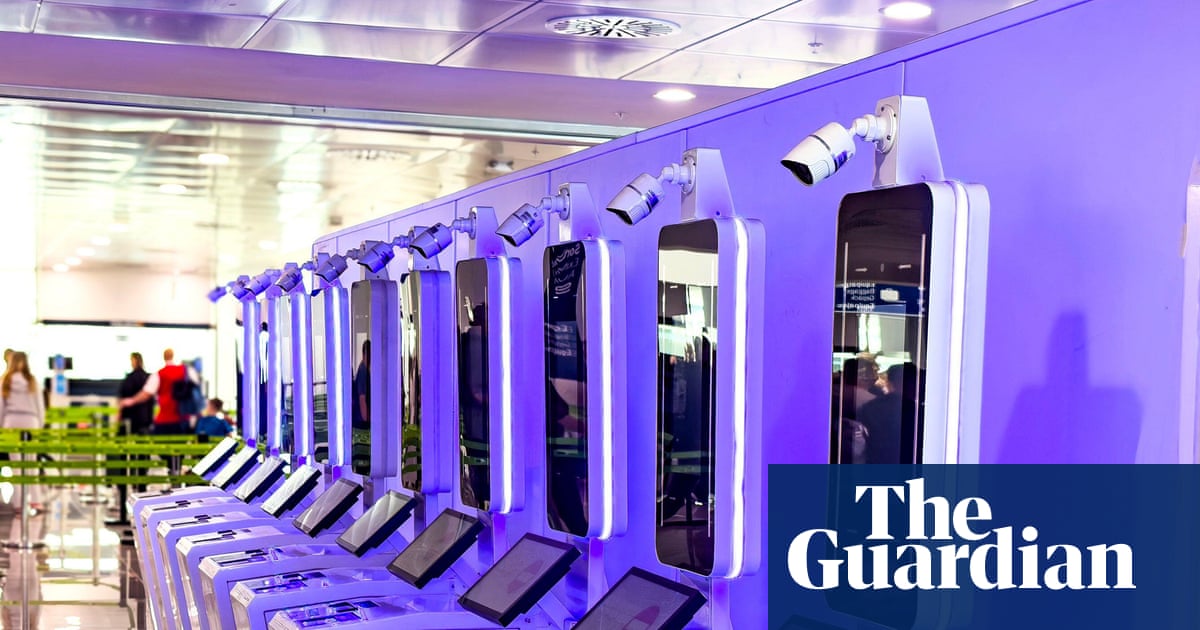
EES is in full operation, but border authorities have been told the EU will not enforce penalties if they continue to suspend the system at entry points when queues escalate. asserted
queues → tell → points
That flexibility has meant the worst fears of the travel industry have largely been avoided this summer. asserted
fears → mean → industry
Abta surveys found only 46% of visitors to Europe reporting having full checks, with half of those people waiting less than 30 minutes, and only 13% queuing for an hour. asserted
% → find → hour
💬Give feedback
🕘History 🎫Support