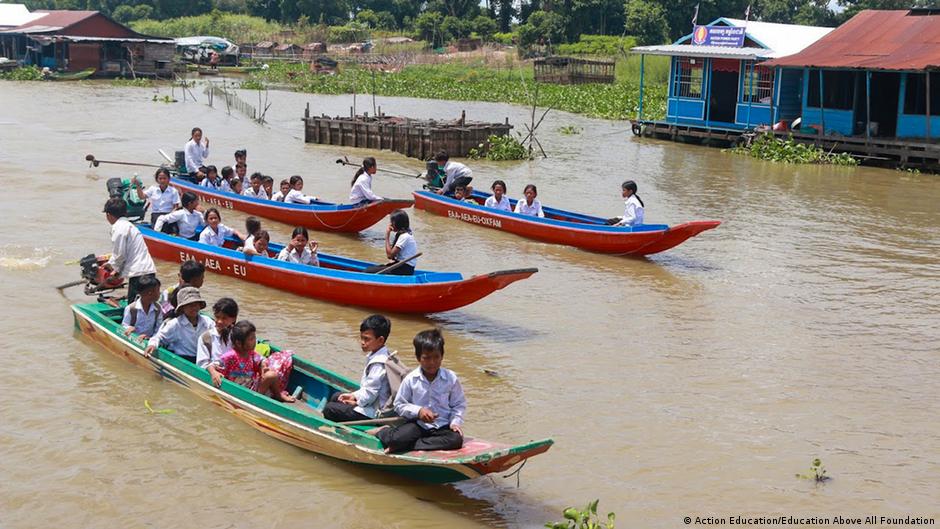
Every morning, 12-year-old Soksan Set faces a journey most children his age never have to think about.
asserted
children → face → journey
Soksan lives in Prek Toal, a floating community on Tonle Sap, Southeast Asia's largest freshwater lake where boats are the main means of transport.
asserted
boats → live → transport
A Grade 4 student at the local primary school, he travels several kilometers on water to attend class and sometimes helps younger children along the way.
asserted
he → travel → way
His family, like many others in the commune, depends on fishing for their livelihood.
asserted
family → depend → livelihood
When fuel prices rise, they are forced to make difficult choices.
asserted
they → rise → choices
"When gasoline prices go up, we don't have enough money to take our children to school regularly," said Soksan's father, 41-year-old Set Soeum.
asserted
father → go → school
"We don't catch enough fish, and we need around three liters (0.8 gallons) of gasoline a day to travel long distances for fishing.
asserted
we → catch → fishing
Because of this, Soksan often has to miss school.
asserted
Soksan → have → school
For families living on the water, rising fuel costs can quickly become a barrier to education.
asserted
costs → live → education
Why rising fuel costs hit Cambodia's poor the hardest
Cambodia relies heavily on imported fuel, leaving households exposed to global price shocks and regional supply disruptions.
asserted
Cambodia → rise → shocks
The 2026 Iran war has driven up energy costs, making transport to remote communities more expensive.
asserted
transport → drive → communities
Around Tonle Sap, this has hit students and their families.
asserted
this → hit → students
Gasoline prices rose 45% and diesel prices more than 70% in March, the largest single-month increase since 2008, according to the World Bank.
uncertain
prices → rise → Bank
Gasoline currently costs 5,700 riel ($1.41, €1.21) per liter, up 26.7% from 4,500 riel a year ago, according to Global Petrol Prices.
uncertain
Gasoline → cost → Prices
Although Cambodia does not depend directly on the Strait of Hormuz for most of its fuel imports, it is exposed to higher global oil prices and supply disruptions affecting regional suppliers.
asserted
it → depend → suppliers
Cambodia imports all of its petroleum products and has no domestic refining capacity.
asserted
Cambodia → import → capacity
For Soksan's family, the pressure is felt both on the fishing boat and the school boat.
asserted
pressure → feel → boat
Some days, they borrow money to buy gasoline.
asserted
they → borrow → gasoline
On other days, they cut back on food, clothing or school supplies.
asserted
they → cut → food
"Five students collect money to buy gasoline, sometimes just one liter at a time," Soksan said.
asserted
Soksan → collect → time
When they cannot afford even that, they row themselves.
asserted
they → afford → that
"We row the boat ourselves.
asserted
We → row → boat
It can take up to an hour, but we still try to go to school," he noted.
asserted
he → take → school
On the Tonle Sap, 12-year-old Siyien Ly walks more than 30 minutes to school during the dry season.
asserted
Ly → walk → season
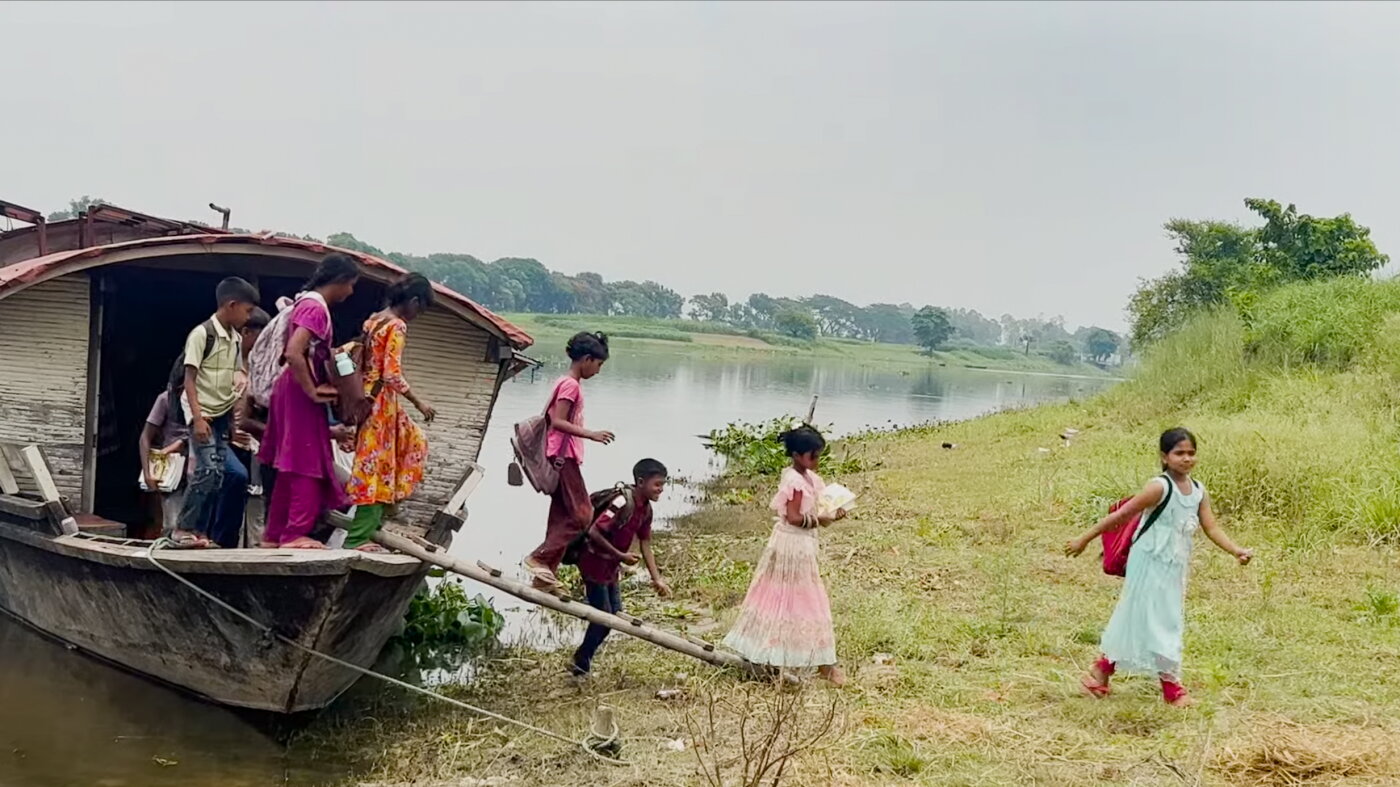
When flooding makes the roads impassable, she relies on an aid-supported school boat.
asserted
she → make → boat
Some of her classmates have stopped attending, because their families cannot afford the cost of transport.
asserted
families → stop → transport
"Even though fuel prices are rising, we still keep trying to come to school because education is important for our future," Siyien said.
asserted
Siyien → rise → future
Siyien's family of six has four children in school.
asserted
family → have → school
Her mother, Kunthea Chin, now sells sugarcane juice after Siyien's father developed serious hearing problems following a water-related accident.
asserted
father → sell → accident
Kunthea said that her daily income has fallen by around half from about $20 to around $10 while the cost of supplies has risen.
asserted
cost → say → supplies
The family spends around $150 a month on fuel, which they need for both the children's transport and her business.
asserted
they → spend → transport
Taking risks to reach the classroom
asserted
Taking → take → classroom
Families also try to reduce costs by traveling together and sharing fuel expenses.
asserted
Families → try → expenses
Some have returned to traditional rowing boats.
asserted
Some → return → boats
But saving money can come at the cost of safety.
asserted
saving → save → safety
When several children share a small boat, it can become crowded.
asserted
it → share → boat
During storms and heavy rain, parents worry about their children's safety on the water.
asserted
parents → worry → water
"My mother worries when too many students ride together," Siyien said.
asserted
Siyien → worry → ?
Remote schools also depend on boats to transport teachers, textbooks, classroom materials, food and maintenance supplies.
asserted
schools → depend → teachers
Higher fuel prices can therefore increase the cost of delivering education itself.
asserted
prices → increase → education
…and 21 more, not listed.
 The Aporia