Egypt's Baha'i minority is running out of space to bury their dead
CAIRO, Oct 13 -
asserted
minority → run → dead
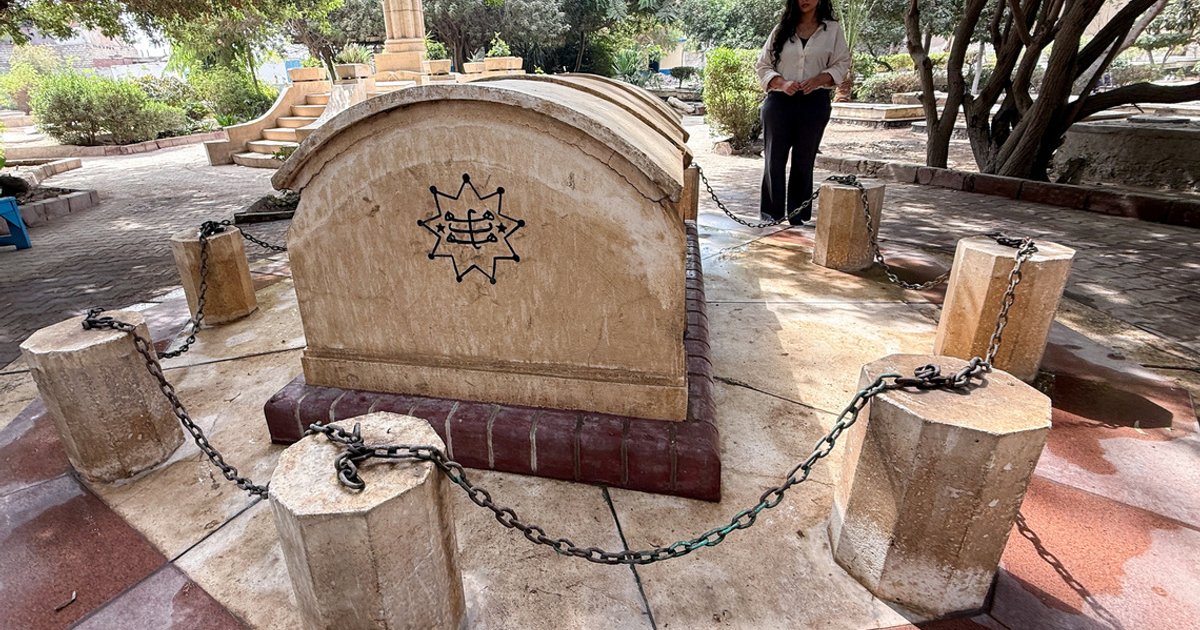
In a Cairo cemetery shaded by palms and tangled shrubs, pale graves are packed so tightly that in some places only narrow strips of sand and broken pavement separate one family’s plot from the next.
asserted
strips → shade → next
This is the last remaining burial place of Egypt's Baha'i community, a religious minority long on the margins of official life, and it is quickly running out of room.
asserted
it → remain → room
As it fills, the cemetery has become a symbol for the community of the bureaucratic obstacles and restrictions they say complicate everything from school enrollment to pensions and marriage registration.
asserted
they → fill → pensions
"God forbid that this area becomes completely full.
asserted
area → forbid → ?
If that happens, we would have no other places where we can bury," said Joumana Labib, a 25-year-old architect whose extended family is buried there.
asserted
family → happen → places
The Baha'i faith, whose members are scattered across different continents and believe their 19th century founder Baha'u'llah is a prophet, was brought to Egypt by merchants in the 1860s, not long after it originated in Iran.
asserted
it → scatter → Iran
With current numbers in Egypt estimated in the thousands, they are a tiny minority in a mainly Muslim country of about 110 million.
asserted
they → estimate → million
The Egyptian constitution guarantees religious freedom, though mainstream Islamic scholars view the Baha'i faith as heretical and officials are often reluctant in practice to recognise religions outside the main Abrahamic faiths.
asserted
officials → guarantee → faiths
BURIAL REQUIRED WITHIN ONE-HOUR JOURNEY
asserted
BURIAL → require → JOURNEY
While Islamic tradition requires burial within a day, Baha'i practices allow a body to be moved no more than one hour from the place of death, creating particular challenges.
asserted
body → require → challenges
Burial grounds once used by Baha'is in the port cities of Alexandria and Port Said have been filled or reassigned over the years, leaving many families to transport bodies to Cairo, according to the Egyptian Initiative for Personal Rights (EIPR), a leading Cairo-based rights group.
Community members say requests for new burial grounds in Alexandria and Port Said — where much of Egypt's Baha'i community lives — have been rejected without clear written explanations, said Marina Samir, who heads EIPR's freedom of religion and belief work.
uncertain
who → use → work
"Death becomes, instead of a time when people are trying to comprehend their loss, a logistical process," Samir said.
asserted
Samir → become → loss
Egypt's government information agency and the governorates of Alexandria and Port Said did not respond to requests for comment.
asserted
agency → respond → comment
Last year, in a response to a UN human rights report, Egypt's government said it "does not impose any restrictions on personal belief or religious affiliation, including adherence to the Baha’i faith".
asserted
it → say → faith
Based on government data, there were "sufficient burial sites to meet the needs of all citizens", it said.
asserted
it → base → citizens
President Abdel Fattah al-Sisi has repeatedly stressed the need for religious coexistence and said the state works tirelessly to fight discrimination and promote tolerance.
asserted
state → stress → tolerance
A landmark 2009 court ruling allowed those who do not follow Islam, Christianity or Judaism to leave a dash in the religion field on their identity documents.
asserted
who → allow → documents
The change allowed Baha'is to avoid declaring a faith they do not follow, but still left them facing practical difficulties.
asserted
they → allow → difficulties
One of the biggest is establishing Baha'i marriages in official records.
asserted
One → establish → records
Baha'i couples are often registered as "single" even after decades together, which can complicate child registration, inheritance, pensions, health insurance and family records.
asserted
which → register → registration
Hanan Kamal El-Din, 65, said her identity card describes her as single, although she married in a Baha'i ceremony 45 years ago and has two children in their 40s.
asserted
she → say → 40s
"What harm would recognising this marriage do to society?" she said.
asserted
she → recognise → society
Like other Baha'is, she won an individual court ruling recognising her marriage in 2020.
asserted
she → win → 2020
But that decision was overturned by a higher court in January this year, a ruling other Baha'i couples now fear could affect them as well.
uncertain
couples → overturn → them
Ahmed Helmy, 49, also won a court ruling allowing his documents to show he was married, but said his wife has already been removed from the family section of his account on the government’s digital services platform.
asserted
wife → win → platform
He worries his status on his identity card will revert to "single" when he next renews it.
asserted
he → worry → it
"If I do not have proof of marriage, I cannot add my wife to health insurance," he said.
asserted
he → have → insurance
"Anything I own, my wife won't be able to inherit.
asserted
wife → own → ?
Anything she owns, I won't be able to inherit.
asserted
I → own → ?
"
For Labib, the community's shrinking burial space and the bureaucratic hurdles are connected by the same demand: to be treated as an equal citizen.
asserted
space → shrink → citizen
"I am not asking anyone to accept my religion," she said.
asserted
she → ask → religion
"I am asking them to accept me as a person in this country."
asserted
I → ask → country
 The Aporia