Win or lose, independent candidates want to meet voters in the middle
These days, Seth Haskin often puts on a puff-sleeved linen shirt under an 18th century waistcoat, breeches fastened just below the knee, long socks and buckle shoes that make a distinctive clip-clop when he walks.
asserted
he → win → clop
The outfit is meant to remind people of the Founding Fathers and evoke their idea of limited government, which the 26-year-old supports.
asserted
old → mean → which
Haskin's day job is managing his family's coffee shop business but this year he's been vying for another position: independent congressional representative for Southwest Florida.
asserted
he → manage → Florida
While campaigning, Haskin also carries an old-school bell.
asserted
Haskin → campaign → bell
"Getting their [people's] attention is the biggest battle that most candidates have," Haskin said.
asserted
Haskin → get → that
Some could dismiss Haskin's attire as a stunt, and they may write off other independent candidates the same way.
uncertain
they → dismiss → candidates
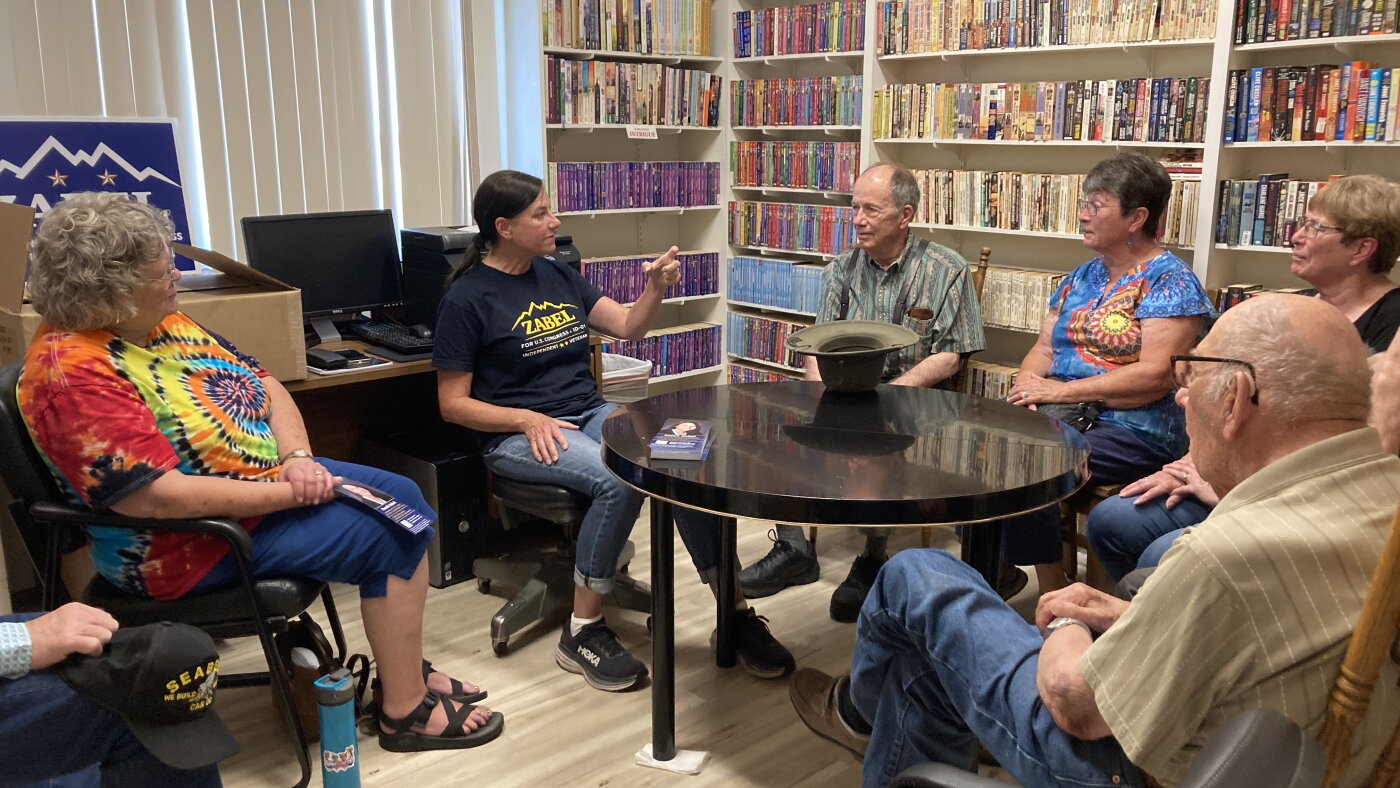
Sarah Zabel, 61, an independent candidate for Idaho's western district, said that view is outdated.
asserted
view → say → district
"Independents used to be a curiosity or a protest or a single issue," said Zabel.
asserted
Zabel → use → ?
"Now, with the parties having gone to such extremes, independents are the necessary relief for the American voter."
asserted
independents → go → voter
At a time when 45 percent of adults identify as political independents — a record high — and just a handful of tight races will decide control of Congress, the 173 independents running for the House this fall will test how big the political middle really is, and whether people who identify as independents will vote for one.
asserted
who → identify → one
Despite the significant chunk of Americans identifying as independents, right now just one independent serves in the House: Kevin Kiley. The congressman whose newly redrawn California district leans Democratic, switched from Republican to independent while in Congress and continues to caucus with Republicans, reported Politico.
asserted
district → identify → Politico
Some candidates said they were always independent, others said their political beliefs didn't change, but their parties did.
asserted
parties → say → ?
While some are confident about winning, others said even a double-digit share of the vote will show both parties that it's time for change.
asserted
it → win → change
Providing an alternative
Zabel, who is running in a deep-red district in Idaho, describes herself as a "heritage Republican," or someone who used to be a Republican and adheres to conservative values.
asserted
who → provide → values
But since 2018, during the first Trump administration, she stopped feeling in line with the Republican party and the "MAGA program."
asserted
she → stop → party
The retired Air Force major general said she didn't feel represented by either party, and she soon learned that many of her neighbors felt the same way.
asserted
many → retire → neighbors
"That's why I decided that I would step forward and be a candidate from the center," Zabel said.
asserted
Zabel → decide → center
But the extremes you see, they are a minority."
asserted
they → see → ?
The Cook Political Report rates the district, which voted for Trump by a 45-point landslide in 2024, as solid Republican for the incumbent, Rep. Russ Fulcher.
asserted
which → rat → incumbent
Zabel, who noted that she would not caucus with either party if in Congress, recognizes that the Democratic nominee narrows her path to victory, but Zabel sees value "in showing Idaho and showing the country that we aren't the MAGA stronghold."
asserted
we → note → country
In Colorado, Shimon Blau, a lifelong independent, did not intend to run for Congress.
asserted
Blau → intend → Congress
Until Melat Kiros, 29, won the Democratic nomination for the state's 1st Congressional District, which encompasses the solidly Democratic city of Denver.
asserted
which → win → Denver
"I was deeply disturbed by the results of the primaries in which our 30-year incumbent, Diana DeGette, was beat by a member of the Democratic Socialists of America," he said.
asserted
he → disturb → America
"I was offended and bothered by [Kiros'] past antisemitic rhetoric, as well as a lot of her socialist beliefs."
asserted
I → offend → beliefs
Kiros faced wide criticism in June for declining to describe a 2025 fatal firebombing attack on Jewish activists in Boulder, Colo., as antisemitic.
asserted
Kiros → face → Boulder
Blau, the Denver-based physician, received an endorsement from The Denver Gazette on Oct. 6; it described him as the "candidate of conscience."
asserted
it → base → conscience
Kiros' upset of DeGette propelled Blau to swiftly gather the 1,500 signatures he needed to be eligible to run as an independent.
asserted
he → propel → independent
Blau believes that in a city as blue as Denver, Republicans are "more of the message candidate than independents," with the latter having a real chance at winning.
asserted
latter → believe → chance
"I think there's a lot of disillusionment right now with both parties," he said.
asserted
he → think → parties
"It seems like both of our traditional parties are leaning more and more towards the extremes."
asserted
both → seem → extremes
Seth Haskin from Florida is also running in a district where one party has dominated for years.
asserted
party → run → years
Trump won at least 60 percent of the vote in the past two presidential elections in Haskin's district, and local media mogul Jim Schwartzel won a tight and crowded Republican primary in August with almost 30 percent of the vote.
asserted
Schwartzel → win → vote
A "strict constitutionalist," Haskin, who previously also ran for governor of Wisconsin as a write-in candidate, said he could've seen himself in either party before the Covid-19 pandemic, before he believed that both parties had been "captured by the same industry leaders and PAC money and foreign lobbies and everything else.
uncertain
parties → run → leaders
Now, he's running as an independent because he thinks voters are ready for a change.
asserted
voters → run → change
"Even if I don't win, if I can get double-digit percentage points as an independent candidate, I will get a lot of phone calls from both parties," he said.
asserted
he → win → parties
"It's going to threaten the duopoly that they have, right?
asserted
they → go → that
In competitive swing districts like Iowa's 1st and states with ranked-choice voting like Alaska, independents aren't campaigning on the idea that both parties have gone too far, but that neither is delivering.
asserted
neither → rank → idea
Businessman Michael Bridgford is running as an independent against Republican Rep. Mariannette Miller-Meeks and Christina Bohannan, the Democratic nominee and former state representative.
asserted
Bridgford → run → Meeks
The Cook Political Report, which long had the race as a toss-up, recently rated the district as lean Democratic.
asserted
which → have → Democratic
Bridgford said people are tired of the "dysfunction" from both parties and by watching Miller-Meeks and Bohannan compete, and they believe that independents can provide the stable center that will let the government solve problems.
asserted
government → say → problems
…and 16 more, not listed.
 The Aporia