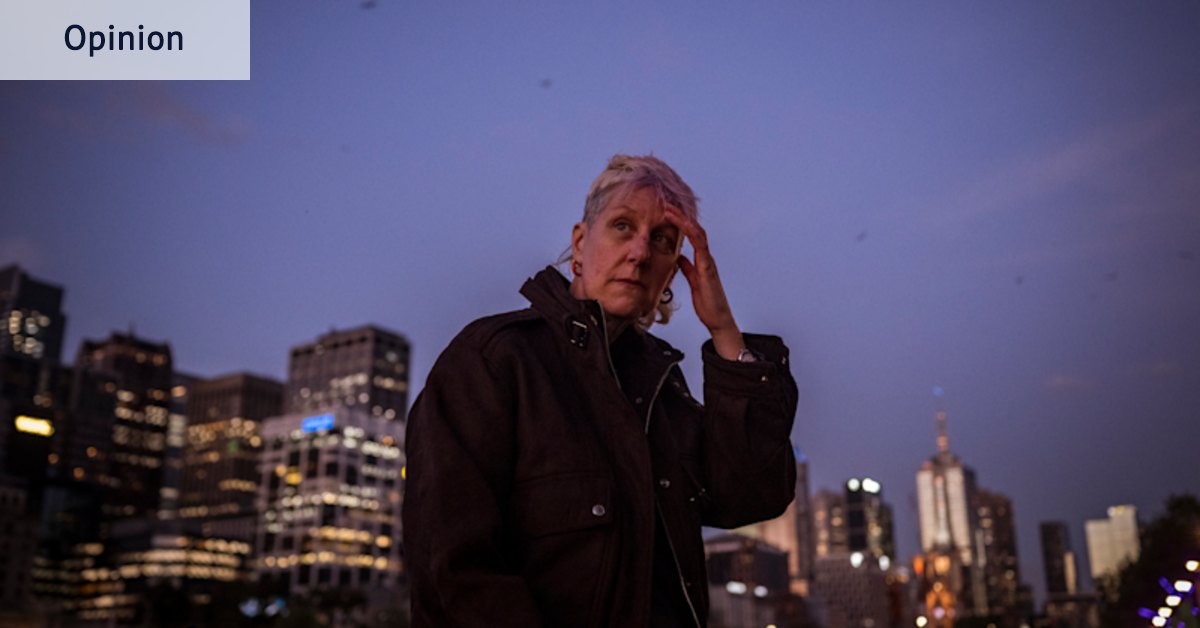
I spend many nights walking the streets of Melbourne.
asserted
I → spend → Melbourne
You wouldn’t know it though as I’m not yelling abuse or sleeping off substances outside shops.
asserted
I → know → shops
I follow wide empty paths that a few hours ago were full of people eating, talking, taking photos.
asserted
that → follow → photos
Around 3am I get tired, stop and lean against a pole, marvelling at the sky or pondering the river.
asserted
I → get → river
I go on and on until it’s time to start the day with a well-placed coffee.
asserted
it → go → coffee
The city has been my home, for want of a better word, since early 2025 when my landlord put their 1970s unit on the market.
asserted
landlord → put → market
I’d been surfing the wave of unsustainable housing for years.
asserted
I → surf → years
It had to break at some point, and I’ve been in the wash-up since.
asserted
I → have → up
My homelessness isn’t for lack of trying.
asserted
homelessness → try → lack
I’ve been labelled Priority One or homeless/at risk of homelessness since 2016.
asserted
I → label → 2016
My choice was to stay in a private rental I couldn’t afford or live on the street for years to get to the top of the list for social and public housing.
asserted
I → stay → housing
To be offered a place, I have to become one of the most vulnerable.
asserted
I → offer → vulnerable
I liken the housing situation to the Mario Brothers game.
asserted
I → liken → game
I jump, run, hit some points, land in a pipe and fall into a chasm of more blocks and holes to jump over in the dark.
asserted
I → jump → dark
I recently struck a jackpot – short-term housing at an aged care place, a transitional space between street and permanent.
asserted
I → strike → street
It’s got a rapidly approaching use-by date.
asserted
It → get → date
The rough sleepers have friends, regular pozzies, shared language and history.
asserted
sleepers → have → friends
Being homeless feels like a spinning gyroscope.
asserted
Being → feel → gyroscope
Money and resources are committed to the “named” rough sleepers in Melbourne.
asserted
Money → commit → Melbourne
The rest of us don’t display data for a spreadsheet, the sort of operational management government systems love.
asserted
systems → display → management
In my travels walking the streets, I’d say the ratio of rough sleepers – people who seem OK to spend a night (or day) on a pavement in full view – to the rest of the homeless population is about one to 50.
asserted
who → walk → population
I see more people squirrelled away in blink-and-miss bivouacs around Southbank, council parks and universities than I do around Flinders Street.
asserted
I → see → Street
The last trains are often speckled with returned service people, older folk and gentler souls getting some sleep.
asserted
trains → speckle → sleep
The city is our bedroom, loungeroom, kitchen, bathroom, if we’re lucky a “home” office.
asserted
we → ’re → ?
Really, rough sleepers have more skills and resources in their kit than some others.
asserted
sleepers → have → others
It’d be hard to let that skill set go.
asserted
set → let → ?
While homelessness is relatively new for me, walking the streets is not.
asserted
walking → walk → streets
As a kid, night and its cosmic space was a salve to all the shouting and scaring that went on in the daytime.
asserted
that → go → daytime
I was an unsupported autistic gender-confused teenager with no social compass.
asserted
I → confuse → compass
My parents worked 12-hour days in thankless jobs and my role models probably grew up in tense homes too.
asserted
models → work → homes
My school was focused on the bright kids, not night kids like me.
asserted
school → focus → me
All along, my autism, sensory-processing issues and mental health has meant the streets are my familiar quiet room.
asserted
streets → mean → ?
Being homeless is not a lifestyle to dabble in.
asserted
Being → dabble → ?
I had to give away most of my life’s belongings, 54 years’ worth, including my drum kit, art materials, favourite homewares, gifts and clothes.
asserted
I → have → kit
I crammed the remaining essentials into a storage unit.
asserted
I → cram → unit
Now I have one shoebox of childhood belongings that sum me up beyond furniture.
asserted
that → have → furniture
I lost my passport, birth certificate and other useful identity documents (which were likely thrown out accidentally); a catch 22 when you want to apply for a post box, vote, pay bills or get a library card.
asserted
you → lose → card
It’s expensive to live in various forms of nowhere.
asserted
It → ’ → forms
It costs more to pay for a safe place to sleep, get the news, shower, change clothes, eat meals, participate in society and be someone you’d like to be – or hope to be – when you have to pay every single time you do it.
asserted
you → cost → it
My work running a successful community arts organisation for people with complex mental health is hugely rewarding but unpaid.
asserted
work → run → health
…and 18 more, not listed.
 The Aporia