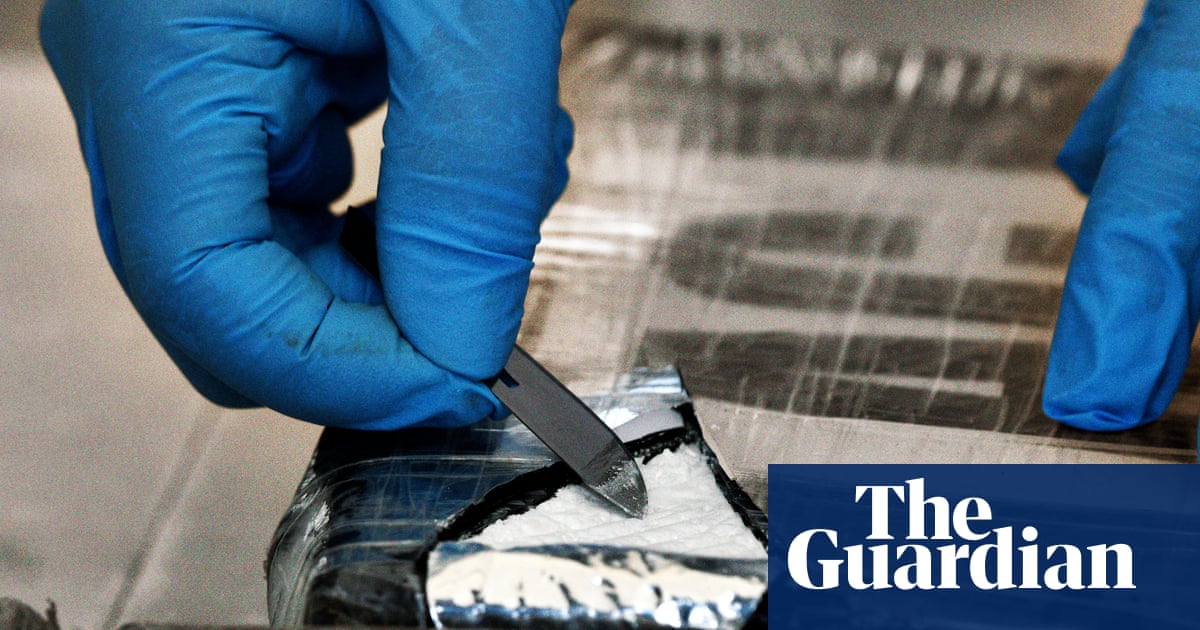
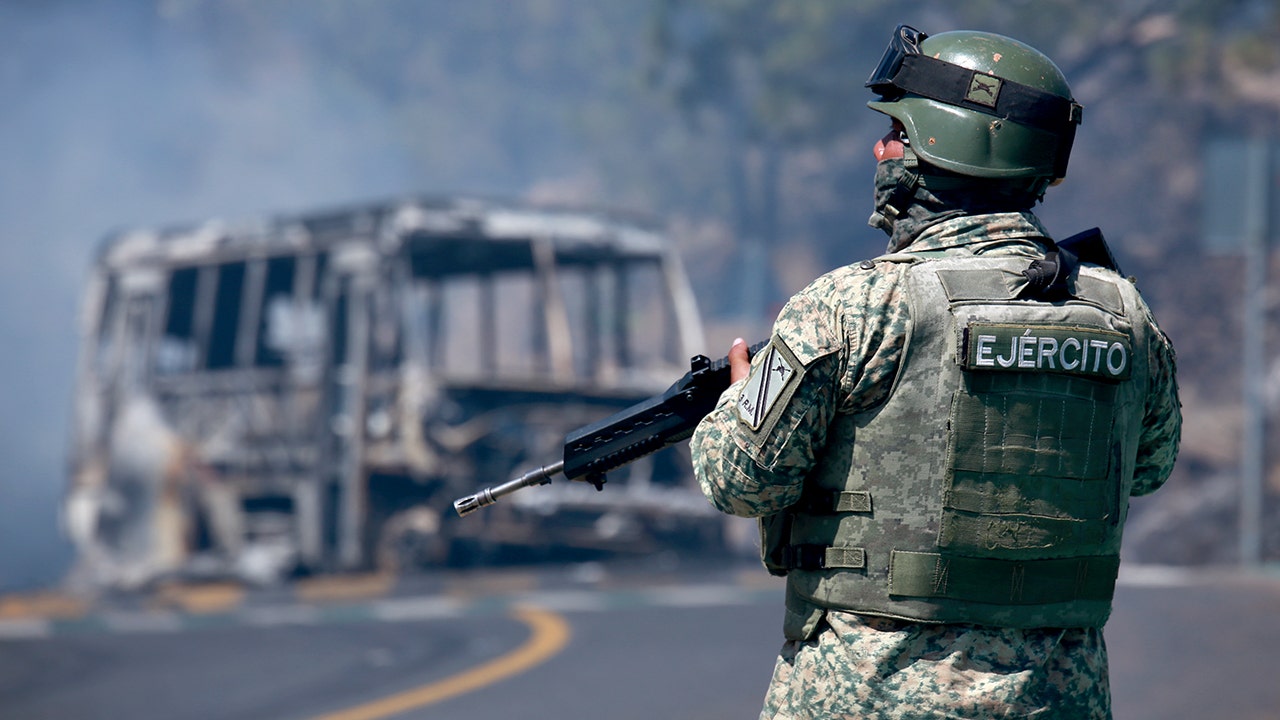
A four-month investigation by the Guardian has revealed that the surge in cocaine trafficking to Europe is directly linked to the expanding presence of Latin American criminal networks in Europe, where they have forged close ties with local mafia organisations.
asserted
they → reveal → organisations
The investigation, utilising databases, police and intelligence agencies, along with interviews with judges, prosecutors and experts from eight countries, shows that cartels and factions from Colombia, Brazil, Ecuador, Venezuela, Mexico and the US are active in at least 12 European countries.
asserted
cartels → utilise → countries
Between 2014 and 2024, there was a 471% rise in the quantity of cocaine seized and more local laboratories processing cocaine derivatives were dismantled.
asserted
laboratories → be → derivatives
The figure could be even higher, as it includes only groups officially identified in Europe through police operations, transnational investigations and ongoing court cases involving brokers, active members, cells or operational networks.
uncertain
it → include → brokers
It does not include gangs that lack a physical presence in Europe while working in “joint ventures” with European mafias.
asserted
that → include → mafias
The identified groups include Mexico’s Sinaloa cartel and the Jalisco New Generation cartel (CJNG); the Clan del Golfo mafia, and the guerrilla organisations ELN and dissident factions of Farc in Colombia; Brazil’s Primeiro Comando da Capital (PCC, or First Capital Command) and Comando Vermelho (CV, or Red Command); Venezuela’s Tren de Aragua; and the US-originated Barrio 18 and MS-13 gangs, which are also prevalent in El Salvador, Honduras, Guatemala and, to a lesser degree, in Mexico.
asserted
which → identify → Mexico
These organisations have built a more prominent presence in Spain, Portugal, the Netherlands, Belgium and France, while their activities have also been noted in Germany, Romania, Croatia and Slovakia.
asserted
activities → build → Germany
The Global Initiative Against Transnational Organized Crime (Gi-Toc) also includes Bulgaria.
asserted
Initiative → include → Bulgaria
Daniel Brombacher, a political scientist and director of the Europe Observatory at Gi-Toc, said: “There is something new happening with a presence of Latin American groups in geographies where there’s no pre-existing infrastructure.
“This phenomenon is no longer limited to the traditional gateway countries,” he says.
asserted
he → say → countries
“Recent police operations have uncovered Mexican-run methamphetamine labs in southern France, north-eastern Poland and Brandenburg, south of Berlin.
asserted
operations → uncover → Berlin
Latin American groups are also appearing in Romania and Bulgaria along the Balkan route.”
asserted
groups → appear → route
Latin American national authorities and experts suggest the list may be even longer.
uncertain
list → suggest → ?
An unpublished report by the São Paulo public prosecutor’s office, partly based on data from the Brazilian intelligence agency (Abin) – which the Guardian reviewed – shows, for example, that the PCC, now Brazil’s biggest criminal group, operates in 16 European countries, including the UK, Ireland, Iceland, Serbia, Sweden, Switzerland and Turkey.
asserted
PCC → base → UK
The suspicion that Latin American cartels and factions are seeking to become established in Europe is not new.
asserted
cartels → seek → Europe
Since at least the 1980s, Colombian criminal organisations such as the Cali and Medellín cartels had footholds in regions of Spain such as Galicia.
asserted
organisations → have → Galicia
In 2013, a Europol report in 2103 warned of their rise.
asserted
report → warn → rise
But what authorities are witnessing now is on an another level.
asserted
witnessing → witness → level
A Europol report this year states that “Latin American MTCNs [most threatening criminal networks] have also settled in the EU, from where they direct operations that affect the EU.
asserted
that → state → EU
This is particularly the case for mobile criminal networks involved in organised property crime.”
asserted
This → involve → crime
Interpol, led by the Brazilian federal police officer Valdecy Urquiza, has been approached, but has not commented.
asserted
Interpol → lead → officer
The problem has become more visible over the past decade.
asserted
problem → become → decade
Drug production in Latin America in that time has increased roughly fourfold to reach a record of about 4,100 tonnes in 2024.
asserted
production → increase → 2024
This comes after growth of up to 35% at the beginning of the decade.
asserted
This → come → decade
More cocaine is now produced in Colombia than during the era of the notorious drug lord Pablo Escobar.
asserted
cocaine → produce → lord
Nearly all the world’s cocaine and many related substances originate from Latin America, particularly Colombia.
asserted
cocaine → originate → America
Víctor Manuel Sánchez Valdés, an academic at the Autonomous University of Coahuila in Mexico who is an expert on organised crime, says: “The main ones are the Sinaloa cartel and the Jalisco cartel [CJNG] in Mexico; the Comando Vermelho and the PCC of Brazil; the Gulf Clan and different factions of the Colombian Farc; the Lobos and the Choneros of Ecuador; and Tren de Aragua of Venezuela.”
asserted
ones → say → Venezuela
He believes that the Latin American presence in Europe is even more widespread than is generally recognised.
asserted
presence → believe → Europe
“Sinaloa cartel and the CJNG have a presence in more than 20 European countries.
asserted
cartel → have → countries
Obviously, that does not mean they dominate or have large cells,” he says.
asserted
he → mean → cells
The UN Office on Drugs and Crime’s 2026 World Drug Report on illicit crimes states that global cocaine production in 2024 was between 3,800 and 4,700 tonnes – more than four times higher than it was in 2014.
asserted
it → state → 2014
South America remains the main production hub, with coca cultivation covering a record 385,000 hectares over the past decade – three times the 2014 figure.
asserted
cultivation → remain → figure
Europe has emerged as a key market because it offers organisations higher profit margins than the US.
asserted
it → emerge → US
Since the beginning of the decade, European police have confiscated more drugs than American forces, and data indicates that Europe now represents about a quarter of global consumption.
asserted
Europe → confiscate → consumption
Europol recently reported that out of 731 MTCNs operating across Europe, 149 are connected to Latin American organisations.
asserted
149 → report → organisations
Of these, 67 have Latin American members, and 22 mainly consist of Latin Americans.
asserted
22 → have → Americans
 The Aporia