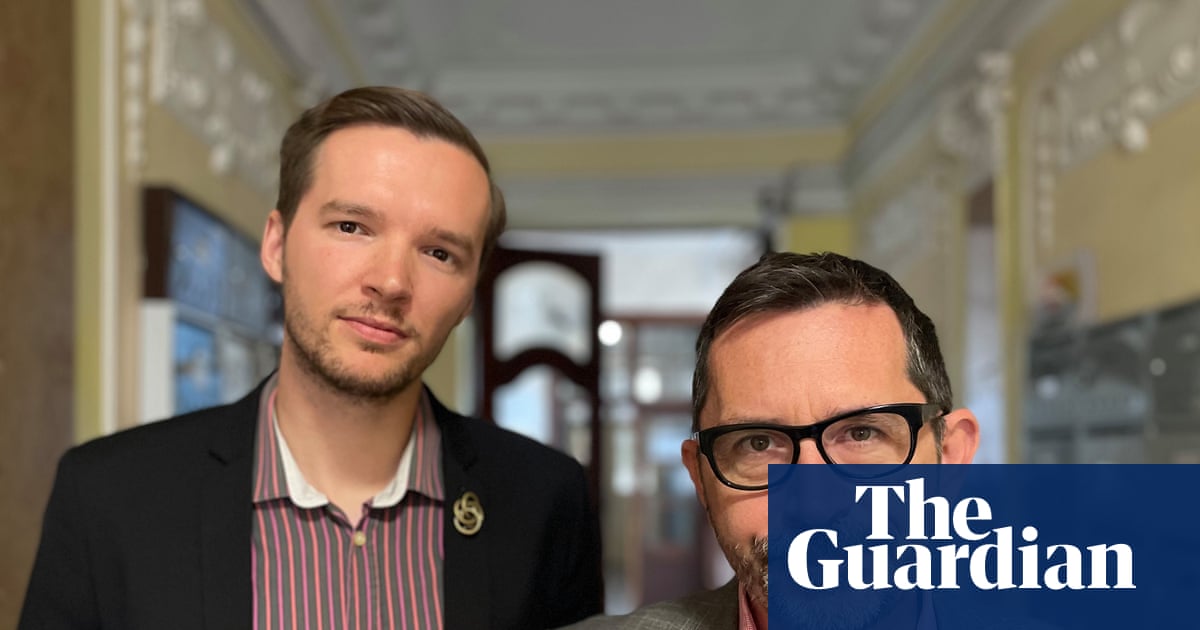
A same-sex couple are suing authorities in Slovakia for refusing to register their Austrian marriage, testing whether a landmark EU court ruling can turn recognition abroad into legal security at home.
asserted
ruling → sue → home
Their fight exposes a clash between European obligations and national restrictions – and what that means for LGBTQ+ people living under Robert Fico’s populist-nationalist government.
asserted
that → expose → government
Ivan Novotný, 31, and Metod Špaček, 51, married in Austria in 2020, but six years on, their marital status at home remains unrecognised.
asserted
status → marry → home
But Novotný and Špaček, who are both lawyers and former diplomats, are not asking for that.
asserted
who → ask → that
They want the Slovakian authorities to recognise a marriage that was concluded legally in another EU country – something the bloc’s top court has said is mandatory for all EU members.
asserted
court → want → members
“I’ve said this publicly several times, and [LGBTQ+] activists in Slovakia have criticised me for it: Metod and I are not discriminated against here.
asserted
Metod → say → it
We have a lovely life here in Bratislava, in Slovakia,” Novotný said.
asserted
Novotný → have → Slovakia
“So, we don’t actually need [recognition of marriage] for our day-to-day lives.”
asserted
we → need → lives
For example, said Novotný, when Špaček was hospitalised during the Covid pandemic he was treated by a “lovely” doctor who recognised Novotný’s official relationship to her patient.
asserted
who → say → patient
He added: “She put me down on the report as ‘husband’ and gave me all your [Špaček] medical information.
asserted
She → add → information
The problem is: that was because she was nice, not because she had to do it.
asserted
she → have → it
If someone wanted to make trouble for us, they could do it.
uncertain
they → want → it
“That’s not how the rule of law should work
asserted
rule → work → law
The couple argue they are on solid legal ground after a ruling by the EU’s highest court in November 2025 in response to a case brought by a Polish same-sex couple who had married in Berlin.
asserted
who → argue → Berlin
Jakub Cupriak-Trojan and Mateusz Trojan had challenged the Mazovia provincial governor’s refusal to recognise their German marriage.
asserted
Trojan → challenge → marriage
The court ruled that member states must recognise such marriages where couples had exercised their right to move and reside in another EU country, and created or strengthened family life there.
asserted
couples → rule → life
The European court of justice ruling does not require member states to allow same-sex weddings at home.
asserted
ruling → require → home
The Slovakian authorities explained why Novotný and Špaček’s request to register their Austrian marriage had been turned down in a letter signed by the interior minister, Matúš Šutaj Eštok.
asserted
request → explain → minister
“[The letter] says that since the constitutional definition of marriage [in Slovakia] is a bond between a man and a woman, they lack the legal basis for formally recognising the marriage certificate.
asserted
they → say → certificate
That’s essentially it,” said Špaček, who served as chief of staff to the country’s liberal former president Zuzana Čaputová.
asserted
who → ’ → president
Across town, in the house his grandparents built on a hill overlooking the Danube, Marián Žáry Kukelka, 44, recalled his wedding to his partner, Ondrej, in 2023.
asserted
Kukelka → build → 2023
The couple married in Hainburg an der Donau, an Austrian town visible from their terrace.
asserted
couple → marry → terrace
Žáry Kukelka, a radio presenter for the public broadcaster STVR, is also suing Slovakian authorities.
asserted
Kukelka → sue → authorities
He uses his full married name on air (Žáry is Ondrej’s surname) and is supported by his colleagues.
asserted
Žáry → use → colleagues
But his official documents refer to him as Marián Kukelka.
asserted
documents → refer → Kukelka
He said: “It’s a court case for love.
asserted
It → say → love
I don’t need that surname to live my life, but for me it’s a kind of tribute to my partner, that I can carry his surname too.”
asserted
I → need → surname
Žáry Kukelka lives behind Bratislava Castle, not far from Zámocká street – the scene of the homophobic attack in 2022 where two people were shot dead outside the LGBTQ+ bar Tepláreň.
asserted
people → live → bar
The anti-LGBTQ+ rhetoric of many Slovakian politicians, especially in the government, was contributing to an atmosphere of increasing hostility, he said.
asserted
he → contribute → hostility
Last year, Fico’s government backed constitutional changes recognising only two sexes and tightening adoption restrictions.
asserted
government → back → restrictions
Žáry Kukelka told the Guardian that Hainburg an der Donau had been “overwhelmed” with LGBTQ+ couples from Slovakia wanting to get married since a change to Austrian legislation made it possible.
asserted
it → tell → legislation
He himself had experienced little in the way of abuse as a gay man, he said, although he admitted he thought carefully before using the words “my husband”, depending on whom he was talking to.
asserted
he → experience → whom
“Two weeks ago, we were in Switzerland, and there we held hands in public for the first time in a long time,” he said.
asserted
he → hold → time
“We felt it was different there.”
asserted
it → feel → ?
Slovakia’s interior ministry said it was bound by the country’s existing constitutional and legal framework, regardless of whether a marriage was valid abroad.
asserted
marriage → say → framework
It acknowledged the primacy of EU law but argued that recognition for freedom of movement purposes did not require registration as a marriage.
asserted
recognition → acknowledge → marriage
Its administrative work “cannot replace decisions by the legislature or the constitutional legislature,” the ministry told the Guardian.
asserted
ministry → replace → Guardian
 The Aporia