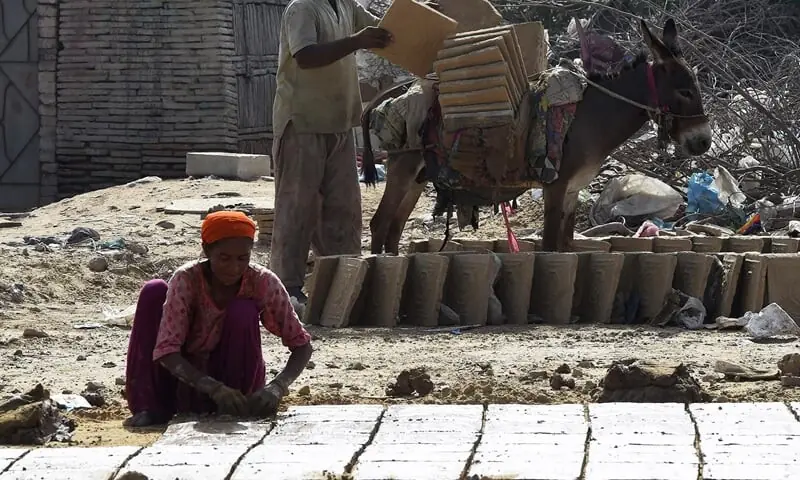
The fourth edition of the Labour Rights Index was launched ahead of World Day for Decent Work on October 7, 2024, highlighting that between January 2024 and January 2026, more countries strengthened their labour laws than weakened them. The index, which assesses legislation in 168 countries based on international standards set by the ILO and UN, found that nearly half of the world's population lives in countries with "reasonable access to decent work," scoring between 70.5-80 out of 100. This report underscores the importance of establishing robust labour laws as a foundation for workers' rights, contrary to concerns about a race to the bottom in worker protections.
Written locally by qwen2.5:14b on 2026-10-13,
using this article's own text rather than the other coverage of the
same event (that is the story summary below).
The fourth edition of the Labour Rights Index, launched on the eve of the World Day for Decent Work (October 7), shows that between January 2024 and January 2026, far more countries strengthened their labour laws than weakened them.
asserted
countries → launch → them
The global debate on jobs is shifting from how many jobs are created to what kind and quality.
asserted
jobs → shift → jobs
A frequent argument is that most countries already have enough labour laws and that the real problem is implementation.
asserted
problem → have → laws
Implementation matters, but a right that does not exist in law cannot be implemented.
asserted
that → matter → law
If the law provides no maternity protection or no right to organise
asserted
law → provide → protection
, no amount of labour inspection can create these rights.
asserted
amount → create → rights
The United Nations Committee on Economic, Social and Cultural Rights recognises that legislation is an indispensable step for rights at work.
asserted
legislation → recognise → work
Sustainable Development Goal indicators 5.1.1 (equality) and 8.8.2 (trade union rights) already assess national legislation.
asserted
indicators → assess → legislation
Produced by the WageIndicator Foundation and the Centre for Labour Research, the 2026 Labour Rights Index covers 168 countries and scores 48 components under 10 indicators.
asserted
Index → produce → indicators
The benchmarks come from International Labour Organisation (ILO) Conventions and UN instruments the world has already agreed upon.
asserted
world → come → Conventions
The challenge is to protect workers rather than jobs, while ensuring a strong floor of labour rights
The Index is deliberately de jure.
asserted
Index → protect → rights
The 168 countries account for more than 95 per cent of the world’s population, nearly half of whom live in countries whose legislation provides “reasonable access to decent work” (countries scoring 70.5-80 out of 100).
asserted
legislation → account → 100
Measuring the law separates legal deficits from implementation deficits.
asserted
Measuring → measure → deficits
The long-term evidence does not support the feared race to the bottom.
asserted
evidence → support → bottom
A 2025 ILO working paper, based on the Centre of Business Rights Labour Regulation Index and covering 117 countries between 1970 and 2022, finds that worker protection has increased steadily and that protective reforms were positively linked to a higher labour share of income.
asserted
reforms → base → income
The Organisation for Economic Co-operation and Development’s 2026 review of employment protection finds that between 2019 and 2025 many countries strengthened regulation of temporary contracts, while virtually none significantly reduced protection on open-ended contracts.
asserted
none → find → contracts
A similar finding appears in the World Economic Forum’s Global Gender Gap Report 2026.
asserted
finding → appear → Report
The average global gender gap has narrowed to its best recorded level, with around 70 per cent of the gap now closed.
asserted
cent → narrow → gap
All 97 economies tracked continuously since 2006 have made progress.
asserted
economies → track → progress
The Labour Rights Index tells a similar story: 134 legal changes in 70 countries between 1 January 2024 and 1 January 2026.
asserted
Index → tell → January
Setting aside minimum wage revisions, 38 reforms raised a component score, and another 60 strengthened the law without changing the score.
asserted
60 → set → score
Nine legal changes lowered a score and four weakened protection without affecting it.
asserted
four → lower → it
The reforms span regions and income groups, from Lesotho and Egypt to the Kyrgyz Republic and Colombia.
asserted
reforms → span → Republic
However, new working-time rules lowered scores in Egypt, India (Uttar Pradesh) and Lesotho.
asserted
rules → work → Egypt
Freedom of association and collective bargaining remains the weakest area globally, and around 36pc of the population covered still lives in countries where the law offers limited access to decent work or worse.
asserted
law → remain → work
South Asia remains the lowest-scoring region (with an average score of 58, against 92 for Europe).
asserted
Asia → remain → Europe
The region is moving, however.
asserted
region → move → ?
India’s four Labour Codes came into force on 21 November 2025, giving India the region’s highest score (71.5).
asserted
Codes → come → score
Bangladesh’s Labour (Amendment) Act, 2026 and Pakistan’s Punjab Labour Code 2026 came after the 1 January 2026 reference date.
asserted
Act → come → date
Pakistan shows why legislation matters.
asserted
legislation → show → ?
It has long relied on more than 40 fragmented labour laws, a structure largely reproduced at the provincial level after the 18th Amendment.
asserted
It → rely → Amendment
The Punjab Labour Code 2026, enacted on 10 February, repeals 26 labour laws and extends protection to agricultural, domestic, home-based and platform workers, and strengthens maternity, childcare and collective rights.
asserted
Code → enact → rights
Pakistan’s official 2026 score of 52.5 does not reflect this Code’s provisions.
asserted
score → reflect → provisions
Assessed against the new Code, Pakistan’s score rises to 86, moving Pakistan from “basic access” to “approaching access to decent work.”
asserted
score → assess → work
This does not make workers better off overnight; implementation is the real test.
asserted
implementation → make → ?
But now there are rights that can be inspected, litigated, and bargained over.
asserted
that → be → ?
Artificial intelligence is reshaping occupations, platform work is blurring the line between employment and self-employment, and climate change is exposing workers to heat stress.
asserted
change → reshape → stress
The answer is not to preserve every job.
asserted
answer → preserve → job
As the 2025 Nobel Prize in Economic Sciences highlighted, innovation-driven growth displaces some jobs; the challenge is to protect workers rather than jobs, while ensuring a strong floor of labour rights.
asserted
challenge → highlight → rights
Good legislation cannot guarantee decent work.
asserted
legislation → guarantee → work
…and 5 more, not listed.
 The Aporia