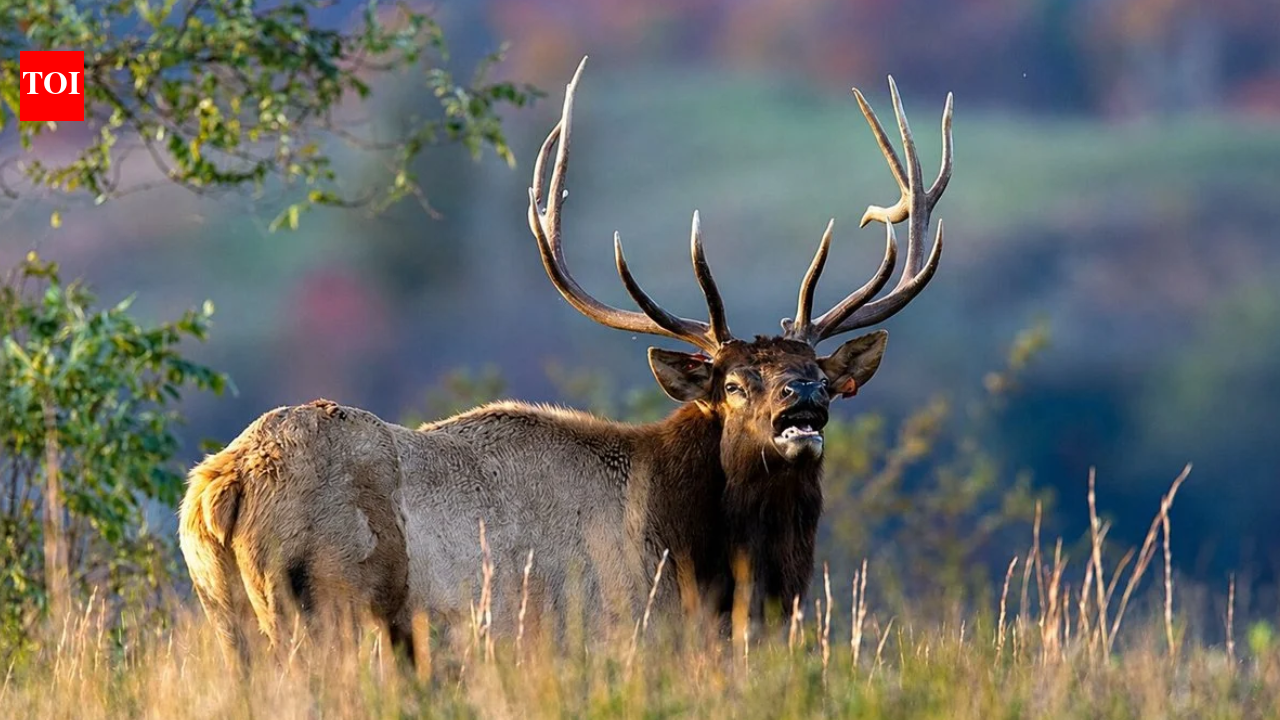
Nearly a decade after elk were returned to West Virginia, the growing herd is beginning to venture beyond its familiar range, offering a new sign of how far the state’s ambitious wildlife restoration effort has come.
asserted
effort → return → sign
The movement was highlighted by WV MetroNews, which reported in July that wildlife officials are seeing more elk explore beyond the Tomblin Wildlife Management Area in Logan County.
asserted
elk → highlight → County
The West Virginia Division of Natural Resources (WVDNR), meanwhile, says the restoration programme has brought the herd to about 130 animals and recorded at least 60 native calf births since the project began.
asserted
project → say → births
One young female recently travelled north into Lincoln County near Harts Creek, spending time along a ridge and in a pasture on private farmland before returning to the Tomblin area.
asserted
female → travel → area
Wildlife officials were able to follow her movements through GPS telemetry.
asserted
officials → follow → telemetry
The journey is significant not because elk are suddenly spreading across the state, but because it shows individual animals are beginning to test the wider landscape available to them.
asserted
animals → spread → them
From disappearing species to a growing herd
Elk once roamed widely across West Virginia but disappeared from the state by the late 1800s, largely because of overhunting and habitat loss.
asserted
Elk → disappear → overhunting
The modern restoration effort began after years of studies identified the southern coalfields as particularly suitable for elk.
asserted
years → begin → elk
Large areas affected by surface mining had created open habitat, while relatively limited agricultural land reduced the likelihood of conflicts with farmers.
asserted
land → affect → farmers
In December 2016, the WVDNR released its first 24 elk at Tomblin Wildlife Management Area, marking the animals’ return after more than 140 years.
asserted
WVDNR → release → years
The state subsequently added another 95 elk, 53 from Kentucky and 42 from Arizona, beginning in 2018.
asserted
state → add → 2018
Additional releases in 2024 brought the estimated herd to about 130 animals.
asserted
releases → bring → animals
Since the programme began, at least 60 calves have been born in West Virginia.
asserted
calves → begin → Virginia
Why are the elk starting to wander?
asserted
elk → start → ?
For now, Tomblin remains the centre of the herd’s range.
asserted
Tomblin → remain → range
But as the population grows, some animals are beginning to look for their own territory.
asserted
animals → grow → territory
GPS collars fitted to released elk, along with collars placed on previously unmarked animals, allow biologists to follow where they travel and how they use the landscape.
asserted
they → fit → landscape
The recent movements into Lincoln County therefore give researchers a glimpse of what the next phase of the restoration could look like.
uncertain
phase → give → restoration
West Virginia’s designated Elk Management Area already covers about 2,845 square miles, spanning all of Logan, Mingo, McDowell and Wyoming counties and parts of Boone, Lincoln and Wayne counties.
asserted
Area → designate → counties
The state’s management strategy calls for officials to monitor elk movements around those boundaries and consider adjustments if the animals’ use of the wider landscape changes significantly.
asserted
use → call → landscape
A conservation comeback that is also drawing visitors
The return of elk has transformed the animals into both a conservation success and a growing tourism attraction.
asserted
return → draw → success
The WVDNR’s 2026 Elk Management Tours are scheduled to begin on September 13, with guided four-hour excursions continuing on weekends through October 24.
asserted
excursions → schedule → October
The tours take visitors into elk country around Logan County, where park staff explain the animals’ behaviour, history and conservation.
asserted
staff → take → behaviour
A viewing platform and education centre at Tomblin Wildlife Management Area, opened in 2025, have added another way for visitors to see the herd while learning about the restoration effort.
asserted
visitors → view → effort
The broader significance of the programme, however, lies beyond tourism.
asserted
significance → lie → tourism
A species that vanished from West Virginia more than a century ago is now reproducing in the wild, establishing a home range and beginning to explore beyond it.
asserted
that → vanish → it
For conservationists, those wandering elk may be among the clearest signs yet that the restoration is no longer simply about bringing the animals back, it is about watching them become part of the landscape again.
uncertain
them → wander → landscape
 The Aporia