Scientists have identified the submerged remnants of a giant lost supercontinent that played a pivotal role in the explosion of complex life more than 500 million years ago, reports a study published on Wednesday in Science Advances.
asserted
study → identify → Advances
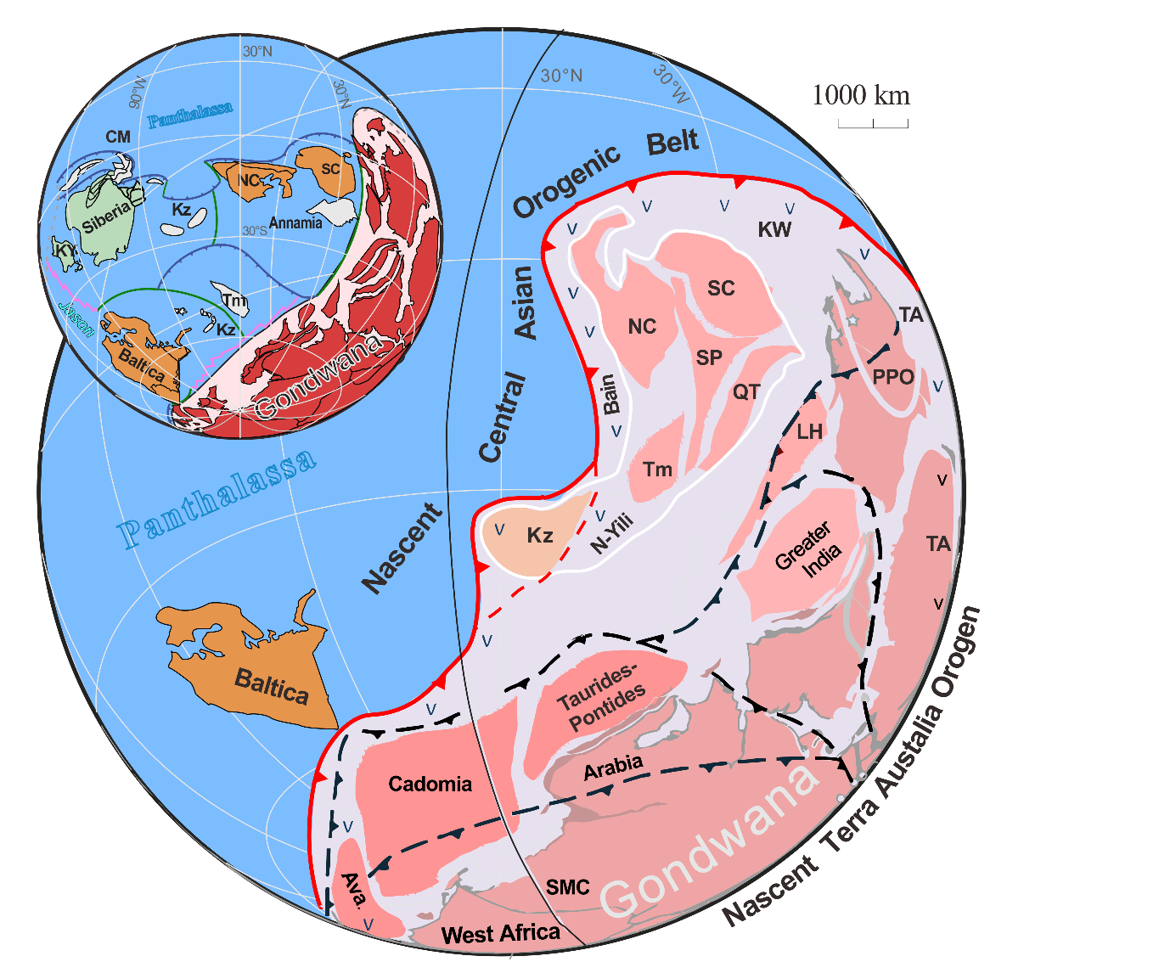
By gathering over 25,000 rocks from ancient continental fragments, a team reconstructed the past contours of Gondwana, a massive landmass that formed between 800 and 500 million years ago in the Southern Hemisphere.
asserted
that → gather → Hemisphere
Gondwana’s true size has long been a matter of contentious debate, but it is generally thought to have taken up two-thirds of Earth’s land at the time, falling short of “supercontinent” status.
asserted
it → think → status
Now, scientists led by Tao Wang, a professor of geoscience at the Chinese Academy of Geological Sciences, have revealed that Gondwana accounted for roughly 80 percent of Earth’s landmass between 550 and 500 million years ago, confirming that it was a supercontinent.
asserted
it → lead → landmass
The formation of this colossal realm helped fuel the Cambrian explosion, a rapid proliferation of complex life that began about 538 million years ago, establishing a fundamental link between “deep-Earth processes” and “the most profound expansion of life in Earth history,” according to the new study.
uncertain
that → fuel → study
The discovery of these ancient Gondwanan remains was “serendipitous,” said William Collins, a professor of geosciences at Curtin University and an author on the study, in a call with 404 Media.
asserted
Collins → say → Media
“We weren't looking for this.”
asserted
We → look → this
Wang added in the same call that the team’s ongoing research is likely to yield more surprises and insights in the future.
asserted
research → add → future
“If we expand our database, maybe we will have new, unexpected results,” he said.
asserted
he → expand → results
For much of his career, Wang has studied the Central Asian Orogenic Belt, a region that stretches from Russia’s Ural Mountains across Asia to the Pacific Ocean that is shaped by the collision of continental plates.
asserted
that → study → plates
In recent years, his team has assembled a database of thousands of magmatic rocks from this region, and others, as part of an international collaboration called Deep-time Digital Earth.
asserted
team → assemble → collaboration
Using AI in combination with new techniques, the researchers were able to identify the origins of many of these samples for the first time, allowing them to place them into a global map that could be used to reconstruct the continents of the deep past.
uncertain
that → use → past
“We used special techniques to get coordinates and locations,” Wang said.
asserted
Wang → use → coordinates
“In this way, we expanded our research from Asia to globally.”
asserted
we → expand → Asia
“If you collect enough data, you can then map out where these ancient crustal blocks were,” said Collins.
asserted
Collins → collect → data
“This is how we came across this new map of the Earth—this deep crustal map extending back 500—and more—million years ago.”
asserted
we → come → Earth
This global map revealed disparate chunks of Gondwana that had been broken apart and strewn across the planet by eons of tectonic activity and shifting continental permutations.
asserted
that → reveal → activity
In particular, the team looked at isotopes of the elements samarium and neodymium, which Collins described as “fingerprints” of the lost Gondwanan supercontinent that have ended up embedded inside much younger rocks.
asserted
that → look → rocks
“The samarium-neodymium isotope maps that we're looking at are not only a step back in time—they're like a time machine—but they have this spatial character that allows us to recognize an ancient continental landmass that formed 500 million years ago, even though the mountains that the rocks are in are only 20 million years old,” Collins explained.
asserted
Collins → look → that
The results show that Gondwana made up the vast majority of the continental landmass of the Cambrian period, an era that featured the sudden appearance of large and complex life, following billions of years of simple microbial organisms.
asserted
that → show → organisms
Almost all major animal families first emerged in this Cambrian “explosion” of life, setting the stage for the incredible abundance and diversity of species that has inhabited our planet ever since.
asserted
that → emerge → planet
This massive supercontinent was shaped by a “subduction girdle” of tectonic activity that stretched across 79 percent of Earth’s circumference.
asserted
that → shape → circumference
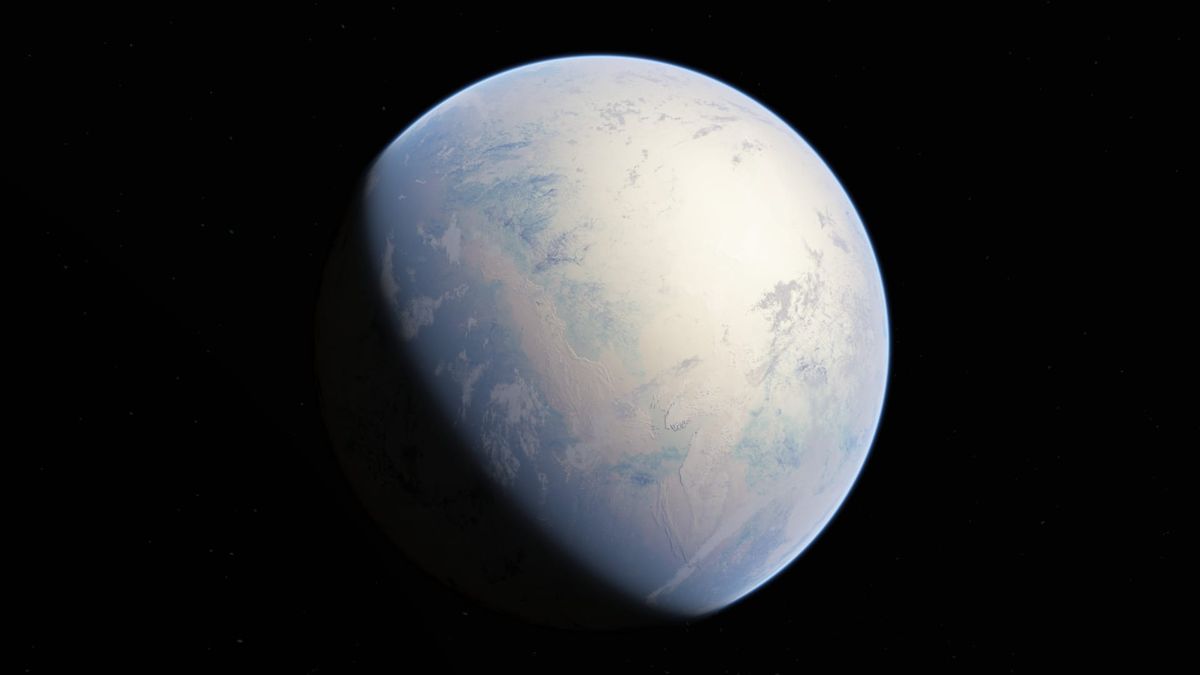
The geological upheaval produced by the structures supercharged volcanic activity, which in turn belched out greenhouse gasses into the atmosphere and warmed the planet from its previous “Snowball Earth” phase.
asserted
which → produce → phase
The combination of this warmer climate, along with an enrichment in new ingredients for life, paved the way for the Cambrian explosion, according to the team.
“This Ring of Fire that formed straight after Gondwana was a source of a huge amount of volcanic gasses, just like the volcanoes around the Circum-Pacific are today,” said Collins.
uncertain
Collins → pave → Pacific
“Those volcanic gasses—particularly water and [carbon dioxide]—are absolutely vital, for climate change, and also for biodiversity.”
In this way, planet-scale geological dynamics powered the lush biosphere that we still occupy today, as well as the 500-million-odd years of phantasmagorical ecosystems that preceded it.
asserted
that → power → it
To reconstruct this process in even more detail, the team plans to expand their rock database and map out the remnants of this long-lost supercontinent with more precision.
asserted
team → reconstruct → precision
“Maybe we can find other new directions, and solve other fundamental Earth science problems,”
Wang concluded.
asserted
Wang → find → problems
 The Aporia