The Sydney Morning Herald
· collected 2026-10-12 · by Rachel Rasker, Kate Aubusson
Australia’s health system is unprepared for the growing number of older patients arriving in emergency departments as elderly and frail patients are left in hospital corridors to deteriorate as they wait for a bed, emergency physicians warn.
asserted
physicians → grow → bed
Emergency departments will brace for a 411 per cent increase in patients aged 85 and over by 2050, the latest Australasian College of Emergency Medicine’s State of Emergency 2026 report revealed.
asserted
report → brace → Emergency
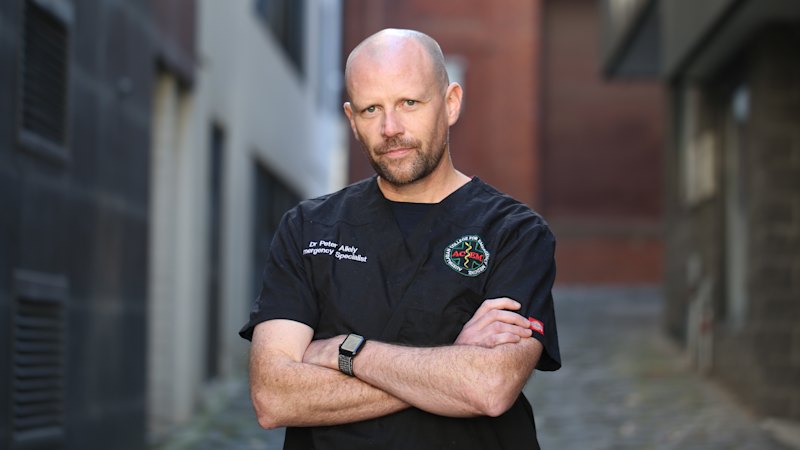
College president Dr Peter Allely said it was terrifying: “We’re only at the beginning of the exponential curve.
asserted
We → say → curve
We are not prepared for this.”
asserted
We → prepare → this
As EDs contend with rapidly rising numbers of older patients with complex conditions, bed block is delaying too many from being admitted to full hospital wards.
asserted
block → contend → wards
The result is older patients being put at greater risk of death within seven days of presentation, and adding flow-on pressure throughout hospitals, according to the report released at Parliament House in Canberra on Tuesday.
uncertain
patients → put → Tuesday
“When you’ve got a 97-year-old sitting in a plastic chair overnight waiting for care, we’re failing, and it’s downright embarrassing that this is happening every day,” Allely said.
asserted
Allely → get → care
The latest intergenerational report projected that by 2030 one in five Australians will be aged 65 and older.
asserted
Australians → project → 2030
Older people aged 65 and over accounted for one quarter of the 9 million people who presented to EDs in 2023-24.
asserted
who → age → 2023
This marked a 16 per cent jump in attendances compared to 2018-19, compared with a 4 per cent increase among younger people.
ACEM Victoria branch chair Associate Professor Mark Putland said: “Our health system is at a tipping point.
asserted
system → mark → point
We can expect things to get much worse in the coming years unless we act.”
asserted
we → expect → years
The NSW spokesperson, Dr Clare Skinner, said the fact people were living longer showed the success of the healthcare system in Australia.
asserted
people → say → Australia
“But the problem we’ve got now, as the first of the Baby Boomers hit 80 this year, is our health system hasn’t kept up,” she said.
asserted
she → get → 80
“Our entire healthcare system is geared towards acute care of younger patients, and we need to collectively shift that to being able to provide safe, effective and compassionate care to older Australians,” Skinner said.
asserted
Skinner → gear → Australians
More than 53,500 older people spent longer than 24 hours in an ED waiting for an inpatient bed on a ward in 2023-24, an approximately 250 per cent rise from the 15,084 in 2018-19.
asserted
people → spend → 2018
Allely said it was a myth that emergency departments were busy because they were full of people who did not genuinely need to be there.
asserted
who → say → people
The report found more than half of older patients in 2023-24 arrived by ambulance, and nearly seven in 10 were triaged as needing more urgent care.
asserted
10 → find → care
One in two were admitted to hospital, and were more than twice as likely to be admitted as younger patients.
asserted
two → admit → patients
The report recommended increased funding for inpatient bed capacity to match population demographics, and to improve patient flow from emergency departments into wards.
asserted
report → recommend → wards
Victoria had the lowest number of public hospital beds per person nationally, with 2.33 beds per 1000 people, compared to 2.52 nationally.
asserted
Victoria → have → 2.52
In NSW, just 14 public inpatient beds were added between 2018-19 and 2023-24.
asserted
beds → add → 2018
The report also recommended strengthening alternative pathways to acute medical care for older patients, such as hospital-in-the-home programs, and expanding prevention mechanisms to reduce ED attendance, such as investment in aged and primary care.
asserted
report → recommend → care
By the government’s projections, Australia needs about 10,600 new aged care beds a year to keep up with current demand, while just 802 new places were added in 2024-25.
asserted
places → need → 2024
Last month, state and territory health leaders met with Health Minister Mark Butler to demand urgent investment in aged care to ease pressure on hospitals, including a short-term stopgap funding increase to home care packages.
asserted
leaders → meet → packages
Butler said it was difficult to increase the number of packages further without running into labour supply constraints.
asserted
it → say → constraints
“We don’t have enough workers in this country,” he said in September.
asserted
he → have → September
When asked if migration would help with labour shortages, Butler said it was “ultimately a question of balance”.
asserted
it → ask → balance
“It’s [about] the ability of our country to absorb greater numbers of people in terms of housing and transport and other infrastructure, but also recognising that significant parts of our economy are substantially staffed by migrants, and aged care is right up there.”
asserted
care → ’ → migrants
Butler said the federal government had made historic investments to ease pressure on hospitals, including increased funding, more aged care beds, more bulk-billing, and 137 Medicare urgent care clinics.
asserted
government → say → funding
“There are real pressures facing the aged care system right now and we continue to work with states and territories in good faith,” he said in a statement.
asserted
he → be → statement
NSW Health Minister Ryan Park said the state government had invested $35.7 million into an aged care response package, which included early intervention pilots, and this year announced the largest increase to the health budget in the state’s history, totalling $10.3 billion over four years.
asserted
which → say → years
A spokesperson for NSW Health also highlighted a $500 million expansion in the availability of non-hospital alternatives and care models, including virtual and urgent care.
asserted
spokesperson → highlight → care
Victorian Health Minister Ingrid Stitt said the government was investing in hospitals and services that helped people receive care at home and avoid unnecessary hospital stays, and were already delivering many of the approaches identified in the report, including hospital in the home, the Victorian virtual ED, urgent care clinics, residential in-reach and specialist frailty programs.
asserted
people → say → home
“We’ll consider the report’s recommendations and keep working with the Commonwealth, clinicians and health services to improve access to timely care,” she said in a statement.
asserted
she → consider → statement
 The Aporia