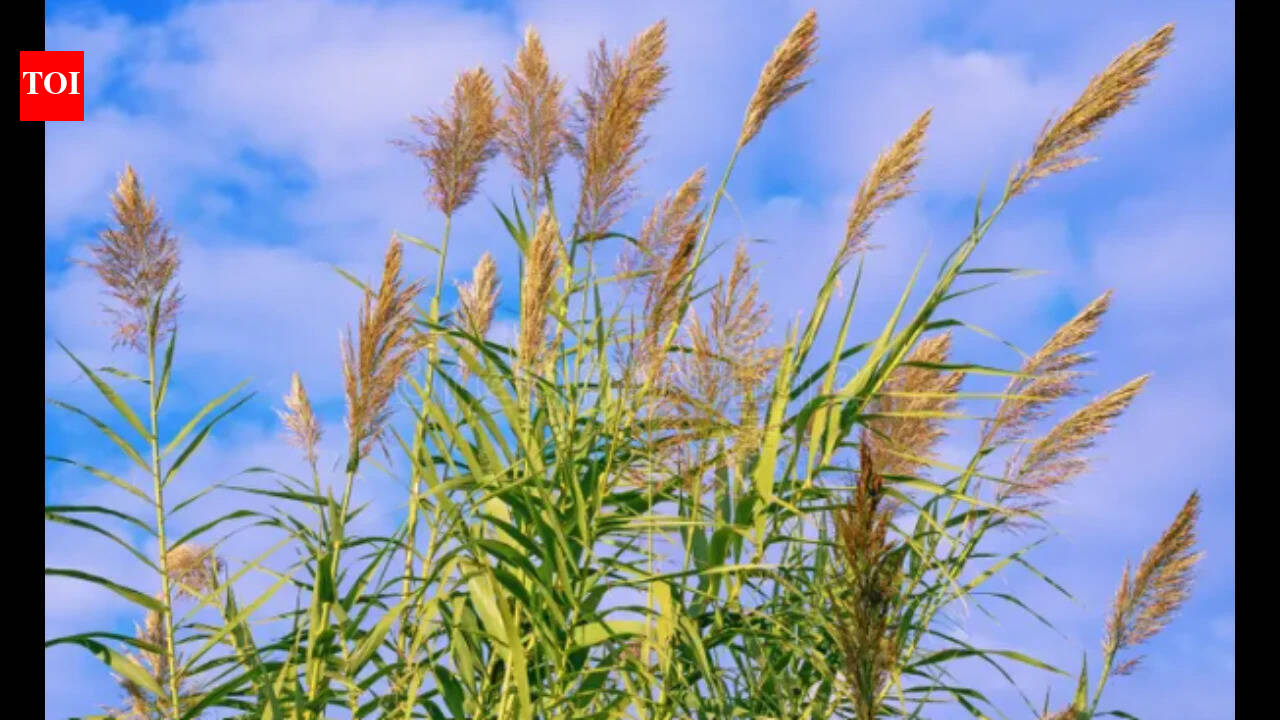
Giant reed came to California in the 1820s; now it crowds out native plants and fuels wildfires

Times of India · collected 2026-09-10 · by TOI World Desk
Read the original at Times of India ↗

Summary

Giant reed, also known as arundo, was brought to California in the 1820s and has since become an invasive weed that crowds out native plants and fuels wildfires. According to research, giant reed can grow up to 4 inches a day and reach 25 feet tall in just over a year, making it a highly effective spreader. The plant's impact is particularly severe in California, where it can choke out native willows and create a fire risk by providing large amounts of fuel in riparian areas. In the Santa Ana River Basin, giant reed infestations have almost tripled the fire fuel load, with an estimated 37,500 acre-feet of water being diverted from native vegetation each year.
Written by the local model on 2026-09-10, using this article's own text rather than the other coverage of the same event (that is the story summary below).

Signals How these are calculated →

Claims extracted
44
claim-shaped sentences
Uncertain
11%
5 of 44 hedged
Leaning
Leans left
of the writing, not the subject
Publisher trust
94.3
red-flag proxy, not a credibility rating
Outlets on this story
1
Environment
Narrative spread
1
articles carrying this framing
Analyzed 2026-09-10 · how these are computed

AI analysis (generated at analysis time, not now)

Story summary

Giant reed, a non-native plant that was introduced to California in the 1820s, has become an invasive weed in parts of the state, crowding out native plants and fueling wildfires. The plant, scientifically known as Arundo donax, was originally planted for its use as roofing material and erosion control, but it has since spread rapidly due to its ability to grow up to 4 inches per day and reach a mature height of 25 feet in just 12 months. According to the University of California, Riverside's Center for Invasive Species Research, giant reed has become a problem not only in California, but also in parts of Texas, Hawaii, Nevada, Utah, Missouri, Virginia, New Mexico, and Florida. The plant's invasive nature is attributed to its ability to thrive in various environmental conditions, making it a significant threat to native ecosystems.

Written for “Invasive Nonnative Plant Threats” on 2026-09-10, grounded in this article and the 0 other(s) covering the same event.
Why this leaning score
The article's own words the score was based on. Each is quoted verbatim and was checked against the article text before being stored, so you can find it in the original.
Score -0.35 Confidence high 1 quote(s) discarded as not found in the article
Leaning score -0.35 for article 7466 (high confidence, 1 verified quote) · logged 2026-09-10

Story

📰 Invasive Nonnative Plant Threats
Environment · 1 article(s) covering the same event. This is the one the site leads with.

How this is being covered How these are calculated →

Article leaning vs. publisher reliability
Source leaning vs. consistency

Compared with similar articles

Nothing to compare against. No article is close enough to this one for the pipeline to have linked or judged the pair.

Publisher

Times of India · 233 article(s) · 0 correction(s) detected
No corrections detected for this publisher. That may mean careful reporting, or simply that nothing has been checked.

Who wrote this

TOI World Desk
134 article(s) here · 1 carrying a prediction
🔮 Driving past roadkill day after day, Wilson began to wonder if that dead-end bridge might have a second life.
🔮 The recent movements into Lincoln County therefore give researchers a glimpse of what the next phase of the restoration could look like.
🔮 It was widely planted in different parts of the world because it could be used for several purposes, including walking sticks, fishing poles and musical instruments.
🔮 Mullin said ICE had lodged the detainer so Singh would not be released back onto the streets and could be removed from the US.
🔮 The deed ensures the land will remain dedicated to conservation, education and community purposes in perpetuity.
🔮 In a video appeal, Larrieu asked for assistance from anyone who could support the search effort.
🔮 Years of planning followed before the restoration could begin.
🔮 The state security agency said preventive operations would continue in Nogales.
🔮 It is expected to begin sailing in 2030, according to Yacht Style and Boat International.
🔮 In May 2026, the restoration reached another major milestone when the Queensland Government recognised the 18-hectare area as being of high nature conservation value, giving the recovering vegetation Category A protection under Queensland's vegetation management framework.
Wire or desk byline, not an individual reporter.
Also by TOI World Desk
Nothing else under this byline is closely related to this article, so these are simply their most recent.
All 134 articles by TOI World Desk →

Topics

California Center for Invasive Species Research Center for invasive species Texas The University of California, Riverside’s

Subjects

California GPE · 5× Texas GPE · 2× Center for Invasive Species Research ORG · 1× Center for invasive species ORG · 1× Hawaii GPE · 1× Missouri GPE · 1× Nevada GPE · 1× The University of California, Riverside’s ORG · 1× Utah GPE · 1× Virginia GPE · 1×

Narrative

The University of California, Riverside’s Center for Invasive Species Research lists California among the areas where the plant has become a problem, along with parts of Texas, Hawaii, Nevada, Utah, Missouri, Virginia, New Mexico and Florida.
framing: assertive · carried by 1 article(s) · first seen 2026-09-10
🔮 It was widely planted in different parts of the world because it could be used for several purposes, including walking sticks, fishing poles and musical instruments.

Claims (44 extracted, 5 hedged)

A plant brought to California nearly 200 years ago has become a serious invasive weed in parts of the state. asserted
plant → bring → state
Giant reed, also known as arundo, was first planted in California in the 1820s to provide roofing material and help control erosion in the Los Angeles Basin. asserted
reed → know → Basin
According to Center for invasive species research, the plant, scientifically known as Arundo donax, is native to eastern Asia. uncertain
plant → accord → Asia
It was widely planted in different parts of the world because it could be used for several purposes, including walking sticks, fishing poles and musical instruments. uncertain
it → plant → sticks
It is also being investigated as a possible biofuel source. asserted
It → investigate → source
Over time, however, giant reed became an invasive weed in several regions where it was introduced. asserted
it → become → regions
The University of California, Riverside’s Center for Invasive Species Research lists California among the areas where the plant has become a problem, along with parts of Texas, Hawaii, Nevada, Utah, Missouri, Virginia, New Mexico and Florida. asserted
plant → list → Texas
One reason giant reed can spread so effectively is its rapid growth. asserted
reed → spread → ?
The plant can grow about 4 inches a day and reach a mature height of 25 feet in about 12 months. asserted
plant → grow → months
It can also tolerate a range of environmental conditions, allowing it to grow in damp riparian areas and in moderately saline soils. asserted
it → tolerate → soils
Dense growth pushes out native plants Giant reed can form dense stands that leave little room for native vegetation. asserted
that → push → vegetation
Native plants are typically displaced when arundo becomes established. asserted
arundo → displace → ?
Animals associated with those native plants may also be unable to use the dense stands of giant reed, leading to declines in their populations. uncertain
Animals → associate → populations
The problem is particularly serious in California, where arundo can choke out native willows. asserted
arundo → choke → willows
Its presence also creates a fire risk because the plant can provide large amounts of fuel in riparian areas, where fires are typically uncommon. asserted
fires → create → areas
The plant is also well adapted to fire. asserted
plant → adapt → fire
This creates another problem because fires can help promote arundo invasions in sensitive habitats. asserted
fires → create → habitats
In the Santa Ana River Basin in Southern California, the fire fuel load in riparian areas has almost tripled because of arundo infestations. asserted
load → triple → infestations
The plant can create problems during floods as well. asserted
plant → create → floods
Large amounts of arundo can be dislodged and carried by floodwater. asserted
amounts → dislodge → floodwater
These pieces can form large rafts, and tons of the plant can build up around bridge supports. asserted
tons → form → supports
Such accumulations can cause bridges to collapse. asserted
bridges → cause → ?
Giant reed also uses large amounts of water The invasive plant's impact is not limited to native vegetation and fire risk. asserted
impact → use → vegetation
Its water use has also been studied in the Santa Ana River. asserted
use → study → River
Research cited by the Center for Invasive Species Research estimated that arundo transpires 56,200 acre-feet of water each year on the Santa Ana River. asserted
arundo → cite → River
Native vegetation was estimated to consume 18,700 acre-feet. asserted
vegetation → estimate → feet
The difference was estimated at 37,500 acre-feet of water. asserted
difference → estimate → water
The study said that if arundo were not drawing this water from the Santa Ana River Basin, there would be enough water to serve a population of about 190,000 people. asserted
arundo → say → people
The same study estimated that purchasing that amount of untreated water from the Metropolitan Water Association would have cost approximately $12 million in 1993 dollars. asserted
purchasing → estimate → dollars
The economic study was conducted in 1993. asserted
study → conduct → 1993
Scientists studying ways to control it Researchers at the University of California are studying the invasion ecology of arundo and different ways to control it. asserted
Researchers → study → it
These include the use of herbicides and mechanical removal from areas where the plant has spread. asserted
plant → include → areas
Another approach being developed by USDA-ARS researchers in Texas is biological control. asserted
approach → develop → Texas
The strategy involves using natural enemies that feed on arundo and could reduce its growth. uncertain
that → involve → growth
In California and other parts of the US, there are no organisms that cause substantial feeding damage or mortality to arundo. asserted
that → be → arundo
The lack of natural herbivores has partly allowed the plant to flourish in areas it has invaded. asserted
it → allow → areas
Researchers searching for arundo's natural enemies in its native range have identified several insects that could potentially reduce the plant's vigour by feeding on it. uncertain
that → search → it
These include the Arundo wasp, Tetramesa romana; the Arundo scale, Rhizaspidiotus donacis; and the Arundo fly, Cryptonevra species. asserted
These → include → wasp
Safety evaluations have found that these insects are highly host-specific and pose no substantial threat to other plants. asserted
insects → find → plants
Efforts are now under way to mass rear these natural enemies and establish them in areas with severe arundo infestations. asserted
Efforts → rear → infestations
…and 4 more, not listed.

💬 Give feedback
🕘 History 🎫 Support