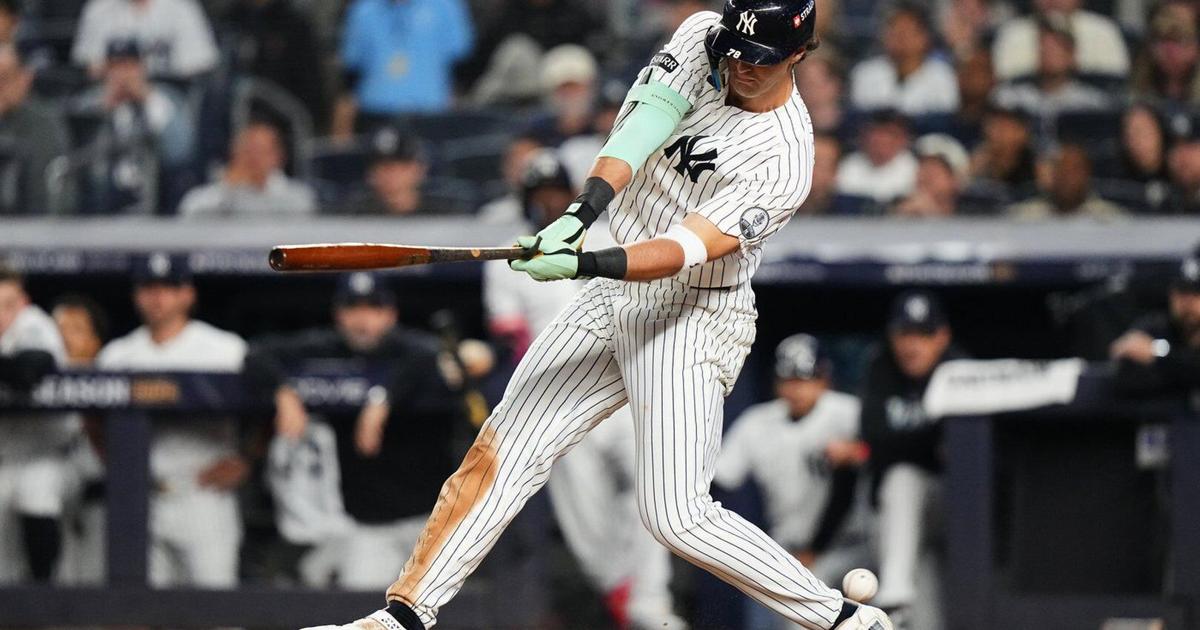
Toronto Star
· collected 2026-10-12 · by Ronald Blum The Associated Press
In the postseason debut of the Automated Ball-Strike System (ABS), batters have been more successful in challenges, with a 59% success rate compared to 54% during the regular season. Teams are also challenging calls more frequently overall, averaging 4.8 challenges per game versus 4.3 during the regular season. The article highlights specific examples of teams and players who had high rates of successful challenges, emphasizing strategic considerations like saving challenges for critical moments later in games.
Written locally by qwen2.5:14b on 2026-10-12,
using this article's own text rather than the other coverage of the
same event (that is the story summary below).
Story summary
During the postseason debut of the Automated Ball-Strike System (ABS), batters have been more successful in challenges than during the regular season, with 59% success compared to 54%. In total, 71 out of 121 challenges were won by teams across the 25 games played in the Wild Card Series and Division Series. This includes an improvement for batters specifically, who won 29 out of 51 challenges this postseason from a regular-season rate of 49%. Additionally, teams are challenging more frequently overall in the playoffs, averaging 4.8 challenges per game, up from 4.3 during the regular season. This increased utilization suggests that while catchers still maintain a high success rate with 60% (42 out of 70), batters are also becoming more assertive and successful in their challenges, potentially altering strategic approaches to ABS use.
Written for “Baseball Challenges Increasing” on 2026-10-12,
grounded in this article and the 0 other(s) covering the same event.
Batters have been more successful on robot umpire challenges in the playoffs than during the regular season, and teams are utilizing the Automated Ball-Strike System more overall in its postseason debut.
asserted
teams → utilize → debut
Seventy-one of 121 overall challenges under ABS prevailed during the 25 games of the Wild Card Series and Division Series.
asserted
challenges → prevail → Series
That includes an improvement for batters to 57% (29 of 51) from 49%.
asserted
That → include → %
It’s not that hitters are necessarily being more conservative, either.
asserted
hitters → ’ → ?
Teams are challenging more in the postseason overall, with 4.8 per game compared to 4.3 during the regular season.
asserted
Teams → challenge → season
Teams exhaust their challenges when they are unsuccessful twice in the game, so the more times they win appeals the more opportunities they can have.
asserted
they → exhaust → opportunities
Catchers had won 60% (42 of 70) of challenges, just above their 59% during the regular season.
asserted
Catchers → win → season
Pitchers were 1 for 1, with Tampa Bay’s Griffin Jax making the only challenge.
asserted
Jax → make → challenge
“Maybe a little more cautious,” Rays catcher Liam Hicks said.
asserted
Hicks → say → ?
“It’s more just in the back of your head, you’re like, you want to save these for a meaningful situation.
asserted
you → ’ → situation
Among the four teams advancing to the League Championship Series, Cleveland won 7 of 13, Milwaukee 8 of 16, Tampa Bay 3 of 5 (with no tries by batters) and the Dodgers 2 of 6.
asserted
Dodgers → advance → 6
Atlanta had the most challenges, winning 14 of 22 over seven games and the White Sox 12 of 31.
asserted
Sox → have → 31
Among batters, Milwaukee’s Jake Bauers and Atlanta’s Austin Riley won both their challenges.
asserted
Bauers → win → challenges
Munetaka Murakami of the Chicago White Sox went 0 for 2 and the Braves’ Ronald Acuña Jr. had the most challenges, splitting on four.
asserted
Jr. → go → four
“It’s a new muscle for these guys to instinctually have, so I think if this is the route we go for the next few years guys will get more and more instinctually,” New York Yankees manager Aaron Boone said.
asserted
Boone → ’ → years
Some guys have struggled with it.”
asserted
guys → struggle → it
Braves catcher Sean Murphy was 4 for 4 and the Phillies’ J.T. Realmuto won 5 of 6.
asserted
Realmuto → win → 6
Realmuto had the first game-ending ABS challenge in postseason history in Game 2 of Philadelphia’s Wild Card Series against Atlanta.
asserted
Realmuto → have → Atlanta
Kyle Teel of the White Sox had the most challenges, winning 8 of 12, and the Guardians’ Patrick Bailey was second, succeeding on just 4 of 10.
asserted
Bailey → have → 10
The Brewers’ William Contreras won 4 of 9.
asserted
Contreras → win → 9
“Some of the first-inning challenges, 1-0 counts, it’s like, let’s let those go and save them for when we might need them later in the game,” Realmuto said.
uncertain
Realmuto → ’ → game
“With that being said, we have a lot of guys that know the strike zone really well.”
asserted
that → say → zone
Just 17 challenges were defined by Statcast as in high-leverage situations, and eight of 17 were successful.
“You’ve got to be careful trying to script it or dictate the perfect situation for it.
asserted
You → define → it
You don’t know what it’s going to lead to, even if it’s early,” Atlanta manager Walt Weiss said.
asserted
Weiss → know → what
“My message has always been, the lower the leverage, the more certainty you need to have and vice versa.
asserted
you → need → certainty
Among 25 umpires who worked the first two rounds, four had perfect rates and were confirmed on all challenges.
asserted
four → work → challenges
Tripp Gibson, James Hoye, Nic Lentz and Gabe Morales all were challenged twice and confirmed twice.
asserted
Gibson → challenge → ?
Lance Barrett was overturned on 10 of 12 challenges during Milwaukee’s Game 2 Division Series victory over San Diego and Adam Beck on seven of 10 during Philadelphia’s Game 2 Wild Card Series win over Atlanta.
asserted
Barrett → overturn → Atlanta
Roberto Ortiz was overturned on 6 of 9, Jansen Visconti and Todd Tichenor on 4 of 7, Shane Livensparger on 5 of 6, Cory Blaser and Chris Guccione on 4 of 5 and Alex MacKay on 4 of 6.
___
asserted
Ortiz → overturn → 6
 The Aporia