The grief Emily Taylor had been holding at bay finally washed over her in January.
asserted
Taylor → hold → January
It had been four months since a lone gunman shot Charlie Kirk in the throat at Utah Valley University, killing the conservative commentator in minutes.
asserted
gunman → shoot → minutes
That winter “was the first time in my entire life that I didn’t go back to school,” said the former English professor, holding back tears.
asserted
professor → go → tears
Taylor had resigned from her tenured position in December to save her tiny college in South Carolina from a political witch hunt in which lawmakers threatened to pull her school’s funding because she’d written a brief essay acknowledging that before his violent death, Kirk had employed violent rhetoric.
asserted
Kirk → resign → rhetoric
“I was a first-generation college student, and I worked my entire life to be an English professor,” said Taylor, who has spent most of the last year scrolling bare job boards since leaving Presbyterian College.
asserted
who → work → College
“The chances that I ever have tenure-track employment again doesn’t seem likely.”
asserted
I → seem → employment
She’s one of the more than 600 people who had their lives upended in the wake of Kirk’s assassination, when a free-speech crackdown led by the Trump administration sought revenge on anyone critical of the deceased far-right podcaster.
asserted
crackdown → ’ → podcaster
A year after Kirk’s killing, The Intercept spoke with five people who lost their jobs in the wake of the Kirk firings and four attorneys representing seven more clients, most of whom are still not back at work after finding themselves ensnared in one of the biggest mass censorship campaigns in modern history.
asserted
themselves → speak → history
Their stories represent a chilling sea change that has become a hallmark of the second Trump administration: an inversion of the assumption that, for the most part, Americans are protected by their right to free speech.
asserted
Americans → represent → speech
They illustrate what happens when an overzealous online army propped up by some of the most powerful people in the country are given free rein to terrorize their perceived political enemies.
asserted
army → illustrate → enemies
“One of the things that was really interesting and very destructive about the post-Charlie Kirk purge was how coordinated and manufactured the outrage was,” said Allen Chaney, who serves as legal director of the ACLU of South Carolina and represents both Taylor and fired Clemson University professor Joshua Bregy, who was reinstated in January.
asserted
who → say → January
While the U.S. has suffered speech crackdowns before — like in the McCarthy and post-9/11 eras — the saturation of online life seems made to supercharge a backlash.
asserted
saturation → suffer → backlash
“I don’t think any other era has had the tools to do the sort of purging that is available now,” said Chaney.
asserted
Chaney → think → purging
Taylor was waiting for her children to finish their piano lessons on September 10, 2025, when she heard the news that Kirk was shot while answering a question about a conspiracy theory he perpetuated suggesting there is an epidemic of transgender mass shooters.
asserted
he → wait → shooters
“Counting or not counting gang violence?” were his final words.
asserted
Counting → count → violence
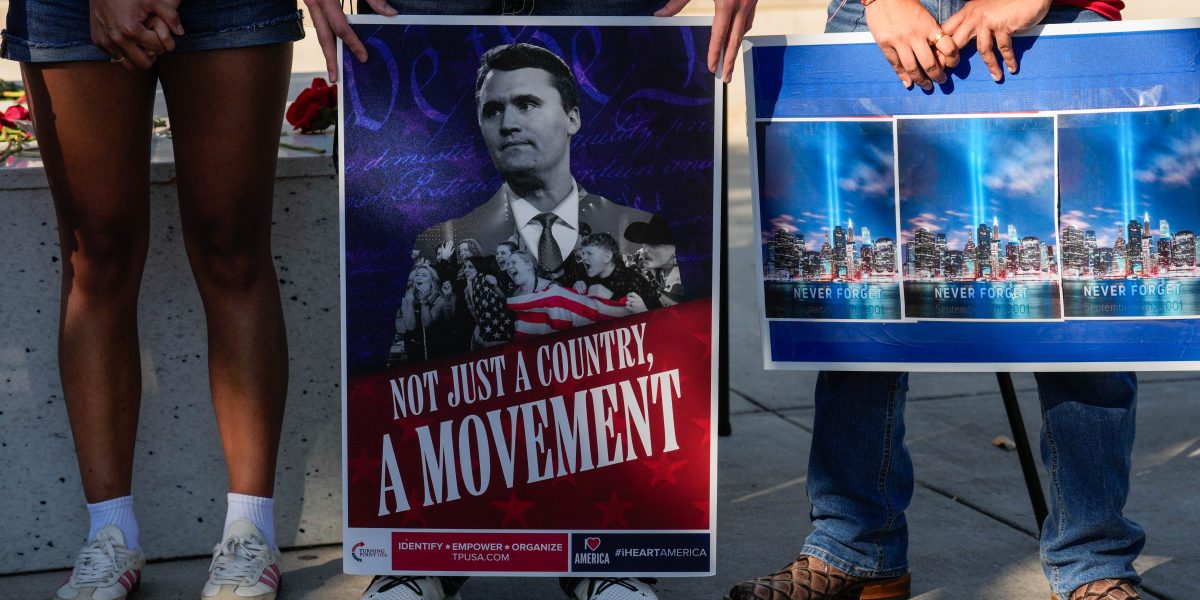
President Donald Trump called Kirk “our greatest evangelist for American liberty” to a packed crowd at his memorial service.
asserted
Trump → call → service
And Vice President JD Vance said anyone perceived to be “celebrating” Kirk’s murder should be targeted.
asserted
anyone → say → murder
“When you see someone celebrating Charlie’s murder, call them out,” Vance said on his podcast.
asserted
Vance → see → podcast
Online troll accounts and politicians alike took up the cause to begin targeting anyone even mildly critical of Kirk.
asserted
accounts → take → Kirk
Lists circulated naming people accused of “celebrating” Kirk’s death, making it easy to harass people en masse.
asserted
it → circulate → masse
Less sophisticated users could simply search the name “Charlie Kirk” on X and harass anyone who made a negative post.
uncertain
who → search → post
Big accounts like Libs of TikTok doxed critics and amplified hate to their millions of followers.
asserted
accounts → doxe → followers
Jimmy Kimmel’s show was temporarily pulled off the air by ABC, after the host quipped in a monologue that MAGA was weaponizing Kirk’s death.
asserted
MAGA → pull → death
Washington Post opinion columnist Karen Attiah was fired for pointing out Kirk’s deep anti-Blackness.
asserted
Attiah → fire → Blackness
Kimmel is back on, and Attiah was recently reinstated by an arbitrator.
asserted
Attiah → reinstate → arbitrator
But most of the people who were targeted, doxed, fired, and harassed were not public figures.
asserted
who → target → people
“My clients really were not high-income earners; we’re talking about support staff,” said Melody Fowler-Green, an attorney who represents several people fired in the wake of the Kirk killing.
asserted
who → talk → killing
“A lot of the people who lost their jobs, they are people who are not in positions of power.”
asserted
who → lose → power
Kimberly Hunt, then a 31-year-old HR professional from Scottsdale Arizona, made a short video questioning the assertion that Kirk “didn’t deserve” his fate.
asserted
Kirk → make → fate
“He said a few deaths a year are worth it if it meant preserving our God-given right to bear arms.
asserted
it → say → arms
He actively fought against women’s rights.
asserted
He → fight → rights
He’s openly Islamophobic, and he spreads anti-trans rhetoric,” Hunt said into the camera, accurately capturing Kirk’s rhetoric.
asserted
Hunt → ’ → rhetoric
“How many hate crimes happened because of him?
asserted
crimes → happen → him
Spare me the empathy because he didn’t believe in it either.”
asserted
he → spare → it
She said she had sympathy for his children but not his wife, Erika, who is now the CEO of his organization Turning Point USA.
asserted
who → say → organization
Hunt said she never listed her job on her social media, but internet sleuths found where she worked, and the phones began to ring off the hook.
asserted
phones → say → hook
When her boss asked her to meet, she knew the writing was on the wall.
asserted
writing → ask → wall
“He explained that I had put him in a tough position because there were so many phone calls coming into our business that it was disrupting their operations,” she recalled, “And that he had to let me go.”
asserted
me → explain → operations
The harassment didn’t stop.
asserted
harassment → stop → ?
Hunt said at one point she received a call from her local sheriff that she was said to be on a “hit list.”
asserted
she → say → list
…and 104 more, not listed.
 The Aporia