That is 0 articles you have read today.
The Aporia is free and carries no advertising, so readers are the only
thing paying for it. If you are getting this much out of it, a small
donation is what keeps it independent.
Daily limit reached
You have read 0 articles today.
That is more than the 15 a day The Aporia gives away,
and well past what it can carry on nothing. Your allowance resets at
midnight.
There is no advertising here and nothing about you is sold, so readers
are the only thing paying for it. If the site is worth this much of
your day, it is worth a few dollars.
Everything else stays open: the
maps, the
directory and
search do
not count against this, and neither does re-opening something you have
already read today.
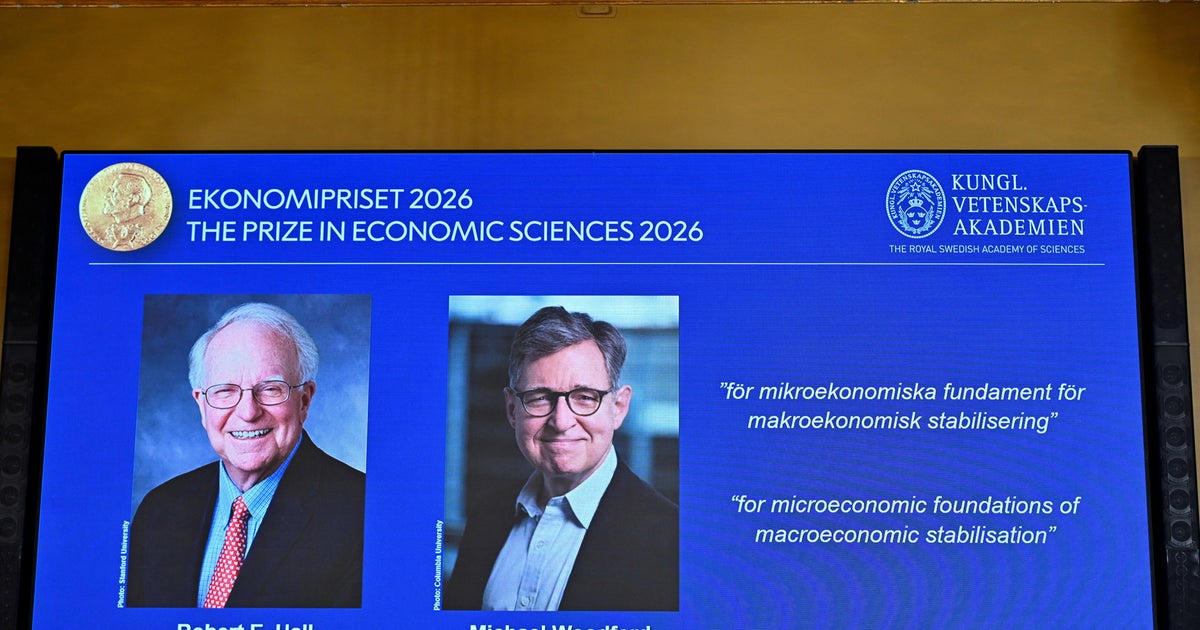
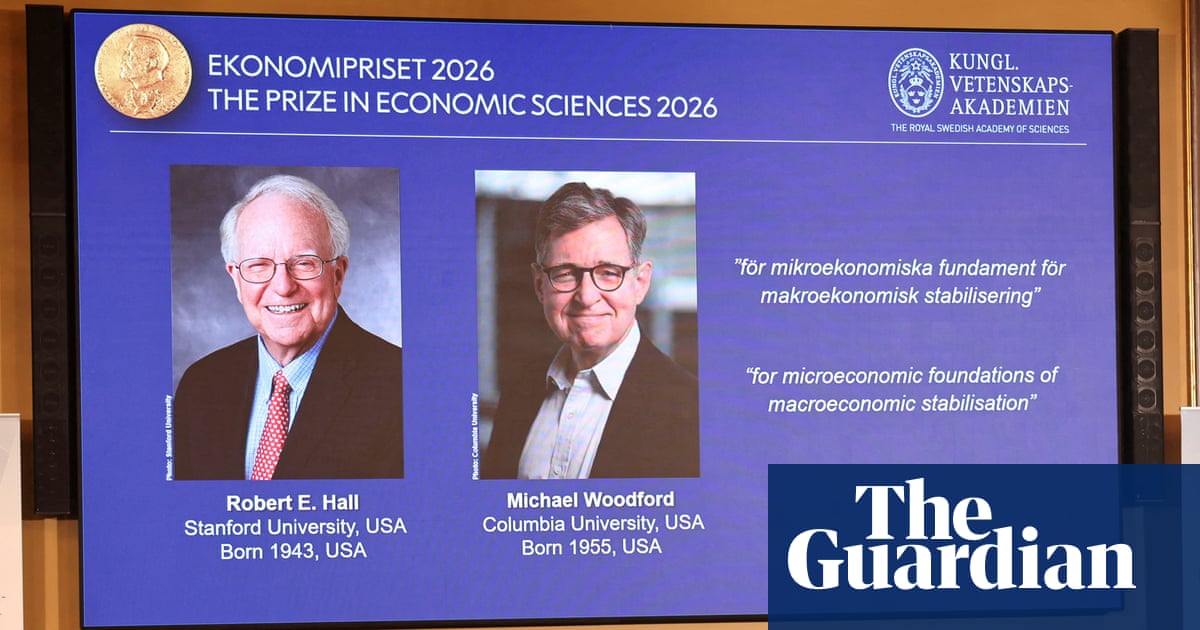
Robert Hall and Michael Woodford received the 2026 Nobel Prize in Economic Sciences for their work on macroeconomic models that help stabilize economic fluctuations through effective fiscal and monetary policies. Announced by the Royal Swedish Academy of Sciences, their research provides a theoretical foundation for central banks and governments to better manage shocks like energy crises or sudden changes in consumption. The prize includes a diploma, gold medal, and $1.2 million cheque.
Written locally by qwen2.5:14b on 2026-10-12,
using this article's own text rather than the other coverage of the
same event (that is the story summary below).
Story summary
On October 12, 2026, Robert Hall from Stanford University and Michael Woodford from Columbia University won the Nobel Prize in Economics in Stockholm, awarded by the Royal Swedish Academy of Sciences. They were recognized "for microeconomic foundations of macroeconomic stabilisation," contributing new models that enhance the effectiveness of fiscal and monetary policies to mitigate economic shocks. The prize, worth 12 million Swedish crowns ($1.2 million), is formally known as the Sveriges Riksbank Prize in Economic Sciences in Memory of Alfred Nobel. Their work has significantly improved policymakers' ability to manage economic fluctuations, such as those caused by energy crises or changes in consumer spending habits.
Written for “Nobel Economics Prize 2026” on 2026-10-12,
grounded in this article and the 8 other(s) covering the same event.
Why this leaning score
This article does not take a side on a contested political
question, so it has no leaning score. That is an
answer rather than a gap: a match report or a rescue can be warmly
or critically written without being left or right, and scoring it
anyway is how approval of a subject gets recorded as a political
position.
No political leaning scored for article 74034 · logged 2026-10-12
The 2026 Nobel Prize in Economic Sciences has been awarded to US academics Robert Hall and Michael Woodford for their work on how monetary and fiscal policy can help stabilise fluctuations in the economy, according to the Royal Swedish Academy of Sciences.
uncertain
policy → award → Sciences
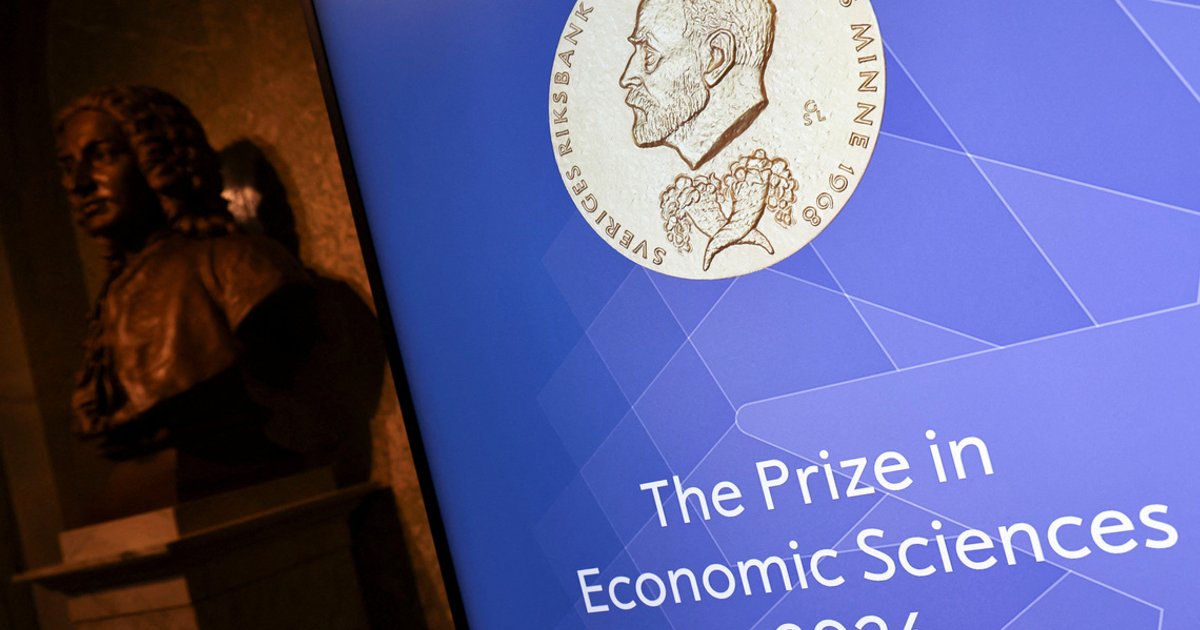
The winners of the prestigious award, formally known as the Sveriges Riksbank Prize in Economic Sciences in Memory of Alfred Nobel and the final prize to be given out this year, were announced on Monday.
asserted
winners → know → Monday
Recommended Stories
list of 4 items- list 1 of 4Canadian Anne Carson wins 2026 Nobel Prize in Literature
- list 2 of 4Who is Navi Pillay, winner of the 2026 Nobel Peace Prize?
- list 3 of 4US sanctions International Criminal Court in major escalation
- list 4 of 4Why is the US sanctioning the International Criminal Court?
asserted
US → win → Court
The two laureates developed new macroeconomic models that improve people’s ability to implement effective stabilisation policies, enabling fiscal and monetary policy measures that can reduce damaging swings in the economy.
asserted
that → develop → economy
“The laureates’ work has provided us with a stable theoretical foundation for the models that are now used by central banks and governments around the world,” John Hassler, chair of the Committee for the Prize in Economic Sciences, said in a statement.
asserted
Hassler → provide → statement
“With them, we are better equipped to deal with shocks in the economy, such as energy crises or sudden changes in how much households consume.
asserted
households → equip → much
During the oil crises in the 1970s, the existing Keynesian models used to determine when and how measures should be implemented to tackle recessions or other economic fluctuations stopped working.
asserted
measures → exist → recessions
Hall and Woodford then developed new tools to understand what policy responses could be the most effective.
uncertain
responses → develop → tools
“Rather than basing the models on statistical links between macroeconomic variables, such as inflation, production and consumption, they chose to build them on a microeconomic foundation,” the academy said.
asserted
academy → base → foundation
“This encompasses an understanding of how the total mass of individual households and businesses affect the economy through their actions.”
asserted
mass → encompass → actions
The economics prize, first awarded in 1969, is not part of the five original awards created in the 1895 will of industrialist and dynamite inventor Alfred Nobel, but was instead established by Sweden’s central bank.
asserted
prize → award → bank
Only three women have ever won, most recently Claudia Goldin in 2023 for her work on how gender has affected pay and employment over time in the US.
asserted
gender → win → US
Last year’s winners – Joel Mokyr, Philippe Aghion and Peter Howitt – won for their work on “creative destruction” and how new technology and production methods can boost growth and living standards.
asserted
technology → win → growth
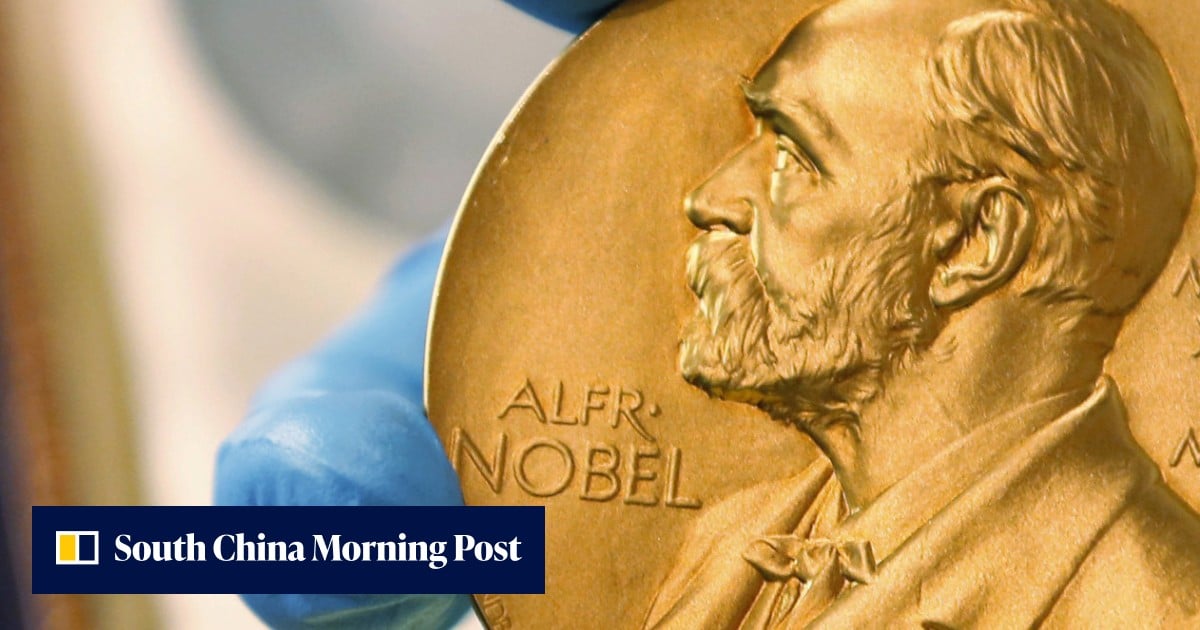
Like the other Nobel awards, the economics prize consists of a diploma, a gold medal, and a $1.2m cheque.
asserted
prize → consist → diploma
The Nobel prizes for medicine, physics, chemistry, literature and peace were announced last week, with South African jurist Navi Pillay and Canadian writer Anne Carson among the winners.
asserted
prizes → announce → winners
 The Aporia