That is 0 articles you have read today.
The Aporia is free and carries no advertising, so readers are the only
thing paying for it. If you are getting this much out of it, a small
donation is what keeps it independent.
Daily limit reached
You have read 0 articles today.
That is more than the 15 a day The Aporia gives away,
and well past what it can carry on nothing. Your allowance resets at
midnight.
There is no advertising here and nothing about you is sold, so readers
are the only thing paying for it. If the site is worth this much of
your day, it is worth a few dollars.
Everything else stays open: the
maps, the
directory and
search do
not count against this, and neither does re-opening something you have
already read today.
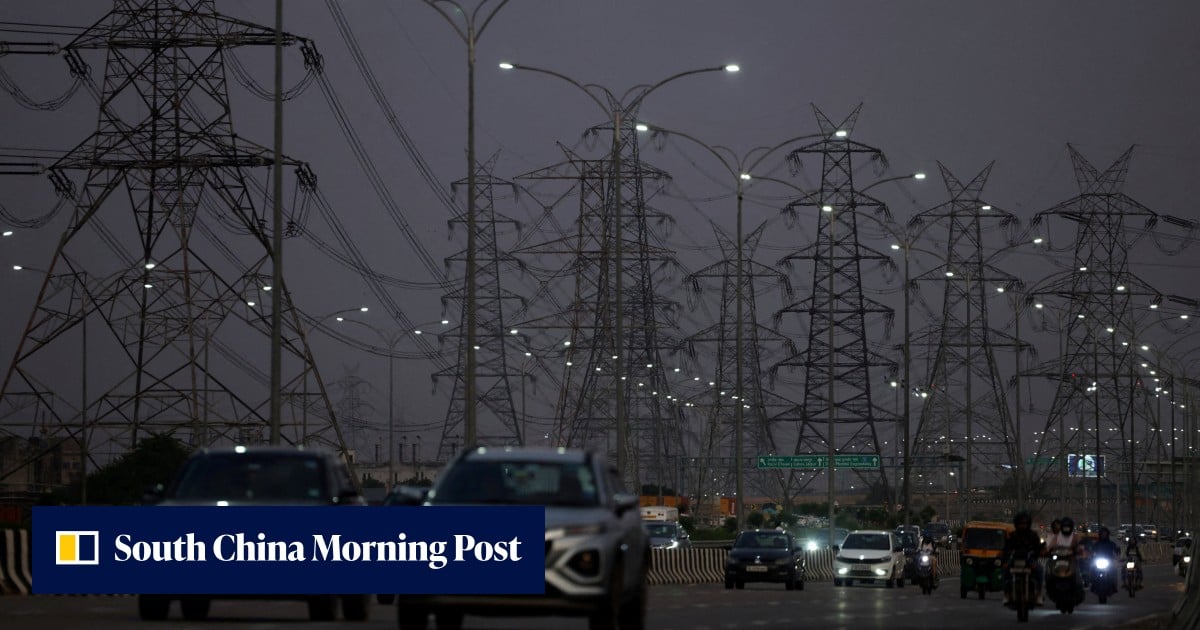
Indian homes and businesses are experiencing frequent blackouts due to a shortage of coal at power plants, which supply approximately two-thirds of the country's electricity. This crisis is exacerbated by the weakest monsoon in seven years, reducing hydropower production, and extreme heat increasing demand for air conditioning and farm irrigation. As a result, smaller factories, farmers, and households are suffering from extended periods without power as supply cannot meet the high energy demands.
Written locally by qwen2.5:14b on 2026-10-12,
using this article's own text rather than the other coverage of the
same event (that is the story summary below).
Story summary
India is experiencing widespread blackouts affecting homes, factories, and smelters due to a shortage of coal at power stations. Coal-fired plants generate about two-thirds of India’s electricity. The situation has been exacerbated by weaker-than-normal monsoon rains this year, reducing hydropower generation while higher temperatures increase demand for air conditioning and irrigation. As a result, the country's coal stockpiles have plummeted, leading to rolling blackouts across smaller factories, farms, and households as supply fails to meet soaring electricity demands.
Written for “Indian Energy Crisis” on 2026-10-12,
grounded in this article and the 0 other(s) covering the same event.
Why this leaning score
This article does not take a side on a contested political
question, so it has no leaning score. That is an
answer rather than a gap: a match report or a rescue can be warmly
or critically written without being left or right, and scoring it
anyway is how approval of a subject gets recorded as a political
position.
No political leaning scored for article 73612 · logged 2026-10-12
Indian homes, factories hit by hours of blackouts amid more demand for coal
Coal-fired power stations supply about two-thirds of India’s electricity.
asserted
homes → hit → electricity
Energy issues include extra hot weather increasing air-con use
Indian factories, smelters and households are being hit by blackouts and rising energy costs as the impact of plunging coal stockpiles at the country’s power stations ripples through the economy.
asserted
impact → include → economy
The weakest monsoon since 2015 has curbed hydropower output, while hotter-than-normal weather has buoyed demand for air conditioning and farm irrigation.
asserted
weather → curb → conditioning
That has seen coal-fired power stations, which supply about two-thirds of India’s electricity, rapidly burn through their inventories.
asserted
which → see → inventories
Smaller factories, farmers and households are facing power cuts as demand outweighs supply on the grid.
asserted
demand → face → grid
 The Aporia