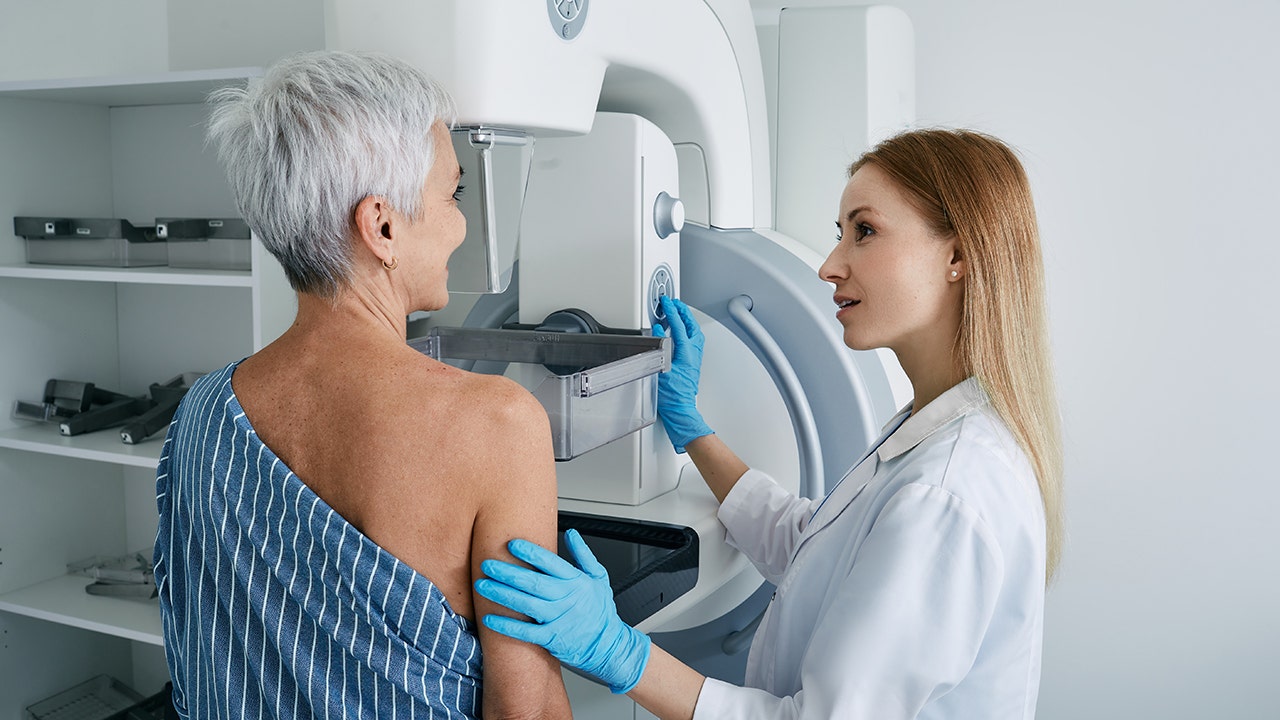
Researchers at NYU Langone Health and Perlmutter Cancer Center have developed an AI tool that predicts a woman's risk of developing breast cancer up to five years in advance by analyzing changes in 3D mammogram images over time. The study, published in the American Journal of Roentgenology, used more than 313,000 mammograms from over 161,000 women. Connie Lehman, a breast imaging specialist at Harvard Medical School, emphasized that AI can identify risk factors not apparent through traditional methods, potentially leading to personalized screening recommendations and early intervention discussions with healthcare providers without requiring additional radiation exposure.
Written locally by qwen2.5:14b on 2026-10-11,
using this article's own text rather than the other coverage of the
same event (that is the story summary below).
Story summary
Researchers at NYU Langone Health and its Perlmutter Cancer Center have developed an AI model to predict a woman's risk of developing breast cancer within five years. This tool analyzes multiple years of 3D mammograms, tracking changes in breast tissue over time instead of relying on just the latest scan. The AI was trained using more than 313,000 mammograms from over 161,000 women, according to a study published in the American Journal of Roentgenology.
Connie Lehman, a breast imaging specialist and professor at Harvard Medical School who wasn't involved with this research, highlighted that AI could help identify high-risk patients whose increased risk might otherwise be overlooked. She noted that many women diagnosed with breast cancer often express surprise due to having no family history of the disease.
Written for “Breast Cancer Prediction Clues” on 2026-10-11,
grounded in this article and the 0 other(s) covering the same event.
An artificial intelligence (AI) tool could help doctors predict a woman's risk of developing breast cancer years in advance, according to new research.
uncertain
doctors → help → research
In a new study, published in the American Journal of Roentgenology, researchers at NYU Langone Health and its Perlmutter Cancer Center tested an AI model designed to estimate a woman's risk of developing breast cancer within five years.
asserted
researchers → publish → years
The tool looks at several years of a woman's 3D mammograms to track changes in breast tissue over time, rather than looking only at the latest scan, according to the researchers.
uncertain
tool → look → researchers
The model was developed using more than 313,000 mammograms from more than 161,000 women, according to the study.
Connie Lehman, a Massachusetts-based breast imaging specialist and professor of radiology at Harvard Medical School who was not involved in the study, told Fox News Digital that AI could help identify women whose increased risk might otherwise go unnoticed.
uncertain
risk → develop → women
"For decades, as a doctor and breast imaging specialist, I have cared for women who were shocked by a breast cancer diagnosis," Lehman said.
asserted
Lehman → care → diagnosis
"Again and again, I heard: 'How can this be?
asserted
this → hear → ?
No one in my family has had breast cancer.'
asserted
one → have → cancer
"
Traditional risk assessments can consider factors such as family history and genetic mutations, while AI can look for additional clues within a woman's breast tissue, according to Lehman.
uncertain
AI → consider → Lehman
"A mammogram can tell us more than whether cancer is visible today — it can also provide information about a woman's risk of developing cancer in the years ahead," she said.
asserted
she → tell → years
That information could eventually help doctors tailor breast cancer screening to a woman's individual risk, Lehman said.
uncertain
Lehman → help → risk
Women identified as being at increased risk could discuss additional screening, such as MRI, with their health care providers, while women at average risk may continue with routine mammograms, according to Lehman.
uncertain
women → identify → Lehman
The technology could also analyze mammograms a woman has already had, meaning the added risk information would not require another imaging exam or additional radiation, she noted.
uncertain
she → analyze → exam
Lehman cautioned that an AI risk score is not a cancer diagnosis and cannot predict with certainty whether a woman will develop the disease.
asserted
woman → caution → disease
"A higher score can prompt a conversation with your health care provider about additional screening and risk-reduction options," she said.
asserted
she → prompt → screening
"A lower score does not eliminate risk or replace regular mammography."
The NYU model remains a research tool and is not FDA-authorized for clinical use, according to Lehman.
uncertain
model → eliminate → Lehman
The researchers also noted that more testing is needed.
asserted
testing → note → ?
The study used mammograms from NYU Langone hospitals and imaging equipment from one manufacturer.
asserted
study → use → manufacturer
The team plans to test the model using data from other medical centers and different 3D mammography systems, according to NYU Langone.
uncertain
team → plan → Langone
Fox News Digital reached out to the researchers for comment.
asserted
Digital → reach → comment
 The Aporia