In the seven years since, she has tried therapy, group programs and medication.
asserted
she → try → therapy
But this year, after she raised concerns with her doctor about a medication’s side effects, she was offered something new: a structured exercise program designed to treat depression.
asserted
she → raise → depression
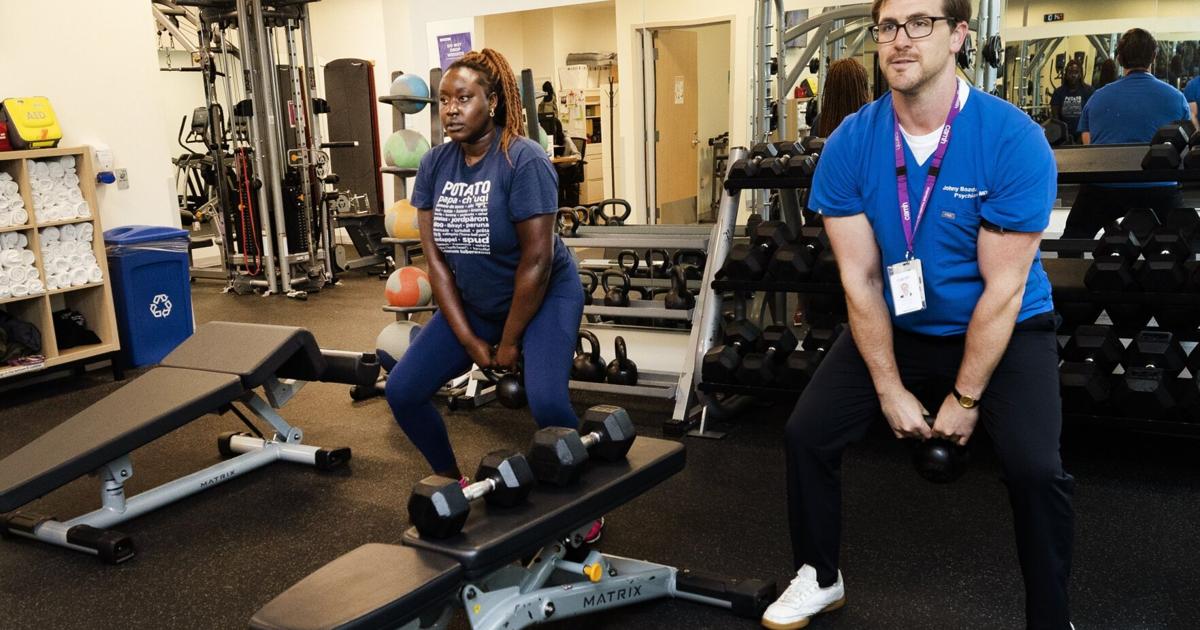
Vander Zaag, who’s in her mid-30s, was part of an exercise pilot program at Toronto’s Centre for Addiction and Mental Health (CAMH).
asserted
who → ’ → Addiction
Knowing that everyone in the twice-weekly class was facing struggles of their own helped her show up.
asserted
her → know → own
“We all got better together,” she said.
asserted
she → get → ?
“If you ever deal with depression, the feeling of loneliness and isolation is such a big part of it.”
asserted
feeling → deal → it
Vander Zaag left the 10-week program feeling better and returned to the boxing classes she used to enjoy before work stress and depression got in the way.
asserted
stress → leave → way
Months later, those benefits have persisted: “I feel a bit more confident that I can do hard things.”
asserted
I → persist → things
But experts say it shouldn’t be.
asserted
it → say → ?
Canadian clinical guidelines have listed supervised exercise as a recommended therapy for mild to moderate depression since 2016, based on substantial research showing it can reduce symptoms as effectively as medication or talk therapy.
asserted
it → list → medication
And yet a decade after exercise was added to the guidelines from the Canadian Network for Mood and Anxiety Treatments (CANMAT), it’s prescribed so rarely that the British Journal of Sports Medicine published an editorial last year asking: Could not prescribing exercise for depression be psychiatric malpractice?
uncertain
prescribing → add → depression
Toronto studies see some success in treating pain, depression.
asserted
studies → see → pain
But ketamine’s potential is still poorly understood.
asserted
potential → understand → ?
Toronto studies see some success in treating pain, depression.
asserted
studies → see → pain
But ketamine’s potential is still poorly understood.
asserted
potential → understand → ?
Treating exercise as real medicine, he said, requires changes to how physicians are trained, links between health-care providers and community programs, and funding to make it accessible and affordable.
asserted
it → treat → providers
“If we don’t hesitate to prescribe a pill, why do we hesitate with exercise?” he said.
asserted
he → hesitate → exercise
Doctors leave medical school and residency with little to no formal training on how to discuss or prescribe exercise as a treatment for depression, Fabiano said.
asserted
Fabiano → leave → depression
Research shows whether a patient is even told about it as an option depends largely on their own doctor’s physical activity and confidence in talking about it, he said.
asserted
he → show → it
“It wouldn’t be acceptable for your psychiatrist to say, ‘I don’t know how to prescribe this medication, sorry, ask someone else.’” Fabiano said.
asserted
Fabiano → say → someone
“But for some reason, it’s acceptable when we have a measure like exercise — that has shown equivalent effects in mild and moderate cases — to not be prescribed.”
asserted
that → ’ → cases
How the CAMH pilot works
The CAMH pilot offers what experts say is needed: a supervised program, led by clinicians, at no cost to patients.
asserted
experts → work → patients
It’s run by Dr. Johny Bozdarov, a CAMH staff psychiatrist and assistant professor of psychiatry at the University of Toronto, and it’s the first program of this kind to be offered at a mental health hospital in Canada.
asserted
it → run → Canada
The hour-long sessions, led by Bozdarov and a personal trainer, wouldn’t look out of place in most gyms: a warm-up, strength training, aerobic circuits and a cool-down.
asserted
sessions → lead → gyms
But the environment is extra-supportive for people who may not have exercised in years or are experiencing medication side effects, and the end goal is different.
uncertain
goal → exercise → effects
“It’s not about fitness, gaining muscles, or losing weight,” said Bozdarov, who has a background in boxing.
asserted
who → ’ → boxing
In the first week, Vander Zaag was lifting five to 10 pounds, focusing on form.
asserted
Zaag → lift → form
By the end, she was lifting 30 to 35.
asserted
she → lift → 35
“It felt good to progress,” she said.
asserted
she → feel → ?
Others did, too: some who began the program working out from a chair were standing by the end, and people who were uncomfortable doing lunges were “going as low as they can,” she said.
asserted
she → do → lunges
The key is a supervised program, said Bozdarov.
asserted
Bozdarov → say → ?
“Everyone knows we should exercise.
asserted
we → know → ?
It’s good for you.
asserted
It → ’ → you
Now imagine being depressed, imagine having a medical history with pains and body aches, and now you’re on medications that maybe cause you to move less.
asserted
you → imagine → medications
It’s just a lot harder.”
asserted
It → ’ → ?
The first group started in January.
asserted
group → start → January
Despite winter weather and rush-hour traffic, attendance at the Queen Street West facility held at 88 per cent — the average participant missed just over two of 20 sessions.
asserted
participant → hold → sessions
That’s a rate unlikely to be matched by the general population, Bozdarov said, “and they were experiencing depression in the dead of winter.”
asserted
they → ’ → winter
Maybe that showcases that we’re on to something here,” he said.
asserted
he → showcase → something
The exercise pilot, which has funding for two years, starts sessions for its third group this fall.
asserted
which → have → group
…and 16 more, not listed.
 The Aporia