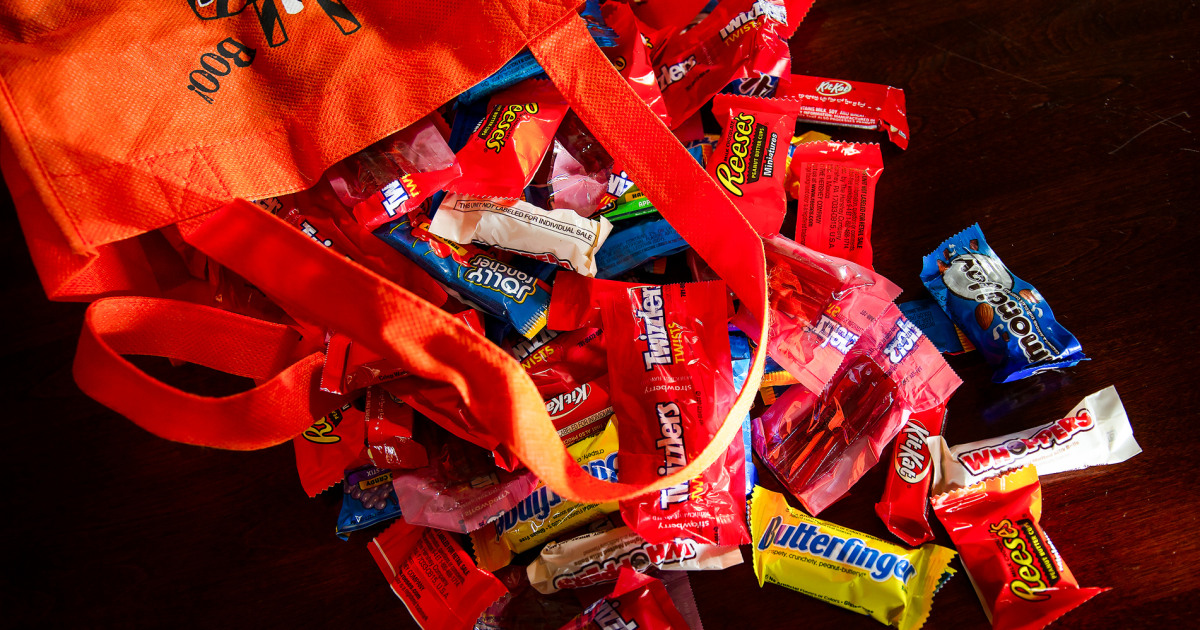
Rising costs are causing many Americans to cut back on expenses, but they remain committed to purchasing Halloween candy despite price hikes. According to the Bureau of Labor Statistics, chewing gum and candy prices increased by 8.1% over the past year, with chocolate candies seeing a more significant jump of 15.5%. Despite economic pressures, consumers like Abby Mynatt are still planning to spend around $50 on Halloween treats. Industry experts attribute the rise in chocolate prices partly to cocoa supply issues and recent tariffs, which have contributed to higher costs for manufacturers and consumers alike. The National Retail Federation predicts that Americans will spend a total of $13.5 billion on Halloween this year, with 96% of shoppers expecting to buy sweets.
Written locally by qwen2.5:14b on 2026-10-11,
using this article's own text rather than the other coverage of the
same event (that is the story summary below).
This Halloween, the fright isn’t just at the haunted house.
asserted
fright → haunt → house
Rising prices for everything from groceries to gas are driving many consumers to cut back.
asserted
prices → rise → consumers
“I’m walking to save a little bit of money,” said Lakisha Reardon, a legal assistant.
asserted
Reardon → walk → money
“I’m bringing in my own lunch.”
asserted
I → bring → lunch
Reardon said she has especially seen her electric bill spike this year.
asserted
bill → say → ?
She said she is paying an extra $150 every month.
asserted
she → say → 150
“I’m ready to invest in candles,” she said.
asserted
she → ’m → candles
But one thing she won’t give up?
asserted
she → give → thing
Average prices for chewing gum and candy have soared 8.1% over the last year, according to the Bureau of Labor Statistics.
uncertain
prices → soar → Statistics
Despite the higher prices, Americans are still buying treats.
asserted
Americans → buy → treats
“I remember being a little kid and being super excited when I would get Reese’s Cups,” said Abby Mynatt, a college student who lives in Knoxville, Tennessee.
asserted
who → remember → Knoxville
“I want to give that to some other children.”
asserted
I → want → children
Mynatt, 21, said she usually spends around $50 for Halloween candy.
asserted
she → say → candy
She is expecting to shell out a bit more money this year despite financial pressures.
asserted
She → expect → pressures
“I certainly think there are a little more tense things with my budget right now,” she said.
asserted
she → think → budget
“But I still think that certain things, even just little pleasures, are still worth it.”
asserted
things → think → ?
The price of non-chocolate candy items has averaged $3.31 this year, up 1.8% from last year, according to PwC.
uncertain
price → average → PwC.
But Halloween chocolate prices have jumped 15.5%, to an average of $5.67 per package.
asserted
prices → jump → package
Industry experts attribute the rise in chocolate prices partly to a cocoa shock over the last couple years.
asserted
experts → attribute → years
Extreme weather in key cocoa-producing countries like Côte d’Ivoire and Ghana sent global cocoa prices soaring — they quadrupled from January 2023 to January 2025, according to data from the International Monetary Fund.
uncertain
they → produce → Fund
“Because chocolate makers buy cocoa months, sometimes up to two years ahead, shoppers are paying for that spike now,” said Ali Furman, PwC’s Consumer Markets Industry leader.
asserted
Furman → buy → spike
“Cocoa prices have since fallen by about half, but lower costs take time to reach the shelf and won’t show up on shelves this Halloween season.”
asserted
costs → fall → shelves
The market research firm NIQ has seen a more muted increase in prices, with chocolate overall up 9.4% from a year ago but Halloween-specific chocolate just up 1.7%.
asserted
firm → see → chocolate
Analysts say tariffs this year aren’t helping, either.
asserted
tariffs → say → ?
In July, the U.S. imposed tariffs of 10% to 12.5% on 60 trade partners.
asserted
U.S. → impose → partners
“Chocolate comes from elsewhere, so tariffs being added onto it have certainly increased costs that manufacturers are feeling as well,” said Chris Costagli, the leader of food and non-alcoholic beverage insights at NIQ.
asserted
Costagli → come → NIQ
Still, the National Retail Federation projects that Halloween spending will soar to $13.5 billion this season, with 96% of Halloween shoppers expecting to buy sweets.
asserted
% → project → sweets
It’s part of a broader trend this year of consumers leaning into little luxuries like makeup and movie tickets as an antidote for economic gloom.
asserted
consumers → ’ → gloom
A lot of that gloom stems from concerns about inflation and the rising cost of living.
asserted
lot → stem → living
Consumer prices have jumped 3.4% over the last year in large part due to rising energy costs, according to data from the Bureau of Labor Statistics.
uncertain
prices → jump → Statistics
With wages up just 3% over the same period, paychecks aren’t keeping up with prices.
asserted
paychecks → keep → prices
It has led many people to forgo bigger purchases and cut back in small ways every day.
asserted
It → lead → ways
Leonard Smith is planning to buy Halloween candy this year, but says he may cut back.
“I don’t want to spend that much money because I need money for other things besides candy,” said Smith, 36, who lives in Delaware.
uncertain
who → plan → Delaware
But he has a strategy to save: Smith buys candy after Halloween when many stores slash prices.
asserted
stores → have → prices
Ari Monahan, a nanny who describes herself as “like a Disney adult, but for Halloween,” said she may get candy that’s a little less expensive, but she still wants to treat the kids in her New York City neighborhood.
uncertain
she → describe → neighborhood
“I want to be the good house,” she said.
asserted
she → want → ?
“There’s not that many kids in my area, so I want to give them a little prize for coming.”
asserted
I → ’ → prize
Monahan, 30, also buys little treats for herself.
asserted
Monahan → buy → herself
“Dark chocolate, a lot of coffees, anything pumpkin spice,” she said.
asserted
she → say → coffees
“If it makes me smile and I have a little money, I’ll pay for it because everything is so grim right now,” she added.
asserted
she → make → it
…and 11 more, not listed.
 The Aporia