Babies born to anaemic mothers have smaller brains, study finds

The Guardian · collected 2026-09-09 · by Kat Lay, Global health correspondent
Read the original at The Guardian ↗

Summary

A study by researchers from King's College London and the University of Cape Town found that babies born to mothers with mild anaemia have smaller brains, particularly in areas related to movement, learning, and emotion regulation. The research involved over 300 mothers and their babies in Cape Town, who were scanned multiple times between three months and two years old. On average, the total brain volume of babies born to anaemic mothers was 4% lower than those born to non-anaemic mothers. By age 24 months, the gap between the groups had widened, with a 6% smaller corpus callosum in the group whose mothers had been anaemic.
Written by the local model on 2026-09-09, using this article's own text rather than the other coverage of the same event (that is the story summary below).

Signals How these are calculated →

Claims extracted
22
claim-shaped sentences
Uncertain
18%
4 of 22 hedged
Leaning
not political
takes no side on a contested political question
Publisher trust
93.5
red-flag proxy, not a credibility rating
Outlets on this story
1
Health
Narrative spread
1
articles carrying this framing
Analyzed 2026-09-09 · how these are computed

AI analysis (generated at analysis time, not now)

Story summary

A study conducted by researchers from King's College London and the University of Cape Town has found that babies born to mothers with anaemia have smaller brains, particularly in areas linked to movement, learning, and emotion regulation. The study used portable MRI machines to scan the brains of over 300 infants between three months and two years old, and found that those born to anaemic mothers had a total brain volume 4% lower than their non-anaemic counterparts. This difference was observed in specific regions of the brain, including the putamen, caudate nucleus, and corpus callosum. The study's findings suggest that anaemia during pregnancy can have long-term effects on cognitive development, potentially leading to problems when children start school. Anaemia is a common condition, affecting more than a third of pregnant women worldwide, with highest rates in sub-Saharan Africa and south Asia. The researchers used portable MRI machines to scan the infants' brains, making it possible to detect these differences at an early age, as early as one year old.

Written for “Maternal Anaemia and Brain Development” on 2026-09-09, grounded in this article and the 0 other(s) covering the same event.
Why this leaning score
This article does not take a side on a contested political question, so it has no leaning score. That is an answer rather than a gap: a match report or a rescue can be warmly or critically written without being left or right, and scoring it anyway is how approval of a subject gets recorded as a political position.
No political leaning scored for article 7160 · logged 2026-09-09

Story

📰 Maternal Anaemia and Brain Development
Health · 1 article(s) covering the same event. This is the one the site leads with.

How this is being covered How these are calculated →

Article leaning vs. publisher reliability
Source leaning vs. consistency

Compared with similar articles

Nothing to compare against. No article is close enough to this one for the pipeline to have linked or judged the pair.

Publisher

The Guardian · 134 article(s) · 1 correction(s) detected
Running correction rate · 1 correction(s)
2026-09-05
Australia’s housing prices are trending down. See which suburbs have had the biggest falls

Who wrote this

Kat Lay
1 article(s) here · 1 carrying a prediction
🔮 Researchers said the differences, first detected at the age of one, could lead to cognitive problems when children started school.
The only article under this byline in the corpus.
Global health correspondent
1 article(s) here · 1 carrying a prediction
🔮 Researchers said the differences, first detected at the age of one, could lead to cognitive problems when children started school.
The only article under this byline in the corpus.

Topics

Cape Town King’s College London King’s Institute of Psychiatry, Psychology & Neuroscience South Africa the University of Cape Town

Subjects

Ringshaw PERSON · 4× South Africa GPE · 2× the University of Cape Town ORG · 2× Brain Communications ORG · 1× Cape Town GPE · 1× IoPPN ORG · 1× Jessica Ringshaw PERSON · 1× King’s College London ORG · 1× King’s Institute of Psychiatry, Psychology & Neuroscience ORG · 1× the World Health Organization ORG · 1×

Narrative

It compared images taken using the traditional “high-field” MRI machines with those taken by the portable “low-field” options, and found the latter were sensitive enough to detect the same differences in the brains of babies born to anaemic mothers. Steve Williams, professor of neuroimaging at King’s, said: “This study has proved that our novel technology can measure the impact of malnutrition on the developing brain, at scale, in some of the most challenging environments.
framing: assertive · carried by 1 article(s) · first seen 2026-09-09
🔮 Researchers said the differences, first detected at the age of one, could lead to cognitive problems when children started school.
2026-09-09 · The Guardian
Babies born to anaemic mothers have smaller brains, study finds · assertive framing

Claims (22 extracted, 4 hedged)

Babies born to mothers with anaemia have smaller brains, particularly in key regions linked to movement, learning and the regulation of emotion, according to a study. uncertain
Babies → bear → study
Researchers said the differences, first detected at the age of one, could lead to cognitive problems when children started school. uncertain
children → say → school
More than a third of pregnant women worldwide have anaemia – a condition typically caused by iron deficiency in which the number of red blood cells in the body is lower than normal. asserted
number → have → body
Symptoms include fatigue, shortness of breath and dizziness. asserted
Symptoms → include → breath
Researchers from King’s College London in the UK, and the University of Cape Town in South Africa, followed more than 300 mothers and their babies in Cape Town, scanning the brains of the infants several times between the ages of three months and two years. asserted
Researchers → follow → months
On average, the total brain volume of babies born to anaemic mothers was 4% lower than that of babies born to non-anaemic mothers – despite all the anaemic mothers being diagnosed only with a mild version of the condition. asserted
mothers → bear → condition
Differences were recorded in three specific regions of the brain: the putamen, caudate nucleus and corpus callosum. asserted
Differences → record → brain
“All three of these brain regions are implicated in key neuropsychological functions,” said Jessica Ringshaw, first author and researcher at King’s Institute of Psychiatry, Psychology & Neuroscience (IoPPN) and the University of Cape Town, citing processing speed, emotion regulation and executive function as examples. asserted
Ringshaw → implicate → examples
The gap between the groups of babies widened over the first two years of life – the corpus callosum, for instance, was about 4% smaller at 12 months in the group whose mothers had been anaemic but 6% by 24 months. asserted
mothers → widen → months
Earlier research in South Africa looking at toddlers and school-age children found comparable differences in brain volume. asserted
research → look → volume
“These aren’t children who are catching up, where the brain differences are disappearing over time,” said Ringshaw. asserted
Ringshaw → catch → time
“They are still there when the children are six years old and going to school, and when these things might then start translating into more noticeable cognitive difficulties. uncertain
things → go → difficulties
The findings offer a potential explanation for earlier studies showing that children born to mothers with anaemia scored less well on tests of development, she added. asserted
she → offer → development
The mothers with and without anaemia were otherwise very similar in terms of factors such as household income and food security, Ringshaw said, making her confident that maternal anaemia caused the differences the team observed. asserted
team → say → differences
The results reinforced the importance of tackling anaemia in women of reproductive age, Ringshaw said. asserted
Ringshaw → reinforce → age
“We should be screening for anaemia and iron deficiency, particularly during pregnancy,” she said, recommending the use of oral or even intravenous iron supplementation where appropriate. asserted
she → screen → supplementation
The causes of anaemia were complex and could include infectious diseases, she said, with the study finding higher rates of anaemia in women living with HIV, “so having our iron interventions, but also appropriate infection management in conjunction with that [is important]”. uncertain
study → include → that
While the World Health Organization lists reducing rates of anaemia as a priority, progress has stagnated over the past two decades. asserted
progress → reduce → decades
“Now more than ever, anaemia needs to be placed at the forefront of public health efforts if we are to ensure that children are not only surviving but thriving,” said Ringshaw. asserted
Ringshaw → need → efforts
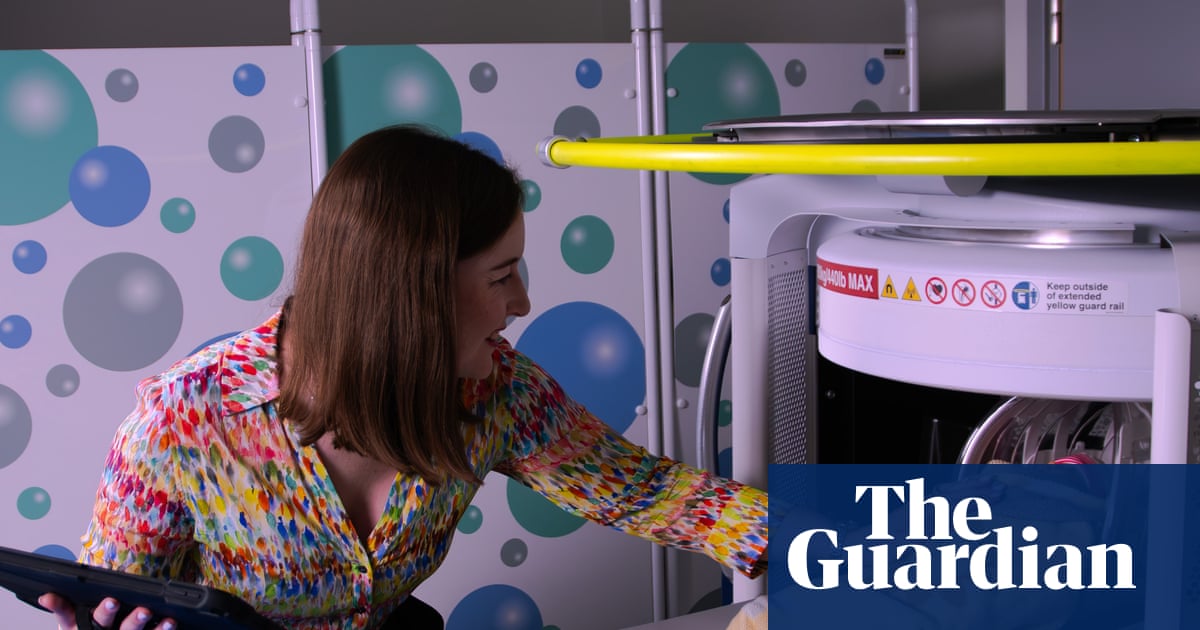
The research, published in the journal Brain Communications, used special new MRI scanners that are cheaper and more portable than the conventional machines used in hospitals. asserted
that → publish → hospitals
It compared images taken using the traditional “high-field” MRI machines with those taken by the portable “low-field” options, and found the latter were sensitive enough to detect the same differences in the brains of babies born to anaemic mothers. Steve Williams, professor of neuroimaging at King’s, said: “This study has proved that our novel technology can measure the impact of malnutrition on the developing brain, at scale, in some of the most challenging environments. asserted
technology → compare → environments
This will provide an early, sensitive assessment of planned interventions.” asserted
This → provide → interventions

💬 Give feedback
🕘 History 🎫 Support