That is 0 articles you have read today.
The Aporia is free and carries no advertising, so readers are the only
thing paying for it. If you are getting this much out of it, a small
donation is what keeps it independent.
Daily limit reached
You have read 0 articles today.
That is more than the 15 a day The Aporia gives away,
and well past what it can carry on nothing. Your allowance resets at
midnight.
There is no advertising here and nothing about you is sold, so readers
are the only thing paying for it. If the site is worth this much of
your day, it is worth a few dollars.
Everything else stays open: the
maps, the
directory and
search do
not count against this, and neither does re-opening something you have
already read today.
Pakistan contributes significantly to rising poverty levels in the Middle East, North Africa, and Afghanistan-Pakistan region, accounting for nearly half of those living in extreme poverty according to the World Bank. The article discusses how repeated crises such as the pandemic, floods, inflation, and economic instability have pushed millions into hardship with little chance to recover between disasters. Each crisis leads to long-term setbacks like depleted savings or children being withdrawn from school, making it difficult for families to bounce back even when economic conditions improve.
Written locally by qwen2.5:14b on 2026-10-11,
using this article's own text rather than the other coverage of the
same event (that is the story summary below).
Story summary
Pakistan accounts for nearly half of extreme poverty in the Middle East, North Africa, and the Afghanistan-Pakistan region, according to the World Bank. Millions of Pakistanis have faced ongoing crises such as the pandemic, deadly floods, soaring inflation, and economic uncertainty without much chance to recover between events. Each crisis deepens poverty by forcing families to deplete savings, sell livestock, borrow money for food, or withdraw children from school.
Even after prices stabilize and incomes improve, these losses are not easily reversed. For example, a farmer who has sold his animals or a small trader who has closed his business cannot quickly resume earning a livelihood. This explains why poverty can rise even as the broader economy recovers, with repeated crises accumulating damage that leaves vulnerable families less able to withstand further blows. Fresh dangers, such as potential conflicts involving Iran, are emerging and could exacerbate these issues further.
Written for “Poverty Issues” on 2026-10-11,
grounded in this article and the 0 other(s) covering the same event.
Why this leaning score
The article's own words the score was based on. Each is quoted
verbatim and was checked against the article text before being
stored, so you can find it in the original.
-
Pakistan’s contribution to rising poverty across the Middle East, North Africa and the Afghanistan-Pakistan region is troubling.
left frames poverty as a societal issue requiring collective action
-
The government must, therefore, go beyond providing relief after disaster strikes. It needs to identify families at greatest risk, strengthen early-warning and disaster-response systems, protect farming livelihoods and ensure that financial help reaches vulnerable households before they are forced into desperate choices.
left advocates for proactive government intervention in poverty reduction
-
Poverty reduction cannot succeed if every new crisis pushes people back into hardship. Pakistan must protect the fragile gains its poorest citizens manage to make.
left emphasizes the need for sustained and comprehensive government support
Leaning: leans strongly left for article 71525 (high confidence, 3 verified quotes) · logged 2026-10-11
PAKISTAN’S contribution to rising poverty across the Middle East, North Africa and the Afghanistan-Pakistan region is troubling.
asserted
contribution → rise → East
According to the World Bank, the country accounts for nearly half of the region’s people living in extreme poverty.
uncertain
country → accord → poverty
Ours is a story of repeated hardship.
asserted
Ours → repeat → hardship
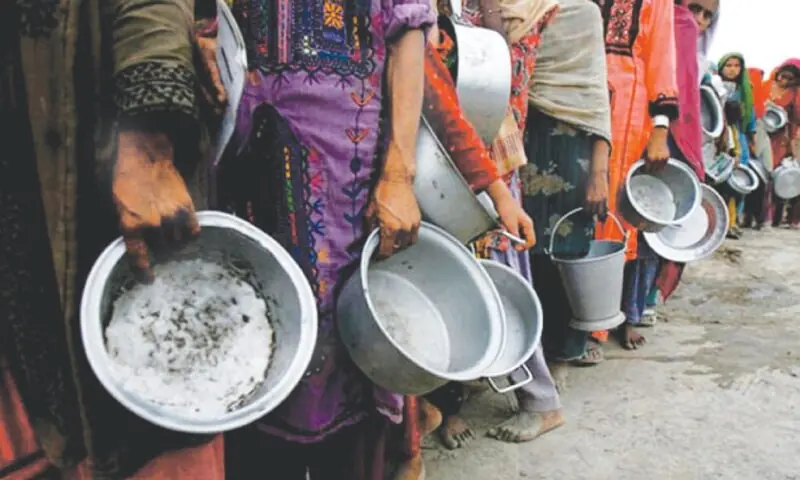
Millions of Pakistanis have endured the pandemic, deadly floods, soaring inflation, and years of economic uncertainty, often with little opportunity to recover before the next crisis arrives.
asserted
crisis → endure → opportunity
For a poor household, each setback leaves lasting damage.
asserted
setback → leave → damage
Families may exhaust their savings, sell livestock, borrow money to buy food, or withdraw children from school to save expenses.
uncertain
Families → exhaust → expenses
Even when prices stabilise and incomes improve, the losses are not easily reversed.
asserted
losses → stabilise → ?
A farmer who has sold his animals or a small trader who has closed his business cannot simply resume earning a livelihood.
asserted
who → sell → livelihood
This helps explain why poverty can continue to rise even as the wider economy shows signs of recovery.
asserted
economy → help → recovery
The damage caused by successive crises has accumulated, leaving vulnerable families with fewer resources to withstand another blow.
asserted
damage → cause → blow
Fresh dangers are emerging.
asserted
dangers → emerge → ?
The World Bank has warned that the conflict involving Iran could push up fuel and commodity prices, weaken remittances and increase borrowing costs.
uncertain
conflict → warn → costs
Adverse weather could also drive up food prices and hurt agricultural livelihoods.
uncertain
weather → drive → livelihoods
For households still struggling with the effects of earlier shocks, another spell of inflation could prove devastating.
uncertain
spell → struggle → inflation
The government must, therefore, go beyond providing relief after disaster strikes.
asserted
disaster → go → relief
It needs to identify families at greatest risk, strengthen early-warning and disaster-response systems, protect farming livelihoods and ensure that financial help reaches vulnerable households before they are forced into desperate choices.
asserted
they → need → choices
Keeping children in school and preventing families from losing their means of earning a living must also be priorities.
asserted
Keeping → keep → living
Poverty reduction cannot succeed if every new crisis pushes people back into hardship.
asserted
crisis → succeed → hardship
Pakistan must protect the fragile gains its poorest citizens manage to make.
asserted
citizens → protect → gains
 The Aporia