October 10, 2026

Read the original at Letters from an American ↗
Letters from an American · collected 2026-10-11 · by Heather Cox Richardson commentary

Quick Summary

Former President Donald Trump openly supported Russian President Vladimir Putin by criticizing Ukrainian President Volodymyr Zelensky for prolonging the war and blaming him for high diesel prices, despite Russia's invasion of Ukraine. When questioned about lifting sanctions on Russian oil, which could fund Putin’s military operations in Ukraine, Trump accused Zelensky of deliberately causing problems rather than pursuing peace. The article highlights historical context, including the 1994 Budapest Memorandum and Putin’s efforts to control Ukrainian industries post-Soviet Union collapse, to frame Trump's current stance as a betrayal of U.S. commitments to protect Ukraine’s sovereignty.
Written locally by qwen2.5:14b on 2026-10-11, using this article's own text rather than the other coverage of the same event (that is the story summary below).

AI analysis runs on qwen2.5:14b, locally

Story summary

On October 9, Russian President Vladimir Putin spoke with US President Donald Trump, during which Putin claimed that recent drone attacks by Ukraine on Moscow and other cities during Russian parliamentary elections had disrupted the possibility of immediate peace talks resuming between Russia, Ukraine, and the US. According to Kremlin foreign policy aide Yuri Ushakov, Putin stressed that these strikes made it impossible for negotiations to restart promptly as Moscow had intended post-elections.

The next day, October 10, Trump publicly criticized Ukrainian President Volodymyr Zelensky, stating that he should step down because Ukraine needed a leader willing to make peace deals. Trump accused Zelensky of rejecting multiple chances to settle the war and contributing to global fuel shortages by attacking Russian oil refineries. This came after Trump announced a deal with Russia to import diesel, which was seen as controversial given ongoing conflicts in Ukraine and Iran.

Written for “Trump Putin Ukraine Calls” on 2026-10-11, grounded in this article and the 13 other(s) covering the same event.
Why this leaning score
The article's own words the score was based on. Each is quoted verbatim and was checked against the article text before being stored, so you can find it in the original.
Reading Leans strongly left (beta estimate) Confidence high
Leaning: leans strongly left for article 71518 (high confidence, 2 verified quotes) · logged 2026-10-11

Signals How these are calculated →

Claims extracted
65
claim-shaped sentences
Uncertain
8%
5 of 65 hedged
Leaning
Leans strongly left
expected in commentary, which argues a position · beta estimate
Correction & hedging signals
not measured
these signals count newsroom corrections; Commentary has none to count
Outlets on this story
14
Politics
Narrative spread
1
articles carrying this framing
Analyzed 2026-10-11 · how these are computed

Story

📰 Trump Putin Ukraine Calls
Politics · 14 article(s) covering the same event. See how they differ ↓

How this is being covered How these are calculated →

Article leaning vs. publisher reliability
Source leaning vs. consistency

Compared with similar articles

This article reads leans strongly left and hedges 8% of its claims. Each row says how that neighbour differs.
The Guardian
⚖️ Leans left further right than this 🔴 7% hedged 2 of 30 📰 publisher trust 60
“Both articles describe Donald Trump's announcement of a deal to buy Russian diesel on October 10, 2026, and Volodymyr Zelenskyy's negative reaction to it.”
South China Morning Post
⚖️ Leans strongly right further right than this 🔴 25% hedged 1 of 4 📰 publisher trust 67
“Both articles report on the same statement made by President Trump on October 10, 2026, criticizing Ukraine's president and calling for his replacement.”
ABC News (AU)
⚖️ leaning not scored 🔴 7% hedged 3 of 41 📰 publisher trust 61
“Both articles describe President Trump's comments on October 10, 2026, blaming Ukrainian President Zelenskyy for high diesel prices and criticizing him for not ending the war with Russia.”
NBC News
⚖️ leaning not scored 🔴 0% hedged 0 of 11 📰 publisher trust 95
“Both articles discuss President Trump's decision to ease sanctions on Russia and its implications for Russian oil/diesel fuel release, addressing the same day's developments.”
Euronews
⚖️ Leans right further right than this 🔴 0% hedged 0 of 10 📰 publisher trust 60
“Both articles describe President Donald Trump's announcement and subsequent comments regarding the import of Russian diesel fuel, directly referencing talks with Putin on the same day.”
NPR
⚖️ leaning not scored 🔴 11% hedged 4 of 37 📰 publisher trust 59
“Both articles discuss President Trump's decision to obtain diesel from Russia and ease pressure on Moscow, indicating the same specific political move regarding sanctions.”
Al Jazeera
⚖️ leaning not scored 🔴 0% hedged 0 of 2 📰 publisher trust 60
“Both articles discuss Donald Trump's diesel deal with Putin and its implications for funding Russia's war against Ukraine on the same date.”
Al Jazeera
⚖️ leaning not scored 🔴 14% hedged 9 of 66 📰 publisher trust 60
“Both articles discuss President Donald Trump's decision to release stocks of diesel fuel from Russia and address concerns related to sanctions and Russia's war on Ukraine.”
The Straits Times
⚖️ Centre further right than this 🔴 8% hedged 1 of 13 📰 publisher trust 59
“Both articles describe a phone call between Putin and Trump on October 10, 2026, with follow-up actions such as Russia supplying diesel to the US and temporary easing of sanctions.”
CBS News
⚖️ leaning not scored 🔴 0% hedged 0 of 2 📰 publisher trust 66
“Both articles discuss President Trump's announcement regarding a deal with Russia for diesel fuel release and his comments on sanctions, both clearly referencing the same press conference or statement on October 10, 2026.”

Publisher

Letters from an American · 73 article(s) · 0 correction(s) detected
No corrections detected for this publisher. That may mean careful reporting, or simply that nothing has been checked.

Who wrote this

Heather Cox Richardson
68 article(s) here · 1 carrying a prediction
🔮 So now, after more than a decade of pretending that he is not associated with Russia and that he would honor the U.S. national security position of support for Ukraine and our European allies, Trump is openly backing Russia’s president Vladimir Putin.
2026-10-11 · assertive framing · October 10, 2026
🔮 “Eric, I really wish you would stop papering all these things,” she wrote.
2026-10-10 · assertive framing · October 9, 2026
🔮 It was not clear, coming out of the Civil War, how Republicans would stand with regard to workers.
2026-10-09 · assertive framing · October 8, 2026
🔮 “I never have empty seats—Never have, and never will
2026-10-07 · assertive framing · October 6, 2026
🔮 It has claimed—without evidence—that the men on the boats were trafficking drugs, but such a charge would normally be handled by the legal system.
2026-10-06 · assertive framing · October 5, 2026
🔮 On Friday night, just before 11:00, Trump announced that his administration “will, immediately, begin sending ‘Checks’ of nearly $100 to over 20 MILLION wonderful Seniors to help pay for their Medicare Part B premiums, which we have already reduced by significant amounts.
2026-10-05 · assertive framing · October 4, 2026
🔮 The festival featured a “Freedom Village” where attendees could find ways to get involved in government, grassroots organizing, education, mutual aid, and social impact organizations.
2026-10-04 · assertive framing · October 3, 2026
🔮 But as the middle class continues to erode, who will be the targets tomorrow?” In 2015, in rhetoric mimicking the classic blueprint of rising dictators, Trump tapped into the anger of people who felt they had been dispossessed from their rightful place of importance in the country and tapped into the country’s racism and sexism as he told them to blame immigrants and Democratic politicians for their plight.
2026-10-03 · assertive framing · October 2, 2026
🔮 The State Department told Hudson that Trump is prioritizing the Western Hemisphere and that the money would be better spent in Latin America than where Congress wanted it.
2026-10-02 · assertive framing · October 1, 2026
🔮 In 2023 the Iraqi government called for complete U.S. withdrawal, and former President Joe Biden and former Iraqi Prime Minister Mohammed Shia al-Sudani agreed to a withdrawal plan in 2024, but Iraq allowed a small contingent of advisors to remain after that deadline when the collapse of Bashar Al-Assad’s regime in Syria led to concerns that the confusion in Syria would allow militant Islamic groups to regain a foothold there.
2026-10-01 · assertive framing · September 30, 2026
Also by Heather Cox Richardson
October 9, 2026
2026-10-10 · Letters from an American
Politics Chat, October 9, 2026
2026-10-10 · Letters from an American
October 8, 2026
2026-10-09 · Letters from an American
October 6, 2026
2026-10-07 · Letters from an American
Nothing else under this byline is closely related to this article, so these are simply their most recent.
All 68 articles by Heather Cox Richardson →

Topics

Russia Russian U.S. Ukraine the United States

Subjects

Ukraine GPE · 17× Russia GPE · 16× Trump PERSON · 8× Russian NORP · 6× Yanukovych PERSON · 6× Zelensky PERSON · 4× U.S. GPE · 3× Ukrainians NORP · 2× Vladimir Putin PERSON · 2× the United States GPE · 2×

Narrative

Special Counsel Robert Mueller’s 2019 report on Russian interference in the 2016 presidential election explained that Manafort and his partner, Russian operative Konstantin Kilimnik, in summer 2016 “discussed a plan to resolve the ongoing political problems in Ukraine by creating an autonomous republic in its more industrialized eastern region of Donbas, and having [Russian-backed Viktor] Yanukovych, the Ukrainian President ousted in 2014, elected to head that republic.”
framing: assertive · carried by 1 article(s) · first seen 2026-10-11
🔮 So now, after more than a decade of pretending that he is not associated with Russia and that he would honor the U.S. national security position of support for Ukraine and our European allies, Trump is openly backing Russia’s president Vladimir Putin.
2026-10-11 · Letters from an American
October 10, 2026 · assertive framing

Claims (65 extracted, 5 hedged)

So now, after more than a decade of pretending that he is not associated with Russia and that he would honor the U.S. national security position of support for Ukraine and our European allies, Trump is openly backing Russia’s president Vladimir Putin. asserted
Trump → pretend → president
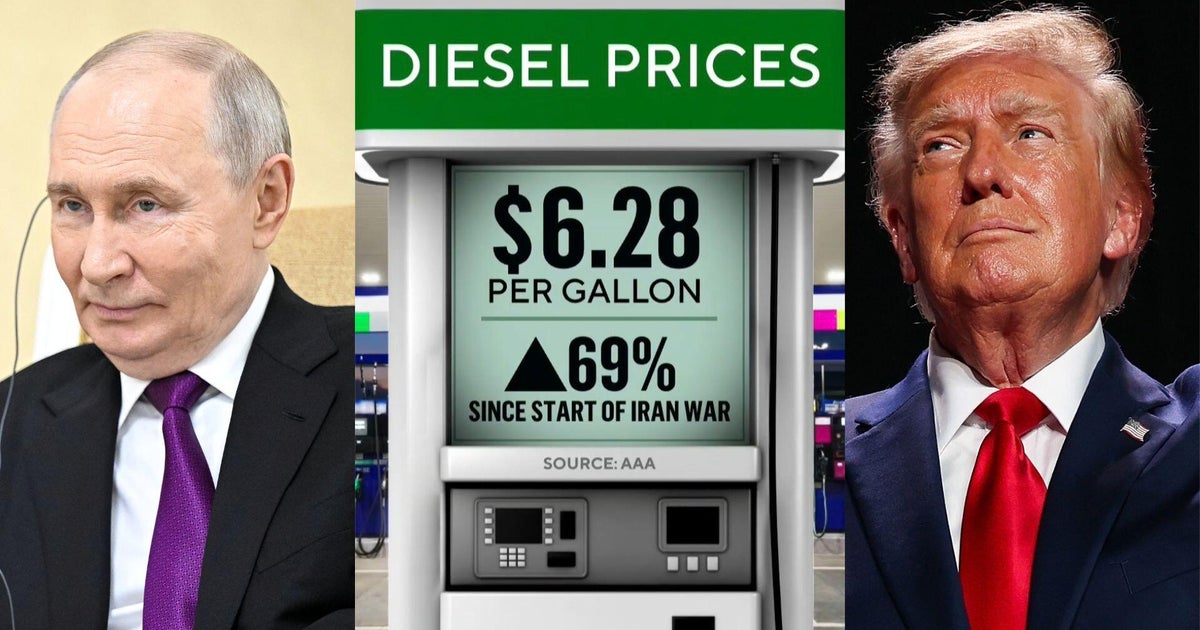
Asked today by a reporter about concerns that his dropping of sanctions against Russian oil yesterday would funnel money to Putin’s war on Ukraine, Trump blamed Ukraine president Volodymyr Zelensky for prolonging the war: “Zelensky could have settled this war many times. uncertain
Zelensky → ask → war
Many, many times,” Trump said, “And he chooses not to.” asserted
he → say → ?
Trump blamed Zelensky for the high cost of diesel because Ukrainian forces have targeted Russian oil refineries, although since Russian oil was sanctioned, the actual chokepoint for diesel prices is the Strait of Hormuz, largely closed because of Trump’s war on Iran. asserted
chokepoint → blame → Iran
Trump accused Zelensky of wanting “to make problems for the world. asserted
Trump → accuse → world
He wants to make problems for our farmers, our ranchers, with diesel fuel, because Russia supplies a large portion of the diesel fuel throughout the world.” asserted
Russia → want → world
Ukrainians have hit Russian oil refineries to stop the flow of money into Russia as it evades sanctions and sells oil through its so-called shadow fleet. asserted
it → hit → fleet
Russia, in contrast, has been striking civilian targets in violation of the laws of war. asserted
Russia → strike → war
Trump continued with a warning to Zelensky, saying “he’d better damn well stop.” asserted
he → continue → Zelensky
Ukraine continues to fight against Russia because Russia has invaded Ukraine and is trying to occupy Ukraine’s eastern industrial area in violation of the United Nations charter that vows no country will use threats or force against another’s territorial integrity. asserted
country → continue → integrity
Until Trump took office, the United States was the key guarantor of this principle. asserted
States → take → principle
The U.S. has stood against Russia’s 2014 and 2022 invasions of Ukraine not only because of the principle of territorial sovereignty, but also because of security guarantees the U.S., along with the United Kingdom and Russia, gave to Ukraine in 1994. asserted
U.S. → stand → 1994
After the Soviet Union crumbled in 1991, Ukraine had the third-largest stockpile of nuclear weapons in the world. asserted
Ukraine → crumble → world
In exchange for Ukraine’s giving up those weapons, the United States, the United Kingdom, and Russia agreed to secure Ukraine’s borders. asserted
States → give → borders
In the 1994 Budapest Memorandum on Security Assurances, they agreed they would not use military force or economic coercion against Ukraine. asserted
they → agree → Ukraine
Then Russian leader Vladimir Putin worked to bring Ukraine under the sway of the Russian oligarchs who rose to replace the region’s communist leaders, monopolizing formerly publicly held industries as those industries were privatized. asserted
industries → work → industries
American journalist Paul Klebnikov, the chief editor of Forbes in Russia, was murdered in 2004 after calling attention to what the oligarchs were doing. asserted
oligarchs → murder → what
In that same year, a Russian-backed politician, Viktor Yanukovych, appeared to be elected president of Ukraine. asserted
politician → back → Ukraine
But the election was so full of fraud—including the poisoning of a key rival who wanted to break ties with Russia and align Ukraine with Europe—the government voided the election and called for a do-over. asserted
government → include → over
Yanukovych needed a makeover fast, and for that he called on an American political consultant with a reputation for making unsavory characters palatable to the media: Paul Manafort. asserted
characters → need → media
For ten years, from 2004 to 2014, Manafort worked for Yanukovych and his party, trying to make what the U.S. State Department called a party of “mobsters and oligarchs” look legitimate. asserted
called → work → mobsters
He made a fortune thanks to his new friends. asserted
He → make → friends
In 2010, Yanukovych finally won the presidency on a platform of rejecting NATO, the North Atlantic Treaty Organization through which Europe joined together to oppose first the USSR, and then the rising threat of Russia. asserted
Europe → win → Russia
Immediately, Yanukovych turned Ukraine toward Russia. asserted
Yanukovych → turn → Russia
Then, in 2014, after months of popular protests, Ukrainians ousted Yanukovych from power in what is known as the Revolution of Dignity. asserted
what → oust → Dignity
He fled to Russia. asserted
He → flee → Russia
Shortly after Yanukovych’s ouster, Russia invaded Ukraine’s Crimea and annexed it, prompting the United States and the European Union to impose economic sanctions on Russia itself and also on specific Russian businesses and oligarchs, prohibiting them from doing business in the United States and in its territories. asserted
Russia → invade → territories
These sanctions hurt Russia and froze the assets of key Russian oligarchs, including Putin. asserted
sanctions → hurt → Putin
Now without his main source of income, Manafort owed about $17 million to allies of Yanukovych and Putin, especially Russian oligarch Oleg Deripaska. asserted
Manafort → owe → Yanukovych
By 2016, his longtime friend and business partner Roger Stone was advising the presidential campaign of Donald Trump, and Manafort was happy to step in to help. asserted
Manafort → advise → Trump
He did not take a salary. asserted
He → take → salary
He began as an advisor in March 2016 and became the campaign chairman in late June, after meeting on June 9 with Don Jr., Jared Kushner, and Russian operatives. asserted
He → begin → Jr.
It turned out that Russia was looking for a way to grab the Ukrainian land it wanted without continuing to fight. asserted
it → turn → land
Special Counsel Robert Mueller’s 2019 report on Russian interference in the 2016 presidential election explained that Manafort and his partner, Russian operative Konstantin Kilimnik, in summer 2016 “discussed a plan to resolve the ongoing political problems in Ukraine by creating an autonomous republic in its more industrialized eastern region of Donbas, and having [Russian-backed Viktor] Yanukovych, the Ukrainian President ousted in 2014, elected to head that republic.” asserted
Yanukovych → explain → republic
The Mueller Report continued: “That plan, Manafort later acknowledged, constituted a ‘backdoor’ means for Russia to control eastern Ukraine.” asserted
Russia → continue → Ukraine
The region that Putin wanted was the country’s industrial heartland. asserted
Putin → want → that
He was offering a “peace” plan that would carve off much of Ukraine and make it subservient to him. asserted
it → offer → him
This was the exact opposite of U.S. policy for a free and united Ukraine, and there was no chance that former secretary of state Hillary Clinton, who was running for the presidency against Trump, would stand for it. asserted
who → unite → it
But if Trump were elected, the equation changed. asserted
equation → elect → ?
According to the Republican-dominated Senate Intelligence Committee, Kilimnik wrote: “[a]ll that is required to start the process is a very minor ‘wink’ (or slight push) from D[onald] T[rump] saying ‘he wants peace in Ukraine and Donbass back in Ukraine’ and a decision to be a ‘special representative’ and manage this process.” uncertain
he → accord → process
…and 25 more, not listed.

💬Give feedback
🕘History 🎫Support