Claims extracted
32
sentences that state something as happening or true
Uncertain
16%
5 of 32 hedged
("reportedly", "may", "according to")
Leaning
not political
takes no side on a contested political question
Publisher signals
60/100
National Post's corrections and
hedging, across everything collected from it. Not a measure of accuracy.
Outlets on this story
1
Entertainment
Same framing elsewhere
1
articles that frame the event the way this one does
We independently select everything we recommend.
asserted
we → select → everything
Buying through us may earn us a commission, which supports our work.
uncertain
which → buy → work
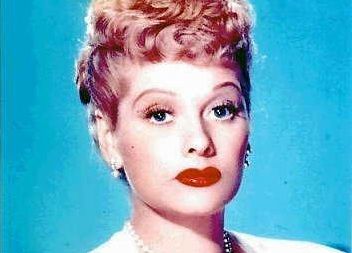
I Love Lucy may have featured one of the most famous redheads on television, but its star didn’t always love her hair.
uncertain
star → feature → hair
In fact, Lucille Ball is naturally a brunette and early in her career experimented with tresses in multiple hues.
asserted
Ball → experiment → hues
“My hair has always been the bane of my existence,” she told Rolling Stone in 1983, per People.
asserted
she → tell → People
“I have never known what to do with my hair.
asserted
I → know → hair
When Ball first arrived in Hollywood, she went by the name of Diane Belmont and found work as a model with blond hair.
asserted
she → arrive → hair
“You had to be a platinum blond then,” explained Ball.
asserted
Ball → have → ?
“They wanted you to be a platinum blond, so I was a platinum blond.”
asserted
I → want → ?
Ball later landed a gig as part of the Goldwyn Girls dance group, which was backed by film producer Samuel Goldwyn.
asserted
which → land → Goldwyn
She wore a long blond wig for the 1933 movie Roman Scandals, according to Parade.
uncertain
She → wear → Parade
It was only when Ball became a contract player for RKO Radio Pictures that she found her signature colour.
asserted
she → become → colour
Hair stylist Sydney Guilaroff was the first person to dye Ball’s hair flame red, according to People, and she reinvented Ball’s appearance for the 1943 musical Du Barry Was a Lady.
uncertain
Barry → dye → musical
Ball loved the look and decided to keep it.
asserted
Ball → love → it
“Red was a happy colour,” she explained to Rolling Stone.
asserted
she → explain → Stone
“It was good with my eyes, and it photographed well.
asserted
it → photograph → eyes
It turned out to be a successful colour.
asserted
It → turn → ?
With her star on the rise, Ball and husband Desi Arnaz starred on the CBS sitcom I Love Lucy.
asserted
I → star → Lucy
The show aired from 1951 to 1957 and was later reimagined as The Lucille Ball-Desi Arnaz Show (a.k.a. The Lucy-Desi Comedy Hour), which ran until 1960.
asserted
which → air → 1960
Ball went on to headline The Lucy Show, Here’s Lucy, and Life with Lucy.
asserted
Lucy → go → Lucy
In her interview with Rolling Stone, Ball reflected on her most famous character.
asserted
Ball → reflect → character
I could still be playing that part.
uncertain
I → play → part
Before I quit working in 1974, my ratings were high, and they wanted me to sign on for another five years of Here’s Lucy,” she revealed.
asserted
she → quit → Lucy
“I said, ‘That’s ridiculous.’
asserted
That → say → ?
The Lucy character is too old to run around like an idiot.
asserted
character → run → idiot
I’d probably still be playing Lucy if I’d signed that contract, but it was silly to keep playing the same thing.”
asserted
it → play → thing
Ball added that she nevertheless looked back on Lucy and her time in television fondly.
asserted
she → add → television
“But now I miss her,” she said.
asserted
she → miss → her
“I miss my arena.
asserted
I → miss → arena
I miss getting up and going to work every day.
asserted
I → miss → work
I have my charities, and I’m getting my house in order, but it’s not the same.”
asserted
it → have → order
Ball died in 1989 at age 77.
asserted
Ball → die → age
 The Aporia