Story summary
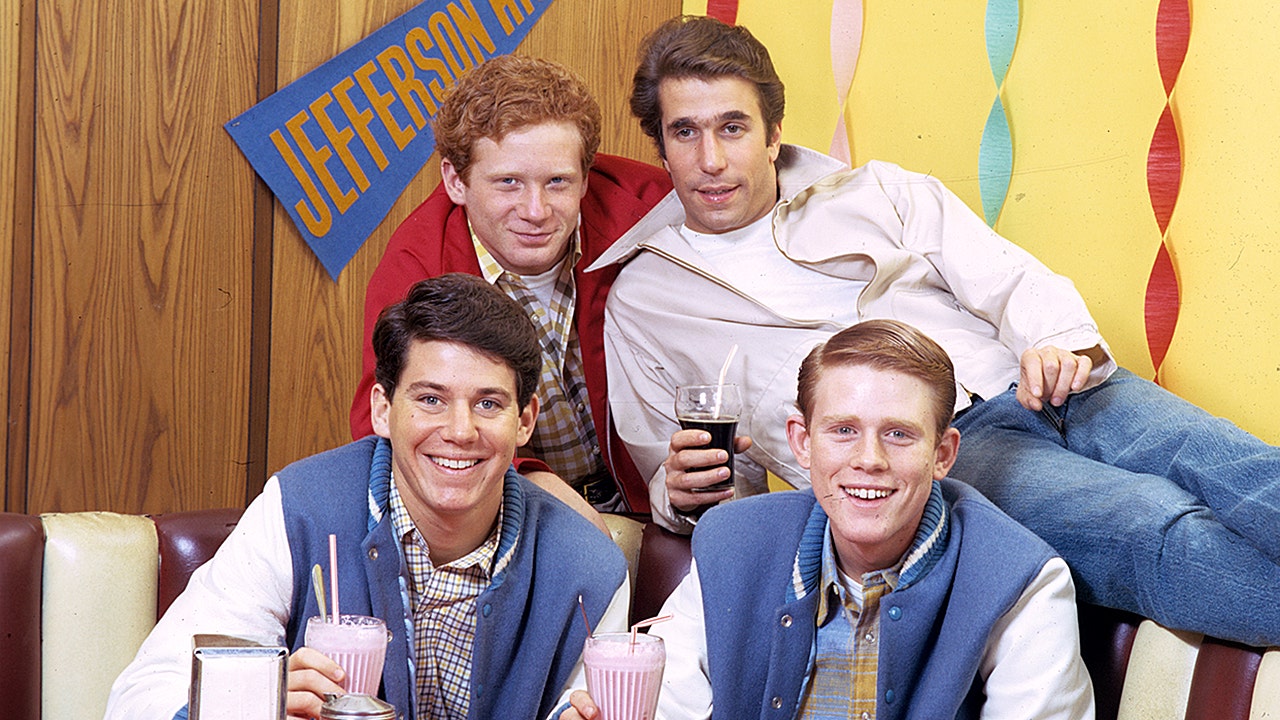
In a recent interview on the "Still Here Hollywood Podcast," Anson Williams, known for playing Potsie Weber in the popular sitcom "Happy Days," revealed that his acting career did not provide enough financial stability. During the show's run, he earned only around $900 to $1,200 per episode, which was insufficient for long-term earnings. Inspired by other actors who had successful music careers alongside their TV roles, such as David Cassidy and Barry Williams, Williams decided to start his own musical career. He approached the show's creator, Garry Marshall, with an idea to form a band that would perform at Arnold's, the burger joint featured in the series. Marshall gave him a chance after Williams demonstrated his singing ability to a bulldog. This side hustle helped Williams secure extra income and create a second career in music during a time when sitcom actors' salaries were much lower than today's standards.
Written for “Sitcom Actor Career Struggles” on 2026-10-11,
grounded in this article and the 0 other(s) covering the same event.
When playing Potsie Weber on "Happy Days" didn't pay well enough, actor Anson Williams came up with a side hustle: a music career.
asserted
Williams → play → hustle
In a recent interview on the "Still Here Hollywood Podcast," the 77-year-old actor revealed the singing sideline was simply a matter of 1970s economics.
asserted
sideline → reveal → economics
"On 'Happy Days' we didn't have the same salaries they have today.
asserted
they → have → salaries
Not even close," he said.
asserted
he → say → ?
Williams said that after speaking to "Partridge Family" star David Cassidy and Barry Williams, of "The Brady Bunch," about how much money they were making by taking their singing acts off the show, he thought to himself, "Wait a minute.
asserted
he → say → minute
I sing.
asserted
I → sing → ?
If I can convince Garry to put a band on the show, maybe I can get booked, and maybe I can get some extra income.
asserted
I → convince → income
After speaking with the show's creator, Garry Marshall, about the possibility of putting together a band to perform at Arnold's, the burger joint where Fonzie held court, the legendary director gave him a chance.
asserted
director → speak → chance
Marshall told him he would have to pick a song and sing it to a bulldog, telling him, "If you're good, I get laughs.
asserted
I → tell → laughs
If you're bad, I get laughs.
asserted
I → get → laughs
You're going to sing the bulldog."
asserted
You → go → bulldog
"So I do it and then the letters start coming in, and he goes 'The people like it.
asserted
people → do → it
The people like it.'
asserted
people → like → it
He goes, 'We'll do more.
asserted
We → go → more
You're in charge of it though,'" Williams recalled.
asserted
Williams → recall → it
"Then I got a major agent for that and started getting booked at state fairs for 10 years."
asserted
I → get → years
Williams added that his idea to sing on the show "started this whole career" that ended up being better for him monetarily, and was "just a whole other life experience."
asserted
that → add → him
After finding success as a musician as well as an actor, Williams said that Marshall approached him to express how proud he was of the actor, telling him, "You found an opportunity, and you're helping the show."
asserted
you → find → show
During an interview with Fox News Digital in March 2024, Williams revealed that while the show started as a hit with audiences, landing in the top 15 or 20, it slid down to 48th place at one point and was "on the verge of getting canceled."
asserted
it → reveal → verge
"And Garry Marshall and Jerry Paris, our director, thought, ‘What if we changed the whole tone? What if we make it a live audience sitcom?’" Williams recalled.
asserted
Williams → think → What
The next season — two and a half in — they switch it to live audience.
asserted
they → switch → audience
That's the year we went to No. 1 in the world.
asserted
we → go → world
That's when we exploded.
asserted
we → explode → ?
"
When the show became a huge success, Williams recalled Marshall advising him and his young co-stars to use their platforms for good, telling them to take the spotlight they found themselves in and "shine it on people that deserve it."
asserted
that → become → it
Following his time on "Happy Days," Williams pivoted to working more as a writer and director.
asserted
Williams → follow → writer
He directed episodes of "Beverly Hills, 90210," "Sabrina the Teenage Witch," "Lizzie McGuire," "Charmed," "The Secret Life of an American Teenager" and more.
asserted
He → direct → Teenager
Through all his successes, Williams never forgot the advice Marshall gave to him during his time on "Happy Days."
asserted
Marshall → forget → Days
"Ron Howard and I did a film called ‘Skyward,’ starring the first paraplegic ever in the history of television," he said.
asserted
he → do → television
"We did films like ‘No Greater Gift,’ which doubled organ donorship cards.
asserted
which → do → cards
Henry did so many social issue movies of the week and after-school school specials, and charities.
asserted
Henry → do → school
"
"We really, to this day, try to shine the light to make things better," he added.
asserted
he → try → light
 The Aporia