The Sydney Morning Herald
· collected 2026-10-10 · by Lauren Ironmonger
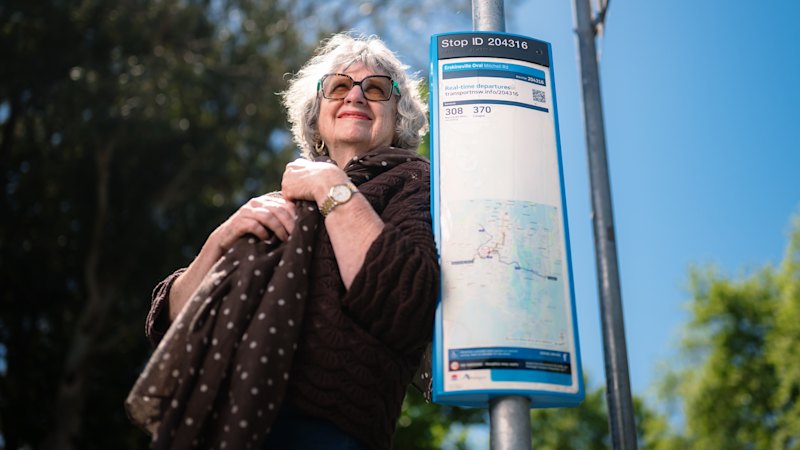
When Lyn Taylor moved to a restricted driver’s licence in July, limiting her to driving within 15 kilometres of her home in inner Sydney, her world shrunk.
asserted
world → move → Sydney
The 85-year-old lives alone, and made the decision after finding the route over the Harbour Bridge to visit family kept changing, and her reaction times were slowing.
asserted
times → live → family
“If you want to live a full life, it’s hard without proper transport,” she says.
asserted
she → want → transport
These days, Taylor uses her car for short trips to meet friends or go to the supermarket.
asserted
Taylor → use → supermarket
Though keen to use public transport, she thinks options are limited despite her central location – visiting her son, for example, requires multiple changes, and services have diminished recently.
asserted
services → use → changes
Meanwhile, she’s found booking taxis to be unreliable, and is hesitant to use ride-share platforms like Uber (the app has introduced certain features for seniors like discounted rides and larger text).
asserted
app → find → rides
“I don’t think they [society] look[s] after elderly people”, she says.
asserted
she → think → people
She’d like to attend meetings run by her local MP, for example, but since they’re held at night, without nearby parking, she doesn’t feel comfortable.
asserted
she → like → parking
“You can’t involve yourself in anything without some form of safe transport,” says Taylor.
asserted
Taylor → involve → transport
A widower and only child, most of her relatives and friends have died, leaving her with few options for lifts.
asserted
most → die → lifts
Still, she is a fan of Access Sydney, a community transport service that has introduced her to new people.
asserted
that → introduce → people
In 2025, there were 795,619 Australian drivers over 80 (about 4 per cent of licence holders), compared to 460,273 a decade ago – a figure which will continue to grow with an ageing population.
asserted
which → be → population
Getting older doesn’t mean you have to stop driving, or that it becomes unsafe, but ageing, and the physical and cognitive changes that come with it, can affect things.
asserted
that → get → things
While there is no age limit for driving in Australia, licensing requirements for older adults vary by state and territory.
asserted
requirements → be → state
An analysis of a decade’s worth of motor insurance claims by AAMI (2014 to 2023) found drivers over 65 were most likely to be involved in an accident, representing 26 per cent of claims.
uncertain
drivers → find → claims
From 2014 to 2024, the fatality rate for those over 75 decreased 22 per cent – though remained the most overrepresented age group, on par with 17- to 25-year-olds.
asserted
rate → decrease → olds
Professor Kaarin Anstey, director of UNSW’s Ageing Futures Institute, has researched predictors of safe driving and risk.
“There are many visual and cognitive factors working together to enable safe driving, and some of those have normal age-related declines,” she says.
asserted
she → research → declines
These include motion perception, visual acuity, contrast sensitivity and reaction times.
asserted
These → include → perception
Older adults can also have difficulty adjusting their vehicles for safe driving.
asserted
adults → have → driving
Australians with dementia cannot drive on an unconditional license, but may apply for a conditional one, though they will eventually need to stop driving completely.
uncertain
they → drive → one
Older Australians with dementia or mild cognitive impairment want more support from healthcare professionals – not just family – when it comes to this transition, a new qualitative study from Flinders University found.
asserted
study → want → University
Speaking with 12 individuals aged 65 and over, researchers identified four key areas often lacking in the driving cessation process: the importance of early and ongoing conversations; a desire for information, options and guidance; clear and compassionate advice when recommending stopping driving; and support to adjust to life without driving.
asserted
researchers → speak → life
Claire Spargo, a PhD student who led the research, will use the findings “to develop an evidence-based clinical pathway” to better support healthcare professionals and patients navigate this period.
Fitness-to-drive assessments tend to be conducted by GPs (alongside memory clinics for those with dementia), who Spargo says can feel uncomfortable broaching the topic given its impact on patients’ independence and identity.
In July, the National Transport Commission announced a review into these assessments, amid calls for national consistency and evidence-based tools to support healthcare professionals in making tough decisions.
asserted
Commission → lead → decisions
The RACGP’s Professor Dimity Pond says she has lost patients after recommending they stop driving.
asserted
they → say → driving
She tries to broach the topic early, but it isn’t always easy.
asserted
it → try → topic
“We see people in their 80s about 16 times a year as GPs, so every few months I’ll introduce it into the conversation, and talk about reducing kilometres or not driving to Queensland for their holidays, so it’s a gradual thing rather than a shock,” she says.
asserted
she → see → holidays
“The more this is normalised and discussed as a part of a life stage, the easier it is for people to move through that transition,” agrees Anstey.
asserted
Anstey → normalise → transition
More older Australians living alone, caring for relatives or with adult children who have young kids, makes stopping driving more difficult, says Pond.
asserted
Pond → live → kids
Pond would like to see subsidised access to costly on-road assessments by occupational therapists, which are better predictors of driving safety.
asserted
which → like → safety
For Spargo, the findings highlight the need for funding for services to support seniors after they stop driving – both emotionally, as participants reported loneliness and isolation, and practically, in terms of alternative transport and community services that help keep them connected.
asserted
that → highlight → them
Seventy-three-year-old Anne Field loves to drive – her red, manual Toyota Yaris taking her around her south Sydney and for road trips further afield.
asserted
Yaris → love → trips
“I’ve always had the convenience of having the car.
asserted
I → have → car
I’m very independent – I hate having to ask anybody for anything,” she says.
asserted
she → ’m → anything
Field, a retired social sciences teacher and local councillor, lives an active life and is in good health.
asserted
Field → live → health
But living alone, she has thought ahead to a future in which she can no longer drive.
asserted
she → live → which
Field has a bus stop on her street, a local shuttle service and is close with neighbours who can help take her to medical appointments if needed.
asserted
who → have → appointments
While she has cataracts and her hearing is deteriorating, she sees specialists regularly to monitor her vision and hearing.
“You’ve got to be switched on to all of these as you get older.”
Preparing for life after driving
- Professor Kaarin Anstey says the decision to stop driving is highly individual, but it’s important for families and individuals to educate themselves about the process.
asserted
families → have → process
- Anstey and her team developed website Ageing Well on the Road which provides free, evidence-based information and resources for seniors.
asserted
which → develop → seniors
- Talk to your GP or trusted health professional and, if you have the means, consider working with a qualified occupational therapist who can assess driving on the road.
- Claire Stokes recommends thinking ahead – including about where you live, the availability of alternative transport and proximity of essential services like supermarkets and doctors.
asserted
you → talk → supermarkets
- Familiarise yourself with community transport services and government subsidies for public transport and ride-share services and taxis.
- Many community groups and private companies offer refresher driving courses for seniors.
asserted
groups → familiarise → seniors
 The Aporia