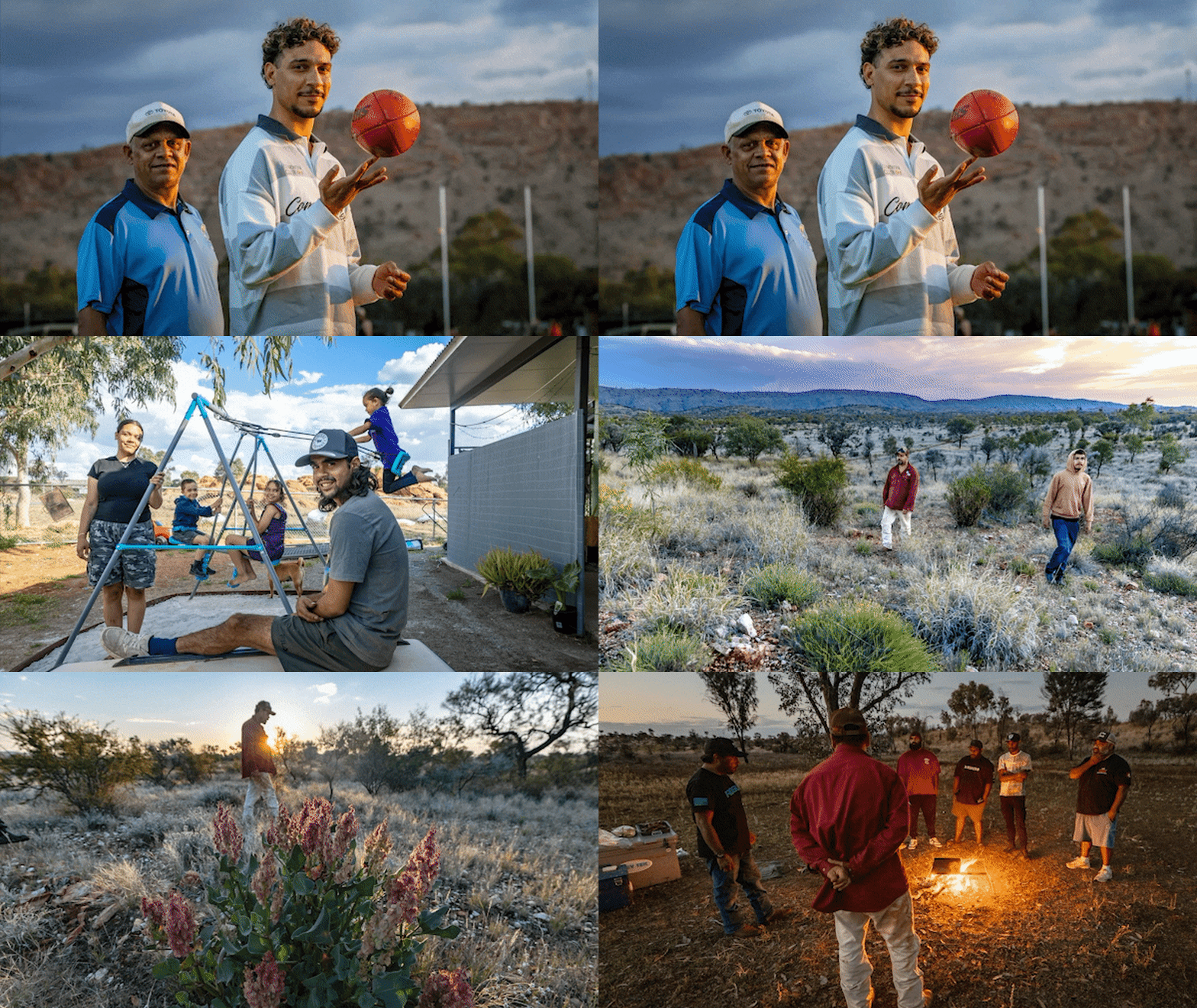
After days of dreary rain following Kumanjayi Little Baby’s funeral, the veil of grief and Sorry Business eases over Alice Springs.
asserted
veil → follow → Springs
The men at Red Dust Role Models, a non-profit mentoring organisation for Indigenous people, have organised an impromptu gathering in the foothills of the East MacDonnell ranges – Country of the Black Caterpillar dreaming, Tyape Utnerrengatye.
asserted
men → mentor → Caterpillar
Red Dust, along with community leaders and local men, have sought to give this masthead an understanding of the plight of men in Alice Springs, and the wider central desert region.
asserted
Dust → seek → Springs
To explore the complexity of issues that lead to, but do not excuse, the extreme rates of domestic, family and sexual violence in the community.
asserted
that → explore → community
The Black Caterpillar Dreaming story of the ranges stretches out along the landscape to beyond the horizon, adorned in vibrant hues of red, pink and yellow desert blooms and vivid green tussock grass after the rain.
asserted
story → dream → rain
Traditional owner Damien Kunoth arrives early with his son Byson.
asserted
Kunoth → arrive → son
The men walk the land in the way of their ancestors, along songlines, acknowledging sacred sites and searching for food; for bush banana (upali) and bush coconut (kandar), which are in abundance, but past their best.
asserted
which → walk → best
Kunoth relates the importance of young men being on Country, of getting out of town.
asserted
men → relate → town
“Too much poison is what we live today, in town where you are trapped by drugs, alcohol, police, courts and the system,” he says.
asserted
he → live → drugs
“We have to get young people back on Country to take care of homelands, to be self-sufficient, to not rely on government.
asserted
We → have → government
“There’s social media and the phones are a problem.
asserted
phones → ’ → ?
To get a young fella out of town without a phone, that phone and him is going to be the problem, to get him in a car and get him on Country, he’s going [to] want to know what his friends are doing, what his girlfriend is doing.
asserted
girlfriend → get → what
The glow of a campfire lures us back to a small gathering of men watching Red Dust co-ordinator Tyrone Lynch deftly cooking chops on a barbecue grill.
asserted
Lynch → lure → grill
Kunoth and Byson join the group and a yarning circle is convened to a crackling fire as the smell of barbecue meats punctuate the fragrant desert air.
asserted
smell → join → air
Kunoth leads the yarn by way of a simple reflection on the sort of day he’s had.
asserted
he → lead → day
Each participant follows suit, and all agree their day is better for getting out of town, on Country, and around a fire.
asserted
day → follow → fire
Kunoth then asks the question – what would they like to change about their life if they could?
uncertain
they → ask → life
Dhandrey Hagan, a young Anmatyerr man, responds by speaking about the challenges of navigating the whitefellas’ world.
asserted
Hagan → respond → world
“When I got to high school I experienced racism and that holds you back.
asserted
that → get → you
It destroys your confidence, makes it harder to learn in class and that carries through to getting a job,” he says.
asserted
he → destroy → job
“Confidence is a challenge, sometimes I have it, sometimes I don’t.
asserted
I → have → it
“I feel more confident through Red Dust and activities on Country like this because they give you that opportunity to speak and share culture.
asserted
they → feel → culture
They point you in the right direction, we go out help kids with the Rangers group and get them involved, teach them to look for their tucker and look after country and native animals.”
asserted
them → point → country
Solomon George, also an Anmatyerr man, speaks of the benefits of being out bush.
asserted
George → speak → benefits
Living in Alice there’s nothing to do, just walk around, I make Aboriginal weapons like boomerang.
asserted
I → live → boomerang
There’s a sense of a longing for the old ways from these men; that the white man’s world doesn’t accept or work for them, and it’s a point of last resistance and hope to maintain culture and lore that gives them status as men.
asserted
that → ’ → men
Regional manager Alan Palmer sits in Red Dust Role Models’ makeshift workshop where the organisation teaches mechanics and other trade skills.
asserted
organisation → sit → mechanics
He uses a cultural metaphor to illustrate the plight of Aboriginal men in Alice Springs and the wider NT community – explaining their disempowerment and the consequent decline of traditional structures that have led to a breakdown in family and community responsibilities.
asserted
that → use → responsibilities
“If you cut the head of the snake the rest of the body is going to flounder – there’s no guidance, direction or leadership.
asserted
rest → cut → body
In the cultural structure of Indigenous society, men play a vital role in protecting, providing, sheltering family and communities, that’s the obligation and responsibility of all Indigenous men and is embedded in our societal structures.”
Red Dust’s programs seek to encourage individual responsibility for violent behaviour, dissuading men from a mindset of saying “colonisation made me do it”, or “my wife made me do it” as an excuse.
asserted
me → play → excuse
They aim to be more nuanced in their approach, allowing men to express frustrations with modern and colonial society that undermine their roles in family, while emphasising the importance of traditional law taught through initiation.
asserted
that → aim → initiation
Alan, along with his fellow Red Dust co-ordinators Lynch and Chris Hagen, relate a sense of despair among Aboriginal men about the way they are portrayed in mainstream media, describing it as stereotypical generalisations by outsiders with little knowledge of their lives or traditional responsibilities.
asserted
they → portray → lives
Palmer revisits the “head of the snake” metaphor when describing the impact of the Northern Territory Intervention in 2007 when prime minister John Howard deployed military personnel and police into Aboriginal communities in response to the Little Children are Sacred report into child sexual abuse in communities.
asserted
Children → revisit → communities
Aboriginal men throughout the territory felt the fallout from the intervention and have struggled to regain their place to lead and govern their families and communities.
“It was a process that degraded and demoralised the head of the snake,” Palmer says.
asserted
Palmer → feel → snake
The Northern Territory is living (the result of) its own history, the intervention is evidence of that; we are a singular population of people that was targeted to save ourselves from ourselves where our rights were taken away from us, everything our forefathers fought for was taken back.
asserted
forefathers → live → us
“What sort of sovereignty, autonomy, independence or self-determination can come from that.
asserted
sort → come → that
You’re looking at a population that’s in despair.”
asserted
that → look → despair
Palmer says during the intervention process, lawyers sought to reduce their clients’ sentences by claiming sexual violence was part of Aboriginal culture, a misconception that led to the demonisation of all Aboriginal men.
asserted
that → say → men
“If the lawyers did their job they would have called it for what it was – rape and paedophilia.
asserted
it → do → rape
But sadly out of that attack on Indigenous men and Indigenous culture, (all) men got the blame for that,” Palmer says.
asserted
Palmer → get → that
…and 43 more, not listed.
 The Aporia