The Sydney Morning Herald
· collected 2026-10-10 · by Stephanie Bunbury
The article discusses a new film called "The Echo Chamber," based on a screenplay by late Italian director Bernardo Bertolucci. Set in an unspecified apartment that appears to be in Rome, the movie focuses on Leo, a music producer suffering from back pain and addiction, his mysterious physiotherapist Anne, and Eva, a retired singer brought back for a project with Leo. The film explores themes of addiction, sexual obsession, and creativity within a confined setting, directed by Andrea Pallaoro who also co-wrote the script post-Bertolucci's death in 2018.
Written locally by qwen2.5:14b on 2026-10-10,
using this article's own text rather than the other coverage of the
same event (that is the story summary below).
Everyone has a past, says Swedish actress Alicia Vikander, but when it comes to the character she plays in a new film from the mind of Bernardo Bertolucci, it’s impossible to guess what that might be.
uncertain
that → have → Bertolucci
The Echo Chamber was the screenplay the Italian maestro – best known for classics such as The Conformist (1970) and 1900 (1976) – was working on when he died in 2018 at the age of 77.
asserted
he → know → 77
The film hinges on the desperation of a man ravaged by back pain and the drugs he takes to make it bearable (Bertolucci was himself in a wheelchair for the last 15 years of his life following an unsuccessful operation on his spine).
asserted
Bertolucci → hinge → spine
It is set entirely in a magnificent old apartment, purportedly in London but fairly obviously, given what we see from the window, in Rome.
asserted
we → set → Rome
The man in pain is Leo, an innovative and clearly very successful music producer played by Luca Martinelli.
asserted
man → play → Martinelli
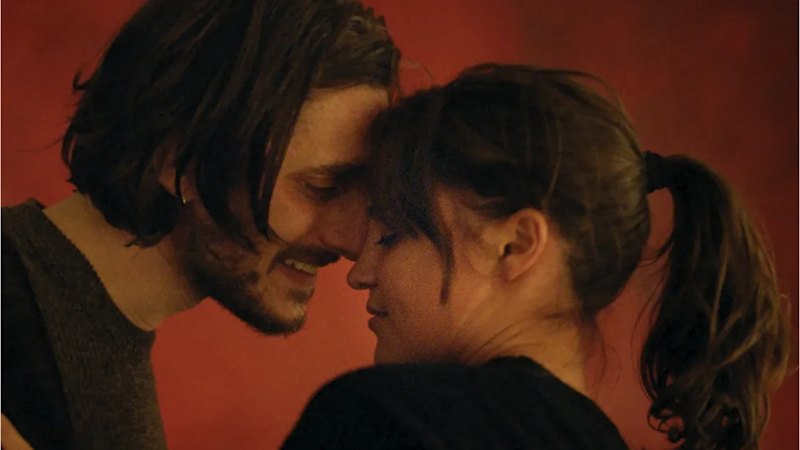
Vikander plays Anne, a physiotherapist who meets Leo for the first time on a house call (which certainly puts it in the realm of fantasy) to relieve his acute back pain.
asserted
which → play → pain
She also prescribes opiates and, on subsequent visits, slips into an ambiguous role where she is both lover and enabler; Leo, as it turns out, is a born addict.
asserted
it → prescribe → role
As viewers, we know nothing about Anne.
asserted
we → know → Anne
She doesn’t even seem to live anywhere.
asserted
She → seem → ?
“I think that is the mystery,” Vikander says.
asserted
Vikander → think → ?
“I wanted to portray that feeling, that whatever you want to read into any of the little clues she gives, it will give you the idea of a past, because everyone has one.”
asserted
everyone → want → one
So mysterious is she that you may wonder whether, in the fictional universe of this film, she even exists.
uncertain
she → wonder → film
“Whoa!” gasps Vikander; they hadn’t thought of that.
asserted
they → gasp → that
Meanwhile, Leo has another love story, albeit a platonic one, with Eva, a celebrated singer he has lured out of retirement to make an album with him, played with considerable brio by 80-year-old Susan Sarandon.
asserted
he → have → Sarandon
She has some stories; she can also see exactly what is happening to her younger friend.
asserted
what → have → friend
The Echo Chamber is directed by the much admired younger Italian director Andrea Pallaoro from a script co-written by Bertolucci and two other writers, Ilaria Bernardini and Ludovica Rampoldi.
asserted
Chamber → direct → Bertolucci
Following Bertolucci’s death, Pallaoro collaborated with the same writers to hone and sharpen the script.
asserted
Pallaoro → follow → script
In the process, he has made it his own, but its concerns are recognisably those of the old maestro: the creation of art, sexual obsession, control within relationships and the corrosive effect of physical pain.
asserted
concerns → make → pain
How much did they think about Bertolucci?
asserted
they → think → Bertolucci
“Obviously the history of Bertolucci beginning the journey or creating the story was a nice element to have,” says Vikander.
asserted
Vikander → begin → story
It also fitted the themes of the film “which talks about the dreams and experiences of life that reverberate within these few rooms”.
asserted
that → fit → rooms
When they were filming, however, the actors were more immediately intent on working with Pallaoro’s distinctive style.
asserted
actors → film → style
“He very often has just one or two set-ups, which is true in this film.
asserted
which → have → film
It’s more challenging because you know he’s not going to cut around as much.
asserted
he → ’ → ?
Bertolucci’s star has declined in recent years to the point where his early masterpieces are barely seen, although a new seven-hour documentary about his work by Luca Guadagnino, shown at the most recent Venice Film Festival, may well turn his posthumous fortunes around.
uncertain
documentary → decline → fortunes
Bertolucci was working to the very end, but it feels as if he is part of a distant past.
asserted
he → work → past
Why he faded from fame so rapidly can be blamed on a few factors.
asserted
faded → fade → factors
Chief among them, certainly, is the grim testimony of Maria Schneider about her treatment by the director and his star, Marlon Brando, during the making of Last Tango in Paris, which emerged and was much discussed at the height of the MeToo movement.
asserted
which → emerge → movement
Guadagnino’s documentary, Joie de Vivre, which is both fascinating and characteristically idiosyncratic, passes over them, concentrating on the great early works.
asserted
which → pass → works
He knows what he likes – and he knows what we should like, too.
asserted
we → know → what
At a press conference in Venice, Sarandon said she had lost several roles in Hollywood because of her public stance against Israeli actions in Gaza and was more welcomed internationally by productions like this one.
asserted
she → say → one
“There were no trailers, no escape, we were all thrown together in this world,” she says.
asserted
she → be → world
She refers to the film’s very European sensibility, which “creates a lot of atmosphere and tells the story not just by the words but by the images.
asserted
which → refer → images
Andrea takes the time to tell the story without talking down to the audience, not explaining everything, trusting the blurring of the lines between past and present, memory and dreams.
asserted
Andrea → take → past
The film had a warm critical response, particularly from the Italian press, which may help to direct a new generation to Bertolucci’s mightier works.
uncertain
which → have → works
Not that it is a Bertolucci film, for all that it shares the DNA of those late films such as Besieged.
asserted
it → share → Besieged
“I was very aware of inheriting a screenplay from a filmmaker whose voice and role in the history of cinema has been so meaningful,” says Pallaoro.
asserted
Pallaoro → inherit → cinema
“It comes with a great sense of responsibility – not a responsibility to imitate, but quite the opposite.”
asserted
It → come → responsibility
He had to make it his own.
asserted
it → have → ?
“And I feel incredibly privileged to have had the opportunity to do so.”
asserted
I → feel → opportunity
…and 2 more, not listed.
 The Aporia