RFK Jr. touched a nerve: An AI second opinion isn’t dangerous — a six-week wait to see a doctor is

Read the original at Washington Examiner ↗
Washington Examiner · collected 2026-10-10 · by Morgan P. Lorio

Quick Summary

The article discusses Robert F. Kennedy Jr.’s suggestion that artificial intelligence (AI) could provide a better second opinion than human physicians, sparking debate among medical professionals. While the American Medical Association warned against claims of AI superiority over doctors, the piece argues that patients facing long waits for specialist care should consider the practical benefits of AI assistance in the interim. The author, a retired orthopedic surgeon, supports cautious integration of AI as a tool to enhance clinical judgment rather than replace it entirely, emphasizing its potential value in providing informed second opinions when timely human consultation is unavailable.
Written locally by qwen2.5:14b on 2026-10-10, using this article's own text rather than the other coverage of the same event (that is the story summary below).

AI analysis runs on qwen2.5:14b, locally

Story summary

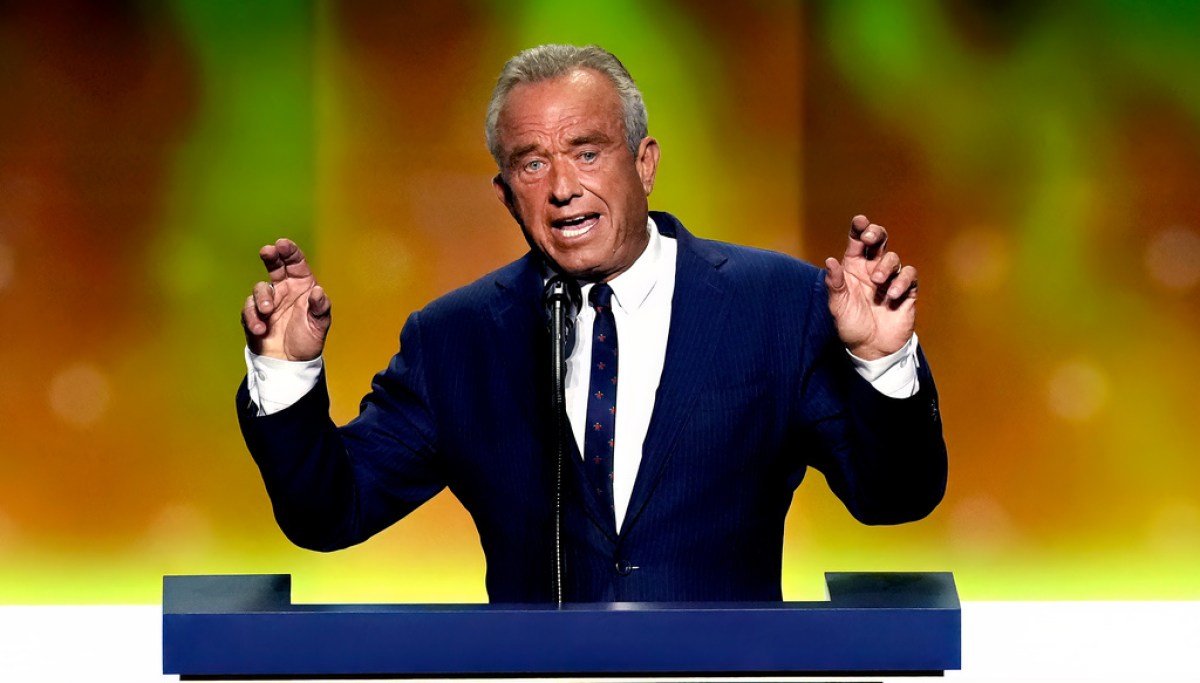
In late September 2023, Robert F. Kennedy Jr., the HHS Secretary, suggested that artificial intelligence (AI) could offer more informed second opinions than human physicians. In response, the American Medical Association (AMA) and five other physician organizations issued a joint statement on September 30, acknowledging AI's potential but warning against claims of its inherent superiority over human expertise, which they argued risks undermining patient trust.

While the AMA was correct to challenge exaggerated claims about AI’s capabilities, critics argue that this stance did not adequately address the practical concerns of patients who face long wait times—often six weeks or more—to see specialists. These patients urgently need guidance when timely medical expertise is unavailable.

As a retired orthopedic surgeon, the author supports clinical judgment and responsibility while also acknowledging AI’s potential dangers, such as devaluing human labor displaced by automation. However, he sees AI as a valuable tool that could assist physicians with validated uses and clear limits, offering an additional resource for patients waiting to receive care.

Written for “AI In Healthcare Debate” on 2026-10-10, grounded in this article and the 0 other(s) covering the same event.
Why this leaning score
The article's own words the score was based on. Each is quoted verbatim and was checked against the article text before being stored, so you can find it in the original.
Reading Leans left (beta estimate) Confidence high 1 quote(s) discarded as not found in the article
Leaning: leans left for article 70481 (high confidence, 3 verified quotes) · logged 2026-10-10

Signals How these are calculated →

Claims extracted
51
claim-shaped sentences
Uncertain
25%
13 of 51 hedged
Leaning
Leans left
of the writing, not the subject · beta estimate
Correction & hedging signals
69.4
corrections and hedging in what we collected; not a measure of accuracy
Outlets on this story
1
Technology
Narrative spread
1
articles carrying this framing
Analyzed 2026-10-10 · how these are computed

Story

📰 AI In Healthcare Debate
Technology · 1 article(s) covering the same event.

How this is being covered How these are calculated →

Article leaning vs. publisher reliability
Source leaning vs. consistency

Compared with similar articles

This article reads leans left and hedges 25% of its claims. Each row says how that neighbour differs.
Washington Examiner
⚖️ leaning not scored 🔴 11% hedged 2 of 18 📰 publisher trust 69
“The articles discuss different perspectives on AI, with Article A focusing on OpenAI CEO Sam Altman's comments about accepting negative consequences for AI benefits and Article B addressing concerns over AI in medical contexts.”
Washington Examiner
⚖️ leaning not scored 🔴 3% hedged 1 of 33 📰 publisher trust 69
“The articles discuss different aspects of AI in healthcare and politics, not the same specific incident or time.”
The Independent
⚖️ Leans left 🔴 8% hedged 4 of 52 📰 publisher trust 59
“The articles describe different aspects of RFK Jr.'s stance on AI in healthcare, but do not indicate they are reporting on the same specific incident or time.”
South China Morning Post
⚖️ Leans left 🔴 11% hedged 1 of 9 📰 publisher trust 67
“The articles discuss different aspects of AI regulation and use; one focuses on dilemmas surrounding control and misuse, while the other addresses AI's role in providing medical second opinions.”
When AI Is Better Than Humans different event · 95%
The Dispatch
⚖️ leaning not scored 🔴 0% hedged 0 of 2 📰 publisher trust 61
“The articles discuss different aspects related to AI, with Article A focusing on a sociologist's new book about the effects of AI as confidantes and companions, while Article B addresses the use of AI for medical second opinions in contrast to human doctors.”

Publisher

Washington Examiner · 2456 article(s) · 4 correction(s) detected
Running correction rate · 4 correction(s)
2026-10-09
Christa Pike woke up: With a 7% botch rate, lethal injection is an engineering disaster
2026-10-03
Tennessee’s prison chief resigns after failed Christa Pike execution, Bill Lee says
2026-10-03
Alito says there’s no perfect time to retire while confirming he will reconsider next year
2026-10-01
Christa Pike was set to be the first woman to be executed in Tennessee in 200 years before botched attempts: What to know

Who wrote this

Morgan P. Lorio
4 article(s) here · 1 carrying a prediction
🔮 That perspective was largely missing from organized medicine’s response when HHS Secretary Robert F. Kennedy Jr. suggested AI could offer a better-informed second opinion than any physician.
🔮 At what point does a temporary sacrifice become an expectation, and our willingness to endure become mistaken for consent? During COVID-19, the public was repeatedly told to “follow the science.”
🔮 His concern — and much of the public debate — centers on the catastrophic possibility that increasingly autonomous systems could escape human control.
🔮 Research suggests that for some people, ordinary rewards may provide insufficient reinforcement while drugs or highly stimulating behaviors produce much stronger signals.
Also by Morgan P. Lorio
Why federal addiction programs keep underperforming
2026-09-06 · Washington Examiner
Nothing else under this byline is closely related to this article, so these are simply their most recent.

Topics

AMA American College of Physicians HHS MedPage Today the American Medical Association

Subjects

Kennedy PERSON · 3× AMA ORG · 1× American College of Physicians ORG · 1× Goldman ORG · 1× HHS ORG · 1× Jason Goldman PERSON · 1× MedPage Today ORG · 1× Robert F. Kennedy Jr. PERSON · 1× Sam Altman PERSON · 1× the American Medical Association ORG · 1×

Narrative

Kennedy, in turn, should provide concrete support for that work, including research funding, transparent evaluation, and safeguards that preserve physicians’ authority to exercise clinical judgment and intervene when necessary.
framing: mixed · carried by 1 article(s) · first seen 2026-10-10
🔮 That perspective was largely missing from organized medicine’s response when HHS Secretary Robert F. Kennedy Jr. suggested AI could offer a better-informed second opinion than any physician.

Claims (51 extracted, 13 hedged)

For a patient waiting weeks for a specialist, the debate over artificial intelligence comes down to a practical question: Is useful guidance available in the meantime? asserted
guidance → wait → meantime
That perspective was largely missing from organized medicine’s response when HHS Secretary Robert F. Kennedy Jr. suggested AI could offer a better-informed second opinion than any physician. uncertain
AI → miss → physician
In a Sept. 30 joint statement, the American Medical Association and five other physician organizations acknowledged AI’s potential while warning that claims of inherent superiority diminish physician expertise and risk undermining patient trust. uncertain
claims → acknowledge → trust
The AMA was right to challenge sweeping claims. uncertain
AMA → challenge → claims
Its broader policies address validation and oversight, but this response gave insufficient attention to patients who lack timely care. asserted
who → address → care
What should they do when the expertise being defended is unavailable? asserted
expertise → do → What
As a retired orthopedic surgeon, I value clinical judgment and responsibility. asserted
I → value → judgment
I have also warned about AI’s dangers, including the devaluation of people displaced by automation. asserted
I → warn → automation
Yet I see AI as a possibly invaluable physician-helper, with validated uses, clear limits, and a practical “kill switch.” uncertain
I → see → uses
AI can serve as a sounding board, helping physicians consider alternative explanations, identify missing information, and question initial assumptions. asserted
physicians → serve → assumptions
AI may ultimately perform much of physicians’ cognitive work. uncertain
AI → perform → work
The extent of that transition should depend on demonstrated performance, patient outcomes, and clear accountability. asserted
extent → depend → performance
Kennedy’s challenge can open a useful dialogue without making every assertion correct. asserted
assertion → open → dialogue
His report that Sam Altman called failure to consult AI “malpractice” does not establish a clinical requirement. asserted
Altman → call → requirement
A 2025 study on injury compared ChatGPT-4 with four orthopedic surgeons answering 20 questions across five common emergency-department scenarios. asserted
surgeons → compare → scenarios
Independent reviewers rated AI’s responses higher for completeness, helpfulness, specificity, and overall quality, without a significant difference in overall accuracy. asserted
reviewers → rat → accuracy
This small study assessed written recommendations, not patient outcomes. asserted
study → assess → recommendations
In comments reported by MedPage Today, former American College of Physicians President Jason Goldman went beyond the joint statement, dismissing AI as a second opinion and emphasizing its potential for error. asserted
Goldman → report → error
Physicians also work with incomplete information and mistaken assumptions. asserted
Physicians → work → information
The possibility of error warrants safeguards; it does not establish comparative performance. asserted
it → warrant → performance
Nor does concern about undermining trust settle the question. asserted
concern → undermine → question
Trust grows when patients can examine recommendations and question the reasoning behind them. asserted
patients → grow → them
Goldman also rejected Kennedy’s characterization of “medical tyranny,” noting that patients can decline physicians’ advice. asserted
patients → reject → advice
But that freedom does not eliminate institutional restrictions on care, and AI advice alone would not remove them either. asserted
advice → eliminate → them
For rural communities and resource-limited settings worldwide, the relevant comparison may be AI-assisted care versus delayed care — or no specialist input at all. uncertain
comparison → limit → care
AI could support local clinicians facing decisions without specialist assistance. uncertain
AI → support → assistance
Evaluation should measure whether it improves assessment, referral, and timely treatment while avoiding false reassurance or delayed transfer. asserted
it → measure → reassurance
For patients awaiting care, AI may also help organize symptoms and prepare questions, without being mistaken for a validated substitute for an independent physician consultation. uncertain
AI → await → consultation
Kennedy’s example of a lengthy medical record and a brief appointment also deserves engagement. asserted
example → deserve → engagement
A patient’s records may be scattered across hospitals, clinics, and specialists whose electronic systems have limited interoperability — the ability to exchange and use information. uncertain
systems → scatter → information
Overcoming barriers to sharing and reconciling records should itself be a goal of AI development, with institutions responsible for enabling secure exchange. asserted
itself → overcome → exchange
With authorized access, source traceability, and verification, AI could help translate data formats, assemble a clinical timeline, and flag conflicting entries, reducing time spent reconstructing records. uncertain
AI → help → records
With patient consent, AI could also document the encounter for physician review, freeing the physician to spend more quality time with the patient during history-taking and physical examination. uncertain
AI → document → taking
Meaningful oversight requires someone with the skill to question an answer, the time to investigate, and the authority to intervene. asserted
oversight → require → answer
A kill switch requires a tested fallback so care can continue safely when automation stops. asserted
automation → require → fallback
Staffing, training, and payment must support that responsibility. asserted
Staffing → support → responsibility
Patients need a route to human evaluation and clarity about who controls recommendations, uses their information, and answers for failures. asserted
who → need → failures
AI should expand access to expertise, not become the only option offered to patients with the fewest resources. asserted
AI → expand → resources
Access also depends on affordability. asserted
Access → depend → affordability
In an earlier Washington Examiner commentary, I asked: Where did the money go? asserted
money → ask → commentary
…and 11 more, not listed.

💬Give feedback
🕘History 🎫Support