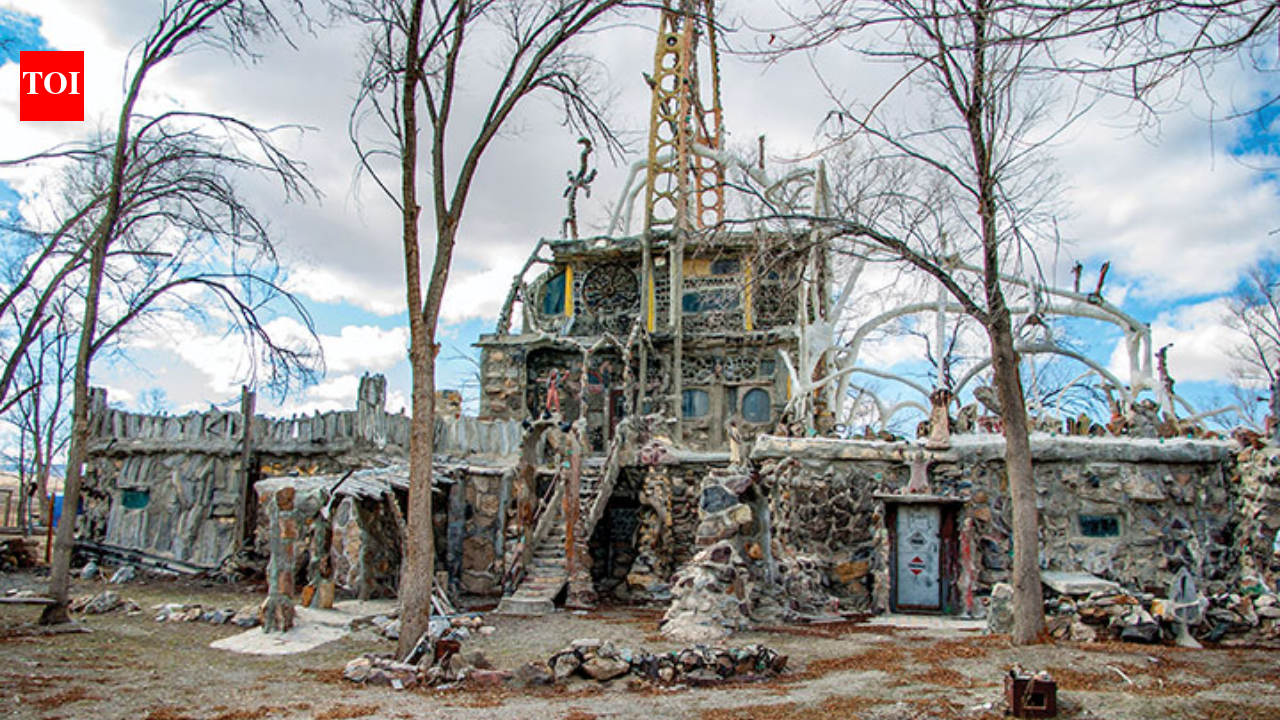
Just off Interstate 80 near Imlay, Nevada, a five-acre roadside attraction showcases an unusual collection of concrete structures and sculptures made from discarded bottles, car parts and scrap metal.
asserted
attraction → showcase → bottles
What looks like a giant artwork made from discarded objects began as the personal project of Frank Van Zant, better known as Chief Rolling Mountain Thunder.
asserted
looks → look → Thunder
According to Travel Nevada, Van Zant started building Thunder Mountain Monument in 1969, using materials such as old bottles, scrap metal and car parts to create a home and a tribute to Native American history.
uncertain
Zant → accord → history
Over the following decades, the site grew into a five-acre collection of handmade structures that visitors can explore for free during daylight hours.
asserted
visitors → follow → hours
How a roadside stop became a lifelong project
Van Zant's journey to Nevada was not originally a plan to build a desert monument.
asserted
journey → become → monument
A World War II veteran, he had worked as a deputy sheriff and later for the US Forest Service, where he collected artefacts he found while preparing maps.
asserted
he → work → maps
In 1968, he travelled east from California with his wife.
asserted
he → travel → wife
According to Travel Nevada's account, their truck broke down near Imlay, a small settlement between Lovelock and Winnemucca.
uncertain
truck → accord → Lovelock
The couple stayed in the area, and Van Zant eventually began building on the property.
asserted
Zant → stay → property
He adopted the name Rolling Mountain Thunder and developed a vision for a place that would honour Native American people and their history.
asserted
that → adopt → people
He also spoke of spiritual experiences and believed he had a purpose in creating the monument.
asserted
he → speak → monument
Rather than designing a conventional house, he started transforming a trailer and gradually expanded it with concrete, rocks and objects collected from the surrounding area.
asserted
he → design → area
What began as a shelter grew into a much larger and more unusual undertaking.
asserted
began → begin → undertaking
Building with what others threw away
Thunder Mountain took shape through improvisation rather than formal architectural plans.
asserted
Mountain → build → plans
Van Zant used whatever materials he could find, fitting discarded objects into walls, windows and decorative features.
uncertain
he → use → walls
Old bottles became part of the walls, creating colourful patterns when sunlight passed through them.
asserted
sunlight → become → them
Car parts, hubcaps, windshields, railroad materials and scrap metal were incorporated into the structures.
asserted
parts → incorporate → structures
Concrete held many of these objects together, giving the buildings their distinctive appearance.
asserted
Concrete → hold → appearance
Travel Nevada's account describes how Van Zant could turn an unwanted typewriter into a design feature or arrange bottles to form a makeshift stained-glass window.
uncertain
Zant → describe → window
Objects that might otherwise have been thrown away became part of the monument's architecture.
uncertain
that → throw → architecture
The result was not a carefully planned building in the conventional sense.
asserted
result → plan → sense
Its unusual appearance reflected the materials available and Van Zant's changing ideas as construction continued.
asserted
construction → reflect → materials
Over the years, he created more than 200 concrete sculptures, many depicting Native American figures and themes connected to their history and experiences.
asserted
he → create → history
The site became both a personal residence and an expansive outdoor art environment.
asserted
site → become → ?
For years, Van Zant lived on the property with members of his family, and the compound also provided shelter for visitors.
asserted
compound → live → visitors
During the 1970s, the site attracted people travelling through the region, including members of the counterculture movement, some of whom stayed there temporarily.
asserted
some → attract → whom
Van Zant's family life was closely connected to the property.
asserted
life → connect → property
He had eight children, and the main structure developed into a maze of rooms, stairways, unusual windows and walls incorporating car parts.
asserted
structure → have → parts
His vision combined artistic expression, spiritual beliefs and a desire to commemorate Native American history.
asserted
vision → combine → history
The monument's many objects were not merely decorations; they formed part of the personal meaning he attached to the place.
asserted
he → form → place
However, the site also experienced setbacks.
asserted
site → experience → setbacks
A fire in 1983 destroyed much of the compound, including a hostel.
asserted
fire → destroy → hostel
Van Zant continued living at Thunder Mountain until his death in 1989.
asserted
Zant → continue → 1989
Preserving the monument after his death
After Van Zant died, the property suffered from vandalism and deterioration.
asserted
property → preserve → vandalism
Its survival depended on people willing to maintain the structures and prevent the unusual collection from falling into ruin.
asserted
survival → depend → ruin
The monument was recognised as a Nevada State Historic Site in 1992.
asserted
monument → recognise → 1992
His son, Dan Van Zant, subsequently helped preserve the property, contributing money and arranging repairs.
asserted
son → help → repairs
The work has remained a challenge because the buildings were assembled from unconventional materials and were never constructed like ordinary homes.
asserted
buildings → remain → homes
Today, a caretaker helps look after the grounds, while donations from visitors support ongoing maintenance.
asserted
donations → help → maintenance
The site remains a reminder of one man's determination to turn an unconventional vision into a lasting landmark.
asserted
site → remain → landmark
…and 8 more, not listed.
 The Aporia