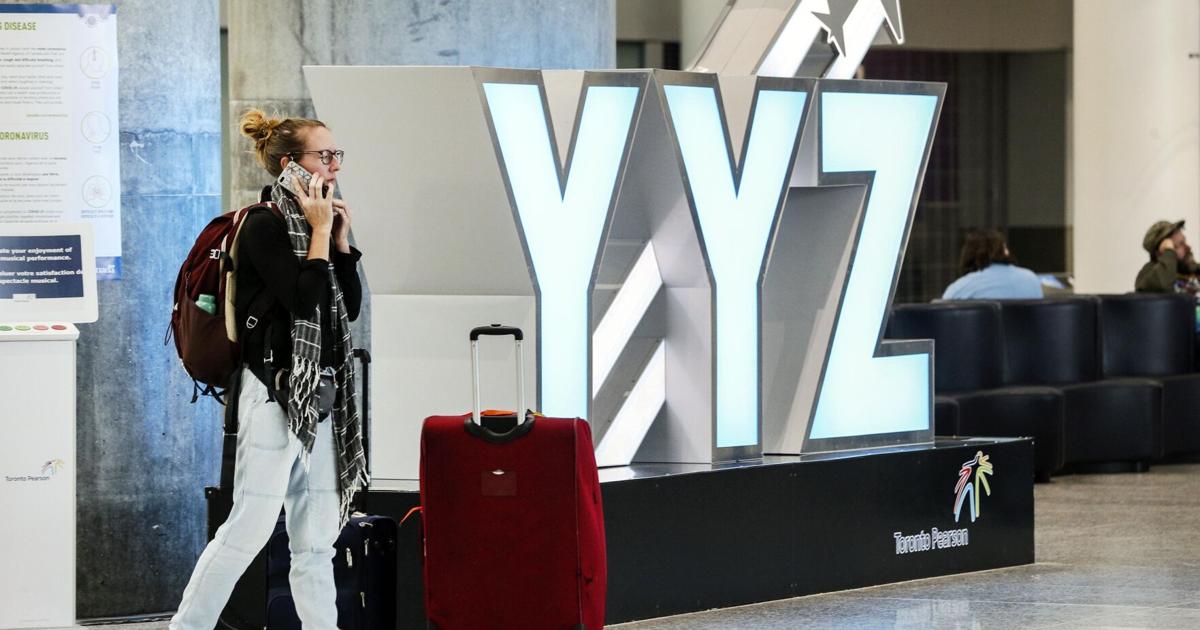
“Canada is open for business” was Prime Minister Mark Carney’s message to global finance leaders gathered in Toronto last month for an international investment summit.
asserted
is → gather → summit
But “open for business” should not mean putting everything on the auction block.
asserted
open → mean → block
Some things should not be subjected entirely to the logic of capital.
asserted
things → subject → capital
Essential services and critical public infrastructure should serve the public interest, not primarily boost investors’ bottom lines.
asserted
services → serve → lines
Yet in his opening speech at the summit, Carney proposed selling the operations of the main airports in Toronto, Montreal, Calgary and Vancouver to for-profit corporations to help finance improvements at smaller airports.
asserted
Carney → propose → airports
We’ve seen this movie before.
asserted
We → see → movie
In the late 1980s, the Mulroney government allowed a private consortium to build and own Pearson’s Terminal 3.
asserted
consortium → allow → Terminal
The state-of-the-art terminal opened in 1991 at a cost of roughly $400 million.
asserted
terminal → open → million
In August 1993, the government leased Pearson’s Terminals 1 and 2 to the Pearson Development Corporation (PDC), a partnership involving the Terminal 3 group and Paxport Inc., a consortium controlled by Don Matthews, a former Conservative party president and one of Brian Mulroney’s top fundraisers.
asserted
government → lease → fundraisers
The deal reeked of crony capitalism.
asserted
deal → reek → capitalism
Liberal opposition leader Jean Chrétien made challenging the deal a key part of his 1993 election platform.
asserted
challenging → make → platform
After winning, his government cancelled the agreement.
asserted
government → win → agreement
PDC sued the federal government for more than $600 million.
asserted
PDC → sue → million
On the eve of the 1997 election, the two sides settled for $60 million.
asserted
sides → settle → million
PDC then sold Terminal 3 to the not-for-profit Greater Toronto Airports Authority for $719 million — $319 million more than its construction cost.
asserted
PDC → sell → cost
Since then, Canada’s major airports have been operated by not-for-profit airport authorities, while the federal government retains ownership of the land and assets.
asserted
government → operate → land
In other words, airports’ operations have already been privatized.
asserted
operations → privatize → words
But Carney is proposing now another step: transferring them from not-for-profit corporations to for-profit companies.
asserted
Carney → propose → companies
Would that improve performance?
asserted
that → improve → performance
But the current system has set the bar remarkably high.
asserted
system → set → bar
Three of the four airports under consideration rank among the world’s top 100 and the 10 best in North America in this year’s Skytrax World Airport Awards.
asserted
Three → rank → Awards
Vancouver ranks first in North America and tenth worldwide.
asserted
Vancouver → rank → America
Together, they generate more than $500 million annually in rent for the federal government.
asserted
they → generate → government
Does privatization actually improve airport performance?
asserted
privatization → improve → performance
But Carney believes privatization can do better.
asserted
privatization → believe → ?
So does Ontario Premier Doug Ford, who says he is “100 per cent confident” that it will produce “more effective, more efficient airports at hopefully lower cost.
asserted
it → do → cost
That confidence is not supported by much evidence.
For-profit corporations, by definition, seek to maximize profits.
asserted
corporations → support → profits
That can mean more revenues through higher parking fees and rents paid by restaurants and retailers, as well as lower costs through outsourcing and reduced wages.
asserted
That → mean → outsourcing
That, for instance, has been the experience at London’s Heathrow Airport and Australia’s major airports following privatization.
asserted
That → follow → privatization
But while profits increased, service did not improve at Australian airports and some services deteriorated at Heathrow.
asserted
services → increase → Heathrow
Carney argues that Canadian pension funds already invest in and manage airports around the world and that it is time to bring that expertise home.
asserted
it → argue → expertise
Indeed, the Public Sector Pension Investment Board owns stakes in seven international airports.
asserted
Board → own → airports
But only one ranks among Skytrax’s top 100.
asserted
one → rank → 100
Whether private ownership would improve their performance, however, is far from established.
asserted
improve → improve → performance
The rationale for changing ownership therefore appears to rest largely on the promise of additional cash — what a Toronto Star editorial called a “fanciful promise of windfall cash.”
asserted
editorial → change → cash
For-profit airports serve the interests of their shareholders.
asserted
airports → serve → shareholders
Not-for-profit airport authorities, by contrast, are designed to balance the interests of a broader group of stakeholders, with boards that include representatives of governments, airlines and labour.
asserted
that → design → governments
But given the strong performance of Canada’s major airports, their contribution to government revenues and the uncertain benefits of for-profit ownership, the case for changing the system has yet to be made.
asserted
case → give → system
Yes, Canada should remain open to investment.
asserted
Canada → remain → investment
But we should also learn from other countries’ experiences — and from our own.
asserted
we → learn → own
 The Aporia