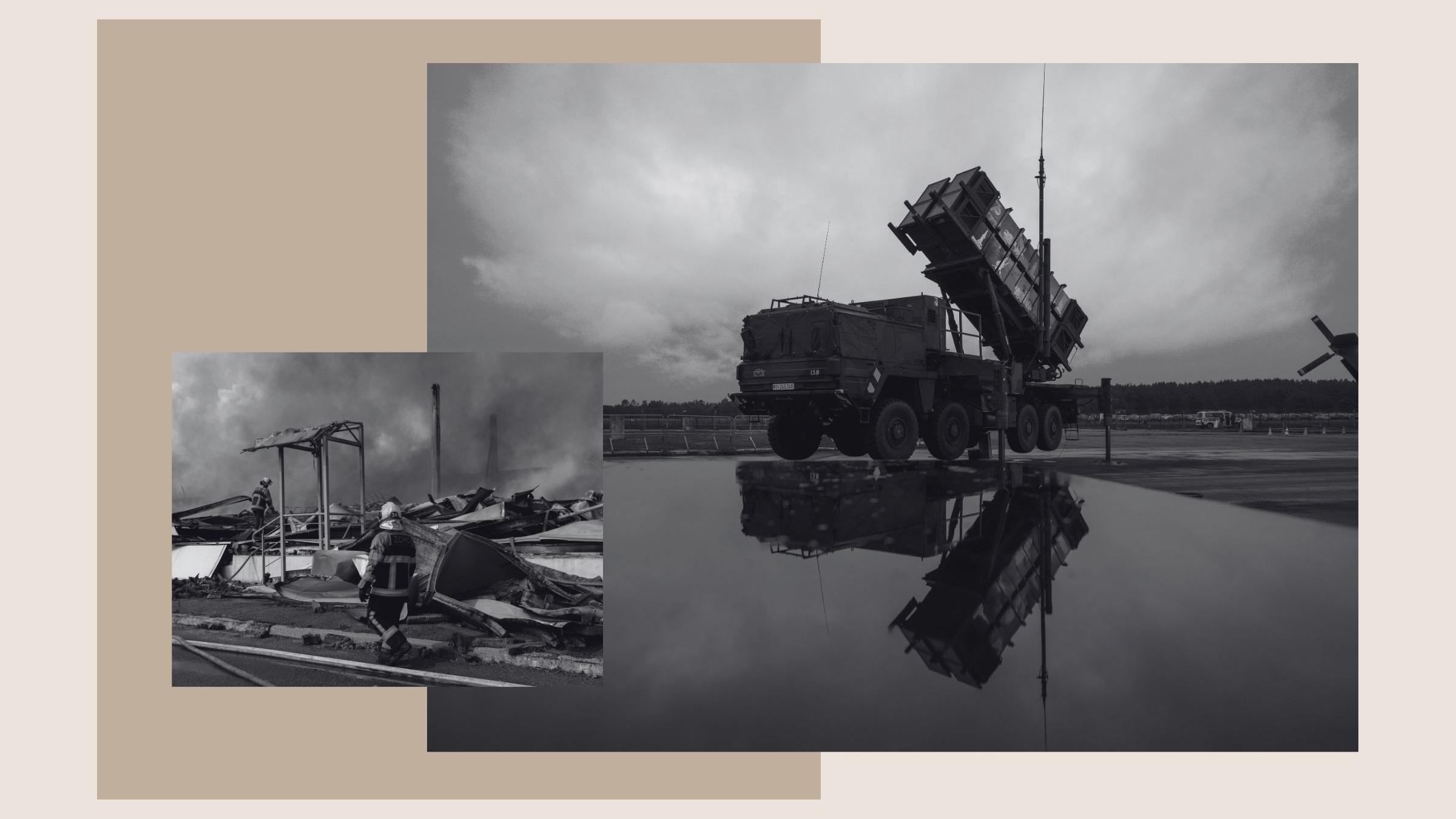
On May 9, 1915, more than 11,000 British troops were killed or wounded in a single day during an ill-fated assault on an entrenched German position in Aubers, France.
uncertain
troops → kill → Aubers
The resulting “Shell Crisis of 1915,” led to a major reorganization of the British government’s defense production system.
asserted
Crisis → result → system
It still wasn’t enough to prevent the fall of Prime Minister H.H. Asquith a year later.
asserted
It → prevent → Asquith
The shell crisis of World War I reminds us just how hard it is to prepare for long wars.
asserted
it → remind → wars
“In almost every war there comes a point when it's clear that the peacetime defense industry, even if it had been ramping up, is inadequate for the demands of war,” says Mark Cancian, a retired Marine Colonel who is now a senior adviser at the Center for Strategic and International Studies (CSIS).
asserted
who → come → Studies
More than a century later, the world, and warfare, have changed.
asserted
world → change → ?
But even in a world of fighter jets, nuclear weapons, satellite communications, drones, and AI, ammunition still matters.
asserted
ammunition → matter → jets
The decline of the British Empire was followed by the rise of the United States as Earth’s military superpower, the Cold War's onset and end, and numerous conflicts throughout the Middle East.
asserted
decline → follow → East
Now, America faces an arms shortage of its own.
asserted
America → face → own
Even given the historical precedent, the current U.S. predicament is stunning.
asserted
predicament → give → precedent
The United States spends more on defense than the next seven countries combined, including rivals China and Russia.
asserted
States → spend → China
And yet, the U.S. military finds itself concerned about running short of key munitions in a war with a country, Iran, that could generously be described as a “middle” power.
uncertain
that → find → power
In August, Reuters reported that the United States had used up “virtually all” of its long-range precision weapons during five months of fighting with Iran.
asserted
States → report → Iran
The U.S. also reportedly used more than two-thirds of its supplies of Patriot interceptors in the Middle East, and the global Patriot shortage has in turn left Ukrainian cities dangerously vulnerable to Russian strikes.
uncertain
shortage → use → strikes
President Donald Trump has angrily insisted that the U.S. has “virtually unlimited amounts of Mid to High Grade Ammunition.”
asserted
U.S. → insist → Ammunition
However, the Pentagon’s own accounting tells a different story.
asserted
accounting → tell → story
An inspector general’s report in September admitted that the war had revealed “strategic inventory shortfalls.”
asserted
war → admit → shortfalls
Warnings from his senior military commanders about the state of U.S. stockpiles were reportedly one major reason why Trump has refrained from a return to full-scale combat against Iran.
uncertain
Trump → refrain → Iran
If that’s what a few months of combat with Iran does to U.S. stockpiles, it’s hard to be optimistic about a potential war with China.
asserted
it → ’ → China
A CSIS report warns that the U.S. would likely run out of some types of long-range missiles after just a week of combat in a war over Taiwan.
asserted
U.S. → warn → Taiwan
All of this begs the question: How is it possible that the most expensive military in the history of the world doesn’t have enough ammunition to fight a war?
asserted
military → beg → war
The origin of the current munitions miseries is often traced back to a particular night in 1993, when Deputy Secretary of Defense William Perry invited defense industry executives to a secret dinner at the Pentagon, which came to be known as the “Last Supper.”
asserted
which → trace → Supper
Perry warned the executives that Cold War-era defense budgets were no longer sustainable and predicted that many of them would likely go out of business.
asserted
many → warn → business
Perry’s prediction proved correct.
asserted
prediction → prove → ?
Between 1988 and 1997, defense budgets fell by around 30% and about a dozen major U.S. defense contractors consolidated into four.
asserted
contractors → fall → four
Much of those budget cuts were taken out of funding for new weapons as the military drew down on Cold War-era stocks.
asserted
military → take → stocks
In the decade following the 9/11 attacks, U.S. defense spending more than doubled, though even amid growing tensions with China and Russia, it’s still less than half of 1980s budgets.
asserted
it → follow → budgets
But even with budgets creeping up toward a trillion dollars, dividing up the pie is harder than you’d think.
asserted
you → creep → pie
Operations costs, maintenance, and spending on military personnel—including pay and retirement benefits—consume a significant portion of the U.S. defense budget.
asserted
costs → include → budget
When it comes to what’s left, new high-budget platforms—aircraft, ships, planes—were often prioritized over munitions supplies.
asserted
platforms → come → supplies
“For many years, in internal defense budget deliberations, to find savings to meet the overall target, munitions were often the ‘bill payer,’” says William LaPlante, who served as Under Secretary of Defense for acquisition and sustainment in the Biden Administration.
asserted
who → find → Administration
The decisions were made easier by the fact that the wars being fought against insurgent groups in Iraq and Afghanistan didn’t require the same amount of missiles, shells, and air defense interceptors needed for a war against a nation-state military.
asserted
wars → make → military
All that changed with Russia’s full-scale invasion of Ukraine in 2022, sparking a war featuring the kind of artillery use not seen in Europe since the days of the Battle of Aubers, as well as missile barrages on Ukrainian cities requiring a massive number of interceptors.
asserted
that → change → interceptors
After years of declines in America’s defense industrial base and manufacturing capabilities, increasing production of artillery shells as well as more advanced missiles and interceptors has been a frustratingly slow process.
asserted
increasing → increase → shells
What happened to the economic principle that supply rises to meet high demand?
asserted
supply → happen → demand
Defense companies have been reluctant to build out production capacity for new wars when the demand may disappear in a year or two.
uncertain
demand → build → year
Indeed, it may even behoove some defense companies to stick to a high-demand, low-supply, high-margin business model.
uncertain
it → behoove → model
The impact for Americans, though, is that the cost to taxpayers stays high, even as the military struggles to keep up with the resource demands of modern combat.
asserted
military → stay → combat
Blaming and buzzwords
Trump, for his part, has blamed Biden’s decision to supply Ukraine for the current shortages in the war with Iran.
asserted
Trump → blame → Iran
This is misleading: the vast majority of the weapons systems sent to supply Ukraine’s land war are of little use in the war in Iran.
asserted
majority → send → Iran
…and 16 more, not listed.
 The Aporia