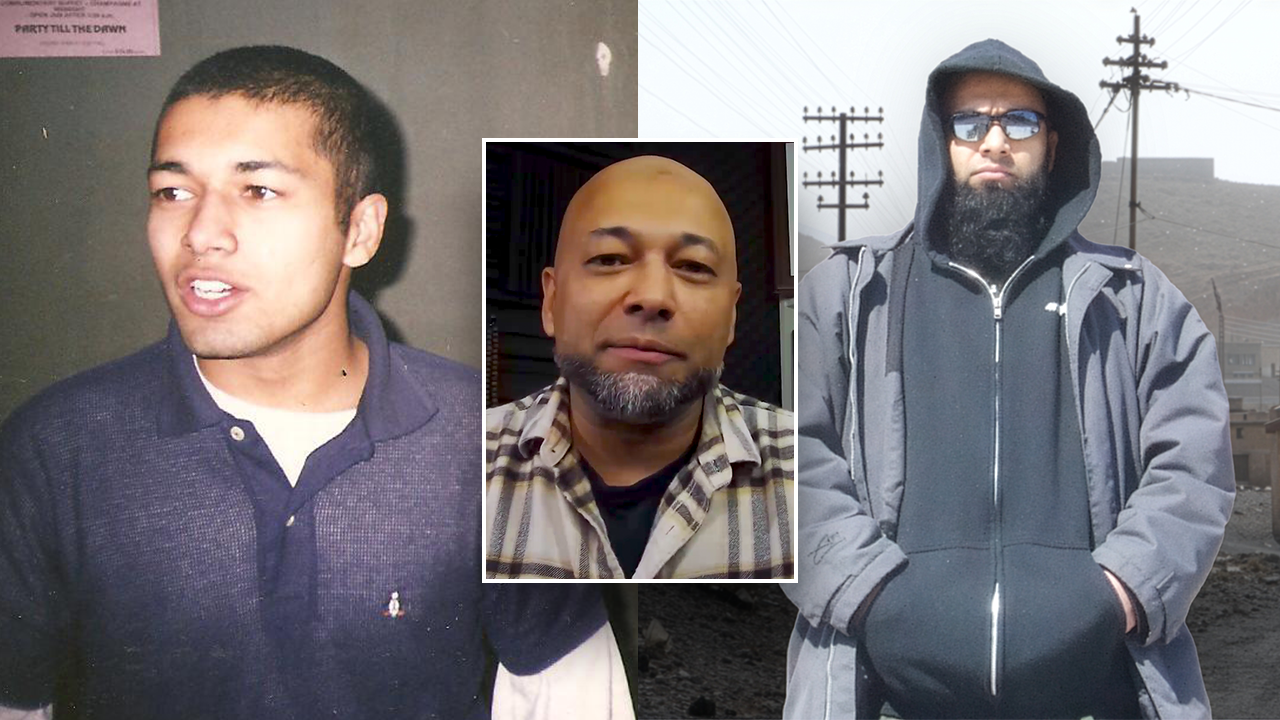
Mubin Shaikh, formerly radicalized by the Taliban, describes how he transitioned from extremism to working against it for U.S. and Canadian authorities. He identifies key signs of radicalization such as reconnaissance on targets like synagogues or mosques. His journey began after feeling pressured at a family party and led him through travels in India, Syria, and Pakistan where he encountered Taliban members who influenced his beliefs. Shaikh’s de-radicalization was partly due to personal responsibilities like marriage and significantly accelerated by the 9/11 attacks, prompting further study that altered his views. After returning to Canada, he was recruited by CSIS following inquiries about a terrorist case involving a childhood classmate.
Written locally by qwen2.5:14b on 2026-10-10,
using this article's own text rather than the other coverage of the
same event (that is the story summary below).
Story summary
Mubin Shaikh, a former Jihadist who was radicalized by the Taliban, has become a counter-terrorism specialist for both the United States and Canada. His journey began after attending a house party in his youth, which led to him feeling guilty about dishonoring his family’s values due to influence from his uncle. This guilt prompted Shaikh to travel to India, Syria, and Pakistan where he was further radicalized in Quetta, a Taliban stronghold city.
Shaikh now works to identify early signs of radicalization, such as individuals conducting reconnaissance on potential targets like local mosques or synagogues. He emphasizes the importance for parents and educators to recognize these behaviors as indicators that could prevent future attacks. Shaikh's story highlights how initial cultural pressures can lead to dangerous paths but also demonstrates the possibility of redemption through education and awareness about extremist ideologies.
Written for “Taliban De-radicalization Program” on 2026-10-10,
grounded in this article and the 0 other(s) covering the same event.
Why this leaning score
The model judged this article politically coded and scored it -0.25, but all 3 of its quote(s) are attributed speech - words the article quotes from someone, not the article's own narration, so the score is not published.
Written under an earlier scoring contract, which gave a paragraph
rather than checkable quotes. Re-analysing this article replaces it.
Leaning score withheld for article 70290: attributed speech only · logged 2026-10-10
Mubin Shaikh, a former Jihadist radicalized by the Taliban, details the radicalization process that enamored him with extremist ideology, before he snapped out of those views to become a counter-terrorism specialist for the United States and Canada.
asserted
he → radicalize → States
"The biggest indicator [of radicalization is] what we call pathway to violence behaviors.
asserted
we → call → violence
So, doing reconnaissance on a target, looking up, you know, where's the local synagogue?
asserted
synagogue → do → target
Where's the local mosque?" Shaikh told Fox News Digital.
asserted
Shaikh → tell → Digital
"It's very important for parents, educators and others to be aware of these signs so that they can possibly prevent the next attack," he continued.
uncertain
he → prevent → attack
Shaikh’s introduction to radicalization began after a house party, where his uncle "guilt tripped" him into thinking the party was the "most heinous thing possible" he could’ve done that "dishonored" his family.
uncertain
that → begin → family
"That’s what made me tell myself, I need to get religious, and that is what would start my radicalization," he continued.
asserted
he → ’ → radicalization
That incident prompted his travels to India, Syria and Pakistan, where he was radicalized by the Taliban.
asserted
he → prompt → Taliban
"The city that I was sent to in Pakistan was called Quetta and was and is a Taliban stronghold…
asserted
I → send → Pakistan
I had a chance encounter with the Taliban who basically impressed upon me that the only way for me to really be successful in this world and the next world was to be a militant, was to fight in jihad," he added.
asserted
he → have → jihad
"Me, [as] this young man looking for a sense of meaning, belonging [and] identity, these guys gave me what I thought I was looking for - and I became a supporter of their mentality," Shaikh continued.
asserted
Shaikh → look → mentality
A few years later Shaikh got married — a reality he says started to clear the smoke around his extremist views.
asserted
he → marry → views
"The abstract conversations around theology and geopolitics yielded to the very real reality in front of me of having a wife and the idea that I could have a future, I could start a family, and so that became more important for me in my life.
uncertain
that → yield → life
And that was basically addressing intimacy needs that every human being has.
asserted
being → address → that
And so my interest in the extremist world started to wane a bit," he said.
asserted
he → start → world
September 11th, 2001 would later become the biggest single catalyst in deradicalizing Shaikh.
asserted
11th → become → Shaikh
The worst terrorist attack in American history prompted him to travel to Syria, and research Islamic studies in depth.
asserted
attack → prompt → depth
"I would spend two years there studying Arabic and Islamic studies and would go through this period of de-radicalization," he continued.
asserted
he → spend → radicalization
When he returned to Canada, "the first Canadian had been arrested on terrorism charges after the newly minted post-9-11 anti-terror legislation" - Momin Khawaja - a fellow classmate and peer of Shaikh from Quran school during his childhood.
asserted
Canadian → return → childhood
Shaikh saw reference to the Canadian Security Intelligence Service (CSIS) and reached out to them, thinking Khawaja’s accusal a mistake.
asserted
accusal → see → them
Once they confirmed his classmate’s arrest and spoke more to Shaikh, CSIS recruited him as an undercover operative in counterterrorism efforts.
asserted
CSIS → confirm → efforts
"I was already online, looking at the extremism that was out there… and by 2012, started to see the rise of ISIS in real time.
asserted
that → look → time
It was at this time that the US government reached out to me and said, 'Hey, can you help us out with what's coming?'
asserted
what → reach → us
And so from 2012 to 2020, I participated and I supported the coalition against ISIS in various anti-ISIS activities and operations," he continued.
asserted
he → participate → activities
Shaikh works now as an exit peer specialist for Parents for Peace, a nonprofit fighting radicalization and extremism by intervening with individuals before it’s too late, most of whom "overwhelmingly are juveniles" under 18.
asserted
most → work → 18
"What gives me hope in countering extremism is really seeing how people turn out after they've left extremist ideologies.
asserted
they → give → ideologies
And when they come to see the mistake that they were making, when they come to see the pathway that it was leading them towards and seeing that they have left that, their lives get better, their personal situation gets better," he continued.
asserted
he → come → that
"To see parents, you know, have their kid back again — that's what it's all about," Shaikh said.
asserted
Shaikh → see → what
 The Aporia