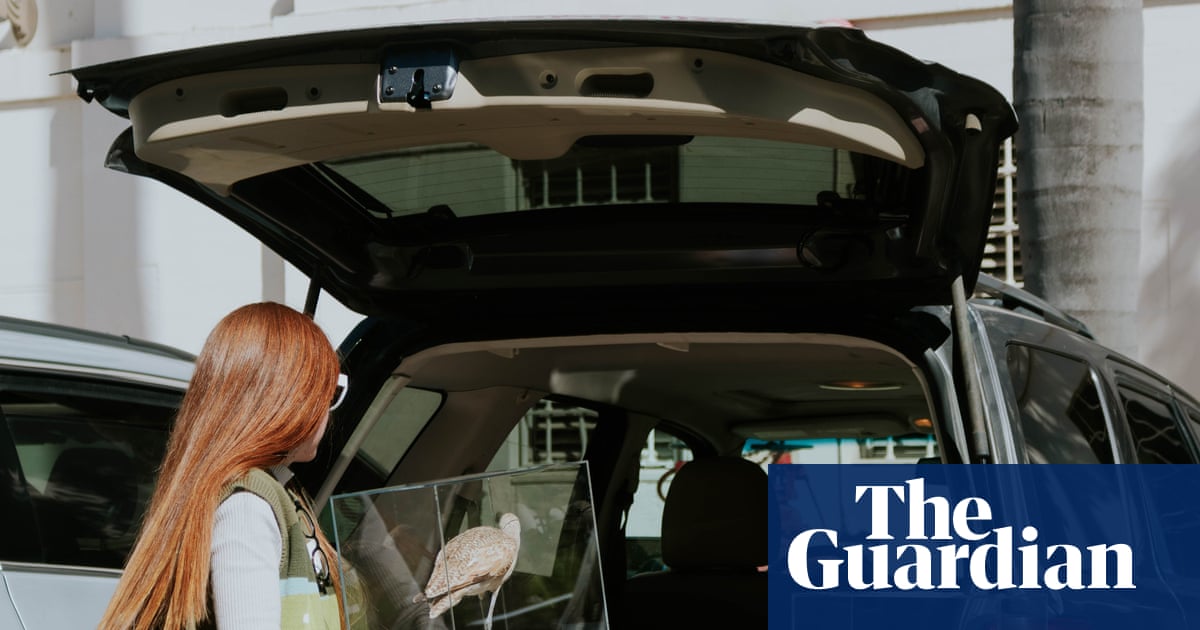
On a hot afternoon in August, I walked out of the San Diego Natural History Museum carrying a whale rib, a leopard pelt, a taxidermized weasel and a small piece of fossilized dinosaur poop.
asserted
I → walk → poop
It felt like a heist.
asserted
It → feel → heist
These were real specimens that belonged to the museum, not gift shop replicas.
asserted
that → belong → museum
But for two weeks, they were mine to take home, display in my living room, even bring to events with my friends.
asserted
they → take → friends
San Diego, California, has the only natural history museum in the US with a collection of nature specimens that they allow members of the general public to check out and take home, just like checking out books from a library.
asserted
members → have → library
Inside the museum, metal shelves of taxidermy fill the space floor to ceiling.
asserted
shelves → fill → ceiling
Light glints off rows of plexiglass boxes: alert bobcats, their ears perked; birds posed on branches; a jackrabbit suspended in air as if in mid-leap.
asserted
ears → glint → leap
Haylie Priest, the loan program’s manager, guided me through the room’s wonders: 1,400 specimens in total, from a megalodon tooth fossil to a king cobra head in a jar.
asserted
Priest → guide → jar
“We have birds of prey up front – large bones and fossils on the left – reptiles are all the way at the back,” she explained.
asserted
she → have → back
At the end of one aisle, on the lowest shelf, I found a small, stuffed alligator.
asserted
I → find → alligator
“He’s missing a few toes,” Priest warned me.
asserted
Priest → miss → me
The natural history museum’s taxidermy library grew out of a loan program that started in the 1920s, to bring “nature cabinets” to local schools around San Diego.
asserted
that → grow → Diego
Some of these old kits are still on display – like a wooden box filled with mineral samples, with a type-written guide inside that looks like it’s from the 1940s.
asserted
it → fill → 1940s
Sometime in the early 2000s, the museum opened up the program so that anyone who was interested could borrow the museum’s collection of specimens.
uncertain
who → open → specimens
While it’s common for American natural history museums to offer scientific kits for schoolteachers, having a specimen loan program open to the general public is unique, said Elizabeth Merritt, a trends expert at the American Alliance of Museums.
asserted
Merritt → ’ → Museums
The San Diego program appears to be the only one of its kind in the United States.
asserted
program → appear → States
It would be easy for museums to offer a similar program, Merritt noted: “There are lots of kinds of natural history specimens that are incredibly common, and quite often natural history museums will have a bucket of them around.”
asserted
museums → offer → them
A spokesperson for the National Museum of Natural History at the Smithsonian, which has a collection of 145.8m specimens and objects, called the San Diego program “certainly intriguing”.
asserted
which → have → program
The “Nature to You” program does fit into a larger pattern, Merritt said: many American museums are trying to open their collections to the public in new and untraditional ways, she said, a trend she calls the “distributed museum”, which started around 2014, at the same time as the rise of the tech “sharing economy”.
asserted
which → fit → economy
The San Diego library’s customer experience is seamless: a cluster of sturdy plastic carts waits near the door, so that members can wheel them up and down the aisles, “grocery style”, as Priest put it, taking bats or bones or bobcats off the shelf and adding them to their cart.
asserted
Priest → wait → cart
“And then we check you out,” she said.
asserted
she → check → you
Priest readily identifies the predator mammals as the most coveted species: a large coyote is No 1, followed by bobcats and foxes, and then a stuffed sea otter reclining on her back with a sea urchin in her paws.
asserted
coyote → identify → paws
“We call her Ophelia,” Priest said.
asserted
Priest → call → her
Like a parent, Priest does not like to pick her own personal favorites among her taxidermy children, though she is particularly fond of a stuffed kākāpō, a flightless nocturnal parrot from New Zealand.
asserted
she → like → Zealand
She refused to identify any of the specimens as the “least popular”, even the dead snakes coiled in jars of formaldehyde.
asserted
She → refuse → formaldehyde
“I feel like there’s a niche or a reason for someone to check out everything,” she said.
asserted
she → feel → everything
One of the biggest differences is that the specimens on loan have much less data associated with them.
asserted
specimens → have → them
Their ages and origins, even their precise species, are sometimes unclear, making them much less valuable for science.
uncertain
them → make → science
When children ask whether the museum killed the taxidermized animals, Priest reassures them the animals died of natural causes.
asserted
animals → ask → causes
“We like to say we gave them a second life,” she said.
asserted
she → like → life
An animal in the wild might live only 10 or 20 years: “These animals have been educating kids like you for 80 to 100 years.”
uncertain
animals → live → years
While the library is open year-round, it has two major seasons, Priest told me: Halloween, when people turn to the library for holiday decor (“a lot of bats, ravens, skeletons, owls … spiders and scorpions”); and spring (
asserted
people → have → bats
“everyone wants life cycles, baby things, butterflies, moths, hummingbirds”).
asserted
everyone → want → cycles
In the past year, the library had 186 members, who borrowed a total of 3,807 specimens.
asserted
who → have → specimens
Priest estimates that about 60% of the members are schoolteachers, and another 30% are educators who work for non-profits or community organizations.
asserted
who → estimate → profits
The last 10% are “private artists, families, and individuals who just have an interest”.
asserted
who → have → interest
Specimens have been checked out as decor for a university theater production and models for sculpture classes.
asserted
Specimens → check → classes
One woman who works from home visited the library every two weeks to get new taxidermy to put in the background of her video calls.
asserted
who → work → calls
“She was like: ‘It was so fun! Because my workers were always thinking, what is she going to pick out next?’” Priest said.
asserted
Priest → think → what
During my visit, I met a series of local park rangers, all in uniform, who borrow birds and small mammals for the local nature courses they teach.
asserted
they → meet → courses
…and 27 more, not listed.
 The Aporia