- Published
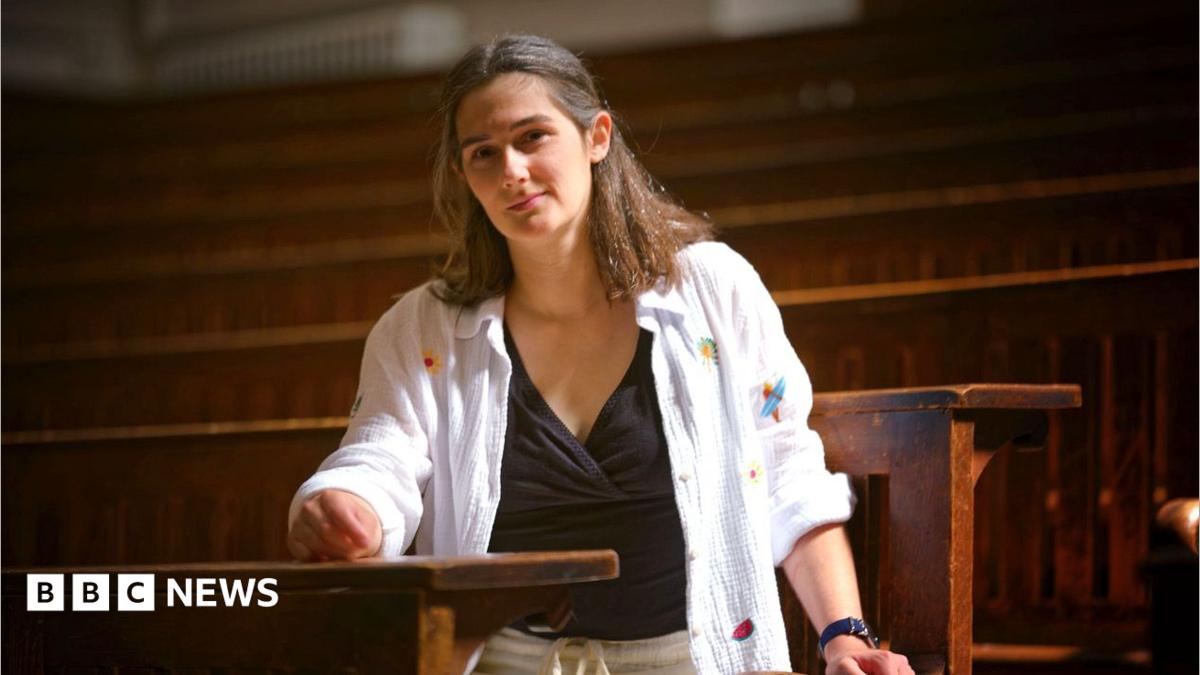
Dr Amanda Cole was 15 and sitting in a religious studies class when she experienced a peculiar spasm at the back of throat.
asserted
she → publish → throat
She assumed it would pass, but it was a vocal tic and her first known manifestation of her Tourette's syndrome, a condition that causes people to make sudden, repetitive sounds or movements.
asserted
people → assume → sounds
"How am I going to have a family?
asserted
I → go → family
How am I going to have a job?" Cole, 32, remembers asking herself as she lay awake at night after her diagnosis in her 20s at her home on the Debden Estate near the London-Essex border.
asserted
she → go → border
"I thought it was going to destroy my life."
asserted
it → think → life
Now a married mother-of-one, Cole is an assistant professor in sociolinguistics at Cambridge University, but throughout her academic life she has kept her Tourette's hidden - until now.
asserted
she → keep → Tourette
Following an incident at this year's Bafta Film Awards ceremony in which a guest shouted out offensive words because of his tics, Cole said she wanted to be open about her condition and allowed the BBC to join her as she began telling colleagues and students.
asserted
she → follow → colleagues
"I felt so scared of Tourette's," says Cole, who is one of about 300,000 people in the UK living with the condition.
asserted
who → feel → condition
"There was no-one I knew that had Tourette's, and I didn't see anyone in the public eye that had Tourette's - and if they did, they were a figure of ridicule.
asserted
they → be → ridicule
"The only impression I had of Tourette's was people acting... and they were swearing, and they were shouting, and they were being obnoxious."
asserted
they → have → Tourette
As a result, she hid the condition from friends growing up and colleagues by either by suppressing the tics or releasing them when the person she was speaking with looked away.
asserted
she → hide → them
Even now, Cole says she retains "some residual shame" about her condition and wants to live in a world where people can "tic freely" without embarrassment.
asserted
people → say → embarrassment
"It's quite liberating telling people, whether it's students or friends because most of the time people are just like 'oh, OK, fine'," says Cole, who is also autistic.
asserted
who → tell → time
The most recent data from the Higher Education Statistics Agency, external shows out of about 245,000 academic staff working in the UK's institutions, just 70 - or 0.03% - have disclosed a developmental condition that affects motor or cognitive skills.
asserted
that → show → skills
Experts believe the true number may be far highe, externalr and that many academics with conditions such as Tourette's hide their neurodiversity for fear of repercussions.
uncertain
academics → believe → repercussions
Cole's vocal tics tend to include the names of her husband, her son or the family cat or random phrases such as "good night" during the day time.
asserted
tics → tend → time
"I worry a little bit [that] I'm like the palatable face of Tourette's - I don't swear, I don't say anything that is going to be too challenging.
asserted
that → worry → anything
"I think what we just really need as society is an understanding of Tourette's, an understanding of tics and to know that tics aren't what we really think," she says.
asserted
she → think → what
The words are merely "a neurological event that we have no control over", she adds.
asserted
she → have → control
Emma McNally, the chief executive at Tourette's Action, says many of those with coprolalia end up self-isolating from society.
asserted
many → say → society
She adds that many people with Tourette's find people accepting of their condition until they say something that feels as though "it's about them".
asserted
it → add → them
"People then take offence even though there's no malice behind it," says McNally.
asserted
McNally → take → it
While Cole and many others with Tourette's have developed often very sophisticated strategies to mask their tics, not everybody can suppress them, McNally says.
asserted
McNally → develop → them
But unreleased tics need to come out at some point, Cole says, and storing them up is physically uncomfortable - she describes the sensation as akin to an "itch" or "suppressing a sneeze".
When she is alone, she will then spend time releasing all of those suppressed tics - a process that can take a few minutes.
"I've gone to great lengths at times to hide my Tourette's," she says.
asserted
she → need → Tourette
Some people with Tourette's can't suppress at all, and some people can suppress to a lesser or greater degree."
asserted
people → suppress → degree
Women, she says, tend to be more adept at "masking" the condition.
asserted
she → say → condition
The BBC joined Cole in May for her first lecture in which every student was aware of her Tourette's.
uncertain
student → join → Tourette
"I had no idea until she told us," says linguistic student Tim Morrice.
asserted
Morrice → have → us
"But I really appreciate her telling us because I think it's really nice to see neurodivergent people in academia because it isn't a thing we see or hear very much."
asserted
we → appreciate → academia
Fellow student Abbie Lovewell says finding out about Cole's Tourette's made absolutely "no difference" to her or how she views her supervisor.
asserted
she → say → supervisor
"I think she's one of the best supervisors that I've had," she adds.
asserted
she → think → that
When asked if she would take a magic pill that removed her Tourette's, Cole responds with a firm "no".
asserted
Cole → ask → no
"I wouldn't ever want to get rid of my Tourette's because my brain is wired the way my brain is wired, and I like being me and the people that love me, like me being me."
asserted
me → want → me
Tourette's, she says, can also offer a selection of "superpowers".
asserted
she → say → superpowers
"I really have hyperfocus - something that has been well-documented as part of Tourette's," she says, describing being able to spend hours on a task she has set herself such as research, painting or playing the piano.
"
asserted
she → have → piano
I can really, really focus and be really, really, really productive," she says.
asserted
she → focus → ?
However, there can be disadvantages to Cole's hyperfocus, according to her husband Ed Wellington, such as getting her attention when she is involved in a task or her refusal to stop doing household tasks in spite of the time, once she has begun.
uncertain
she → accord → time
Her tics and her Tourette's in general, however, have never been something the pair have really discussed, he says.
asserted
he → discuss → ?
"From when I first met her, I could sort of tell she had something about her - she had real energy and drive," says Wellington.
uncertain
Wellington → meet → energy
"I didn't know she had Tourette's.
asserted
she → know → Tourette
…and 9 more, not listed.
 The Aporia