[This is one of the finalists in the 2026 book review contest, written by an ACX reader who will remain anonymous until after voting is done.
asserted
voting → write → reader
I’ll be posting about one of these a week for several months.
asserted
I → post → months
When you’ve read them all, I’ll ask you to vote for a favorite, so remember which ones you liked
asserted
you → read → ones
In 1940 the Empire State Building was the tallest man-made structure in the world, and if you stood at the top of it you could see the future.
uncertain
you → make → future
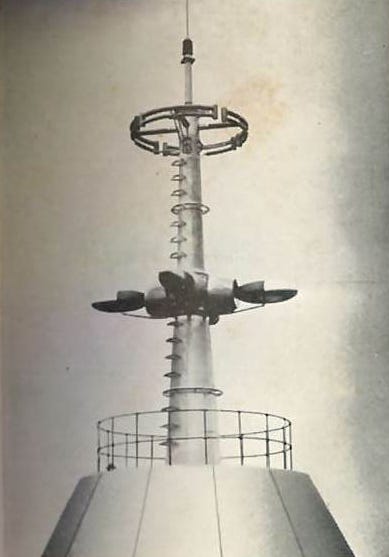
Specifically, you could see this: the first NBC television broadcast transmitter, intermittently blasting 49.75 MHz audio and 46.5 MHz video signals across a hundred-mile swath of megalopolis.
uncertain
you → see → megalopolis
A turnstile antenna, a ring of linked dipoles, and a crowning lightning rod formed the sharp point at the literal apex of human achievement.
asserted
antenna → link → achievement
This is the lance that scraped the sky deeper than it had ever been scraped, the tip of the spear for a high radio modernism that would soon conquer the world.
asserted
that → scrap → world
This is the needle that pierced the veil of the corporeal and pulled the thread of human culture into a realm of deracinated ghosts forever haunting the invisible airwaves.
asserted
that → pierce → airwaves
Maybe this sounds overwrought and spooky.
asserted
this → sound → ?
But I’m not just editorializing on my own here: this is how some of the guys who invented television talked about it!
asserted
who → editorialize → it
I found this out by reading We Present Television, a collection of essays by various stakeholders in the earliest American TV broadcast systems—“televisionaries”, as they are occasionally referred to in the text.
asserted
they → find → text
I rescued my copy from being pulped after it was weeded from a library.
asserted
it → rescue → library
What got me to look at it was the odd handwritten title on the spine, and what got me to keep it was the shockingly early copyright date of 1940.
asserted
me → get → 1940
This is not a pat description of a settled feature of American life; these pieces were written from the bleeding edge of a brand new technology.
asserted
pieces → settle → technology
They were intended for the edification of a public for whom TV was a curious experimental luxury that only your richest friend’s richest friend might own1.
uncertain
friend → intend → that
The essays read roughly 90% as prosaic technical notes on the state of the art and 10% as wild-eyed futurist prophecy.
asserted
essays → read → prophecy
Both modes offer a fascinating glimpse of a transformative new art in the process of being born.
asserted
modes → offer → process
It is an approachable, Scientific American-style primer, but also, at times, the closest thing I have ever found to a dread grimoire written by the successful summoners of an Elder God.
asserted
I → find → God
In my mind, prior to reading We Present Television, the history of TV was a pretty firm thing stretching from the present back to the early 1950s and I Love Lucy.
asserted
I → read → Lucy
I had no clue really.
asserted
I → have → clue
I suspect most people don’t.
asserted
people → suspect → ?
Lucy stands as a cultural totem of “early TV” the way that The Wizard of Oz and Frankenstein stand in for all of “early film” in the popular imagination.
asserted
Wizard → stand → imagination
But here was a book about television from a decade before Lucy and Desi ever got up to a single shenanigan!
asserted
Lucy → get → shenanigan
What could possibly have been going on on TV back then?
uncertain
What → go → TV
The answer is, for the most part, some weird stuff that it’s impossible to watch today.
asserted
it → ’ → that
To continue the film analogy: “Talkies” as a medium have the advantage of a single solid genesis point with The Jazz Singer in 1927, just as “Classic TV” has the genesis point of Lucy being shot on 35mm film that allowed it to be preserved for future generations.
asserted
it → continue → generations
The nascent television documented in this book is more akin to film in the 1900s and 1910s: a frontier technology still undergoing rapid technological progress and gradual artistic maturation2.
asserted
television → document → progress
And like those flammable early films, early TV was seldom preserved to leave any kind of cultural footprint, rendering it forgotten to all but a scholarly few today.
We Present Television is in large part the textual equivalent of a How It’s Made episode for “1930s television programming”.
asserted
It → preserve → programming
It comes at the subject from every angle and through every stage of the process, and ends up illuminating why early TV evanesced from the cultural memory even as the concept of television pervaded culture.
asserted
concept → come → culture
If you associate “inventor of television” with a single name, it is likely Philo Farnsworth, the Utahan tinkerer who received the first US patent for it.
asserted
who → associate → it
The fabulously-named Waldemar Kaempffert, science editor for The New York Times from 1927 to 1956 and author of We Present Television’s introduction, thinks that’s a load of crock.
asserted
that → name → crock
Kaempffert was evidently fond of technocultural prognostication (he got the NYT gig after writing an essay for Forum magazine on “The Social Destiny of Radio”), so a lot of his introduction falls into the realm of Prophecy and will be covered later in the review.
asserted
lot → get → review
But he also does a bit of historiography right at the top.
asserted
he → do → top
In Kaempffert’s telling, television was inevitable from the moment the first fax machine was conceived in the 1840s3, and it was midwifed into existence not by any one nameable genius but by the concerted effort of technocapital itself:
“What strikes the student of social sciences and the historian of technology is the manner in which this dream of television became a fact.
asserted
dream → conceive → television
The early facsimile telegraphers, cinematographers, phototelegraphers, and television empiricists all belonged to what may be called the laissez-faire school of invention.
uncertain
what → belong → invention
It was a school that educated itself by cut-and-try experimenting, that converted attics and cellars into laboratories, that had to hawk its patents until at last some imaginative capitalist bought them.
asserted
capitalist → educate → them
Just as the laissez-faire school of economics gave way to planning, so the laissez-faire school of invention is giving ground to planned research.
asserted
school → give → research
And for the simple reason that the attainment of television demanded a deeper knowledge of theoretical physics than any garret inventor could possess…
uncertain
inventor → demand → physics
[Television] is probably the very first great invention deliberately developed by organized research and born full-grown in most of its essentials.
asserted
Television → develop → essentials
Kaempffert’s precis of the development of television goes on to describe an ever-increasing rate of advancement in which “time was telescoped”, driven by wildly extravagant capital investment that “probably exceeds $20,000,000”.
asserted
that → go → ”
…and 333 more, not listed.
 The Aporia