- Published
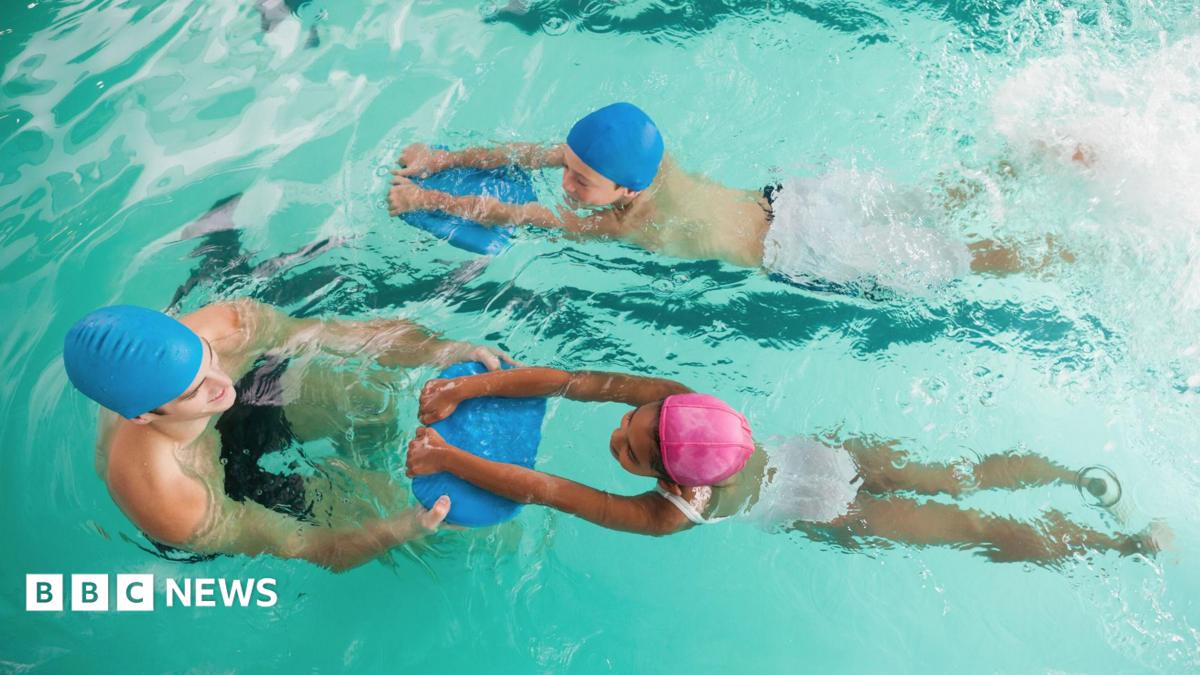
Children at English primary schools with more pupils on free school meals are less likely to leave able to swim 25m, BBC research has found.
asserted
research → publish → m
While 72% of Year 6 children on average left school able to swim 25m in 2024-25, this drops to just 55% for schools with a higher proportion of disadvantaged children.
asserted
this → leave → children
Ashley Jones, head of water safety and education at the Royal Life Saving Society (RLSS), said it was "absolutely vital" children were equipped with basic swimming and self-rescue skills.
asserted
children → say → skills
A Department for Education (DfE) spokesperson said it was aware of the gap and it "needs to change".
asserted
it → say → gap
The national curriculum in England, external states when they leave Year 6, all pupils should be able to:
Swim competently, confidently and proficiently over a distance of at least 25m
Use a range of strokes effectively (for example, front crawl, backstroke and breaststroke)
Perform safe self-rescue in different water-based situations
asserted
pupils → state → situations
A BBC Freedom of Information request to the DfE has revealed the proportion of Year 6 pupils at individual state schools, excluding special schools, who are able to meet the targets.
asserted
who → reveal → targets
While 70% of 2024-25 Year 6 leavers nationally could on average perform a safe self-rescue, only half of children from schools with the highest level of free meal eligibility could do so.
uncertain
half → perform → eligibility
A safe self-rescue includes being able to tread water for 30 seconds, children being able to float on their back for 60 seconds and swim 15m to exit the water unaided.
asserted
children → include → water
Most school groups only get six weeks of 30-minute sessions to learn basic swimming skills – three hours in total.
asserted
groups → get → total
The findings come after several water-related deaths this summer, including an 18-year-old man who died after getting into difficulty at sea at the weekend in East Sussex.
asserted
who → come → Sussex
Find out how your child's school performed
School performance ranged from no pupils leaving Year 6 able to swim 25m to others meeting the target at 100%.
asserted
pupils → find → %
Only 38 schools in the highest category for disadvantaged pupils hit the swimming target.
asserted
schools → hit → target
Meanwhile, it was met by nearly 400 schools with the lowest proportion of children on free school meals.
asserted
it → meet → meals
For parents, there can be several obstacles when it comes to helping their children learn to swim and become water competent.
asserted
children → come → parents
In 2021, Swim England published its Decade of Decline report, external warning almost 2,000 swimming pools could be lost forever by 2030.
uncertain
pools → publish → 2030
Accessibility is one of the factors Ashley Jones from the RLSS says limits children's swimming education.
asserted
Jones → say → education
"We've got some incredible public leisure facilities, just not enough of them," he said.
asserted
he → get → them
"That means people have got to travel further.
asserted
people → mean → ?
Some schools are tackling transport costs in innovative ways, such as in Derby where a pop-up swimming pool was set up on school grounds.
asserted
pool → tackle → grounds
The RLSS works to help people stay safe in, on, and around water.
asserted
people → work → water
A key element of its work is using education to help people become water competent.
asserted
people → use → education
Jones explained: "You can be a really competent pool swimmer, but we wouldn't dare put you in 6ft of surf or throw you in a raging river.
asserted
we → explain → river
"Building competence, you've got to have knowledge, you've got to have skills, you've got to have experience, crucially, and you've got to have training."
asserted
you → build → training
In order to help children build water competency, Jones believes swimming lessons need to be universal, engaging and accessible.
asserted
lessons → help → competency
The RLSS would like to see "a fully funded, fully supported, high-level learn to swim programme" that is supported by water safety education and then applied in an outdoor environment.
asserted
that → like → environment
Hampshire-based swimming teacher Bethany Harris said it was "really tough" to teach a life skill in that time to children who have not had much access to swimming.
asserted
who → base → swimming
She believes school swimming lessons should start earlier in life to ensure nobody is left behind.
asserted
nobody → believe → life
"Ultimately, in three hours you can't take someone from being a nervous swimmer to confidently being able to swim 25m with a stroke that is calm and is going to keep them safe," she said.
asserted
she → take → them
"I don't think many of us would come out of that with something that was going to save our lives potentially.
asserted
that → think → lives
I think it needs to come in basically as we're teaching them to read and write in the infant school."
asserted
we → think → school
Harris lives "on the doorstep" of Hawley Lake, near Farnborough, where a 14-year-old died in May after going missing while swimming.
uncertain
old → live → May
"Even being inland away from the coast you've got dangerous water all about," she said.
asserted
she → get → water
The bottom fifth of local authorities for the average proportion of children able to swim 25m were all urban areas.
asserted
fifth → swim → m
Overall, fewer children in urban areas could swim the distance proficiently than in rural areas.
uncertain
children → swim → areas
Harris would also like to see pools offer more initiatives to ensure they are accessible to all families.
asserted
they → like → families
She said: "Ten years ago, there used to be a summer scheme where you could swim for £1 all summer long through some leisure centres.
uncertain
you → say → centres
I haven't heard of anything like that happening locally these days."
asserted
anything → hear → that
A spokesperson for the DfE said a new PE Partnership Network would help close the gap seen by disadvantaged children.
asserted
Network → say → children
It will bring together schools, local clubs and national bodies like Swim England.
asserted
It → bring → England
"This means targeted support for the areas and pupils who need it most, so that every child, wherever they live, gets the same chance to learn to swim," the spokesperson said.
asserted
spokesperson → mean → chance
…and 4 more, not listed.
 The Aporia