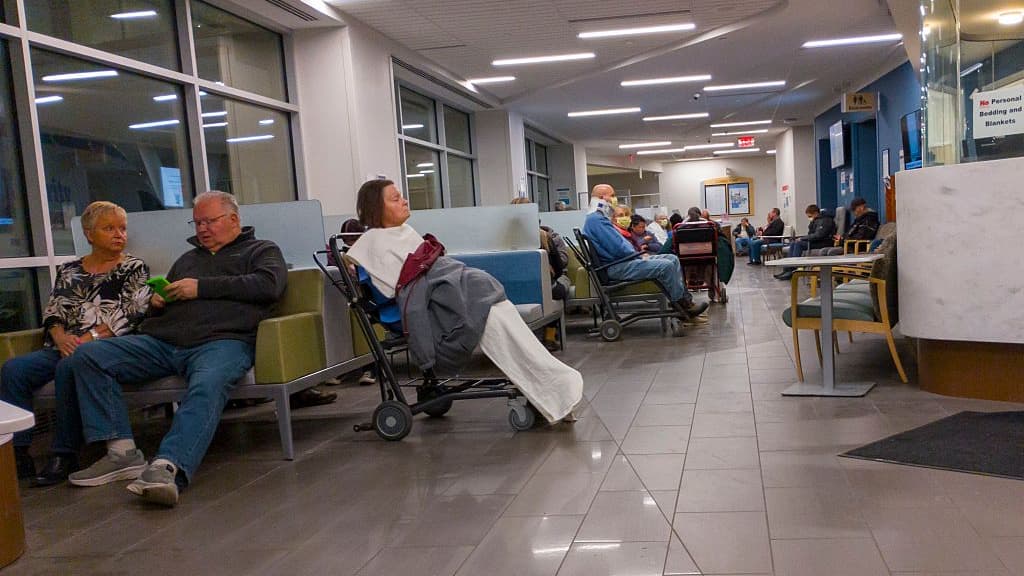
Dr. Elaine Batchlor, CEO of MLK Community Hospital in Los Angeles, already knows what will happen if her hospital closes.
asserted
hospital → know → Angeles
All she has to do is remember King Drew, a similar safety net hospital that provided care to a large share of low-income patients in the same neighborhood, that closed in 2007 because of safety and quality problems.
asserted
that → have → problems
As a result, other hospitals in the area saw higher volumes of patients and more uninsured patients; one hospital’s share of uninsured patients more than tripled, from about 13% to nearly 45%, a study found.
asserted
study → see → %
This redistribution of sick people led to severe overcrowding in other hospitals and higher costs for insured patients.
asserted
redistribution → lead → patients
Now, Batchlor and many other hospital administrators are bracing for this dynamic once again as cuts from H.R. 1, also known as the One Big Beautiful Bill Act, ripple across the U.S. health care system.
asserted
cuts → brace → system
H.R. 1 makes it more difficult for people to stay on Medicaid by introducing work requirements and by demanding that people re-confirm their income and address every six months, rather than every year.
asserted
people → make → income
It also reduces the amount of state funding hospitals receive through the Medicaid program.
asserted
hospitals → reduce → program
Batchlor estimates that her hospital will lose between $80-$100 million a year because of H.R. 1.
asserted
hospital → estimate → H.R.
She’s scrambling to find funding from elsewhere, including from a new 5% sales tax recently passed in Los Angeles County to fund local health services, including safety net hospitals like hers.
asserted
She → scramble → hers
She’s determined to keep MLK Community Hospital open, but she knows other hospitals won’t be successful in doing so.
asserted
hospitals → ’ → Hospital
One analysis found that more than 300 rural hospitals are at risk of closing because of H.R. 1.
asserted
hospitals → find → H.R.
What Batchlor wants people to know is that an increase in uninsured people doesn’t just affect the people losing insurance.
asserted
increase → want → insurance
It affects everyone.
asserted
It → affect → everyone
More uninsured people means more of a financial burden on hospitals—particularly hospitals like hers, which are located in low-income neighborhoods and which will incur higher costs treating everyone who shows up in the emergency room because they’ll see more uninsured patients.
asserted
they → mean → patients
When hospitals face financial distress, they cut back on services: often ob-gyn and preventative care.
asserted
they → face → services
Or they close altogether.
asserted
they → close → ?
“There will be hospitals that will likely close as a result of the financial distress, and the patients that were served by those hospitals will need to go somewhere else,” she says.
asserted
she → close → hospitals
“They will go to hospitals in other neighborhoods, and those emergency departments will become more crowded, and those hospitals will become more crowded.”
asserted
hospitals → go → neighborhoods
What’s more, people with insurance are likely to see their costs rise as the number of uninsured Americans spikes.
asserted
number → ’ → Americans
Hospitals and doctors must charge more as they provide more non-reimbursed care.
asserted
they → charge → care
A September 2 report by Marsh, the consulting firm formerly known as Mercer, estimates that the cost of health insurance plans to employers will increase by 11% in 2027—the biggest jump in decades—and that many employers will pass those costs on to their workers.
asserted
employers → consult → workers
“Lower government funding and reimbursements in public health programs are also driving higher charges or care in employer plans,” the report found.
asserted
report → drive → plans
Why the health-insurance landscape is changing so quickly
The U.S. is facing its most serious health-insurance crisis since the passage of the Affordable Care Act in 2010.
asserted
U.S. → change → 2010
It’s not just that H.R. 1 is projected to make more people lose Medicaid coverage; Congress decided not to renew subsidies for the Affordable Care Act in 2026, meaning that thousands of families are seeing the cost of insurance skyrocket and are deciding to drop insurance coverage rather than pay hundreds or thousands of dollars a month for care.
asserted
cost → ’ → care
All told, the Congressional Budget Office expects 16 million more people to be uninsured by 2034.
asserted
people → tell → 2034
People who will not have health insurance may forgo primary care, checkups, and other preventative measures, and could be saddled with hundreds of thousands of dollars in bills if they get a serious illness.
uncertain
they → have → illness
But it’s not just bad news for them—the insurance crisis threatens the finances and care of everyone, even if they have private insurance plans and are sure they won’t lose coverage, experts say.
asserted
experts → ’ → coverage
Everyone is likely to face longer wait times, fewer services, and higher costs as hospitals and medical systems sag under the weight of more uninsured.
asserted
hospitals → face → uninsured
And as the example of MLK Community Hospital shows, they may also be paying higher taxes on products that aren’t even health related to help fund care for the uninsured.
uncertain
that → show → uninsured
“There’s a ripple effect that hits the uninsured and newly uninsured and underinsured particularly hard,” says Anthony Wright, executive director of Families USA, a national consumer health advocacy group.
asserted
Wright → ’ → USA
“But it ripples through families and communities and the health system we all rely on.”
asserted
we → ripple → families
Some hospitals are already closing.
asserted
hospitals → close → ?
Select Specialty Hospital—Tucson East recently announced its imminent closure, though a spokesperson did not confirm it was because of H.R. 1.
asserted
it → announce → H.R.
Others are already making tough choices about what services to continue.
asserted
Others → make → services
One Las Vegas hospital said in August that because of increased demand for its emergency room services, it was closing its maternity and NICU services by the end of September.
asserted
it → say → September
How hospitals absorb the costs
Safety net hospitals are most in danger of seeing their finances erode quickly.
asserted
finances → absorb → danger
That’s because they are, by definition, non-profit hospitals that provide care to people regardless of their insurance status or ability to pay.
asserted
that → ’ → status
America’s Essential Hospitals, an association for safety net hospitals, said in an interview that among its 400 members, three-quarters of the patients they serve are uninsured or on Medicare or Medicaid.
asserted
they → say → Medicare
Already, these hospitals are losing money every year, says Jennifer DeCubellis, president and CEO of America’s Essential Hospitals.
asserted
DeCubellis → lose → Hospitals
This is likely to get worse as more people delay care and then end up in emergency rooms, where their care is going to be more expensive, she says.
asserted
she → get → rooms
…and 35 more, not listed.
 The Aporia