Toronto Star
· collected 2026-10-09 · by Seth Borenstein The Associated Press
This article provides a glossary explaining hurricane-related terms for clarity during storm threats. It covers definitions of tropical cyclones, hurricanes, typhoons, tropical depressions, and storms, detailing their wind speeds and impacts on land. The piece also describes the Saffir-Simpson Scale, categorizing hurricanes from 1 to 5 based on maximum sustained winds, with Category 3 and above classified as major hurricanes capable of extensive damage. Additionally, it explains storm surge and tide, including potential water levels and fatalities associated with them.
Written locally by qwen2.5:14b on 2026-10-09,
using this article's own text rather than the other coverage of the
same event (that is the story summary below).
Story summary
Hurricanes are powerful storms that can cause significant damage, especially when they rapidly intensify near land. Rapid intensification occurs when a storm's sustained winds increase by at least 35 mph within 24 hours due to unusually warm water temperatures. These storms pose a dangerous threat if they strengthen quickly just before making landfall.
Tropical cyclones are the broader category of these rotating systems, which form in Earth’s warmer regions and rotate counterclockwise in the Northern Hemisphere but clockwise in the Southern Hemisphere. In the Atlantic and eastern Pacific, the strongest tropical cyclones are called hurricanes, while they are referred to as typhoons in the northwest Pacific and cyclones or tropical cyclones in the south Pacific and Indian Ocean.
The weakest of these storms start as tropical depressions with winds less than 39 mph (63 kph). Once they reach sustained wind speeds between 39 mph and 74 mph, they are categorized as tropical storms and given names from a predetermined list. When tropical storm winds reach 74 mph or higher, the system is classified as a hurricane, with five categories based on increasing severity according to the Saffir-Simpson Scale.
Written for “Hurricane Terms Explained” on 2026-10-09,
grounded in this article and the 0 other(s) covering the same event.
It’s a confusing time when a hurricane threatens, and some terms used by officials aren’t known by everyone, so here’s a storm glossary.
asserted
glossary → ’ → everyone
Let’s start with the broad category of these storms, called tropical cyclones.
asserted
’s → start → storms
In the northern hemisphere, a tropical cyclone is a rapidly counterclockwise-rotating storm that forms in Earth’s warmer areas that is organized with a center that winds flow out of.
asserted
winds → rotate → that
Tropical cyclones rotate clockwise in the southern hemisphere.
asserted
cyclones → rotate → hemisphere
The strongest tropical cyclones in the Atlantic and eastern and central Pacific oceans are called hurricanes.
asserted
cyclones → call → Atlantic
In the northwest Pacific they are called typhoons and in the south Pacific and Indian oceans they are called cyclones or tropical cyclones.
asserted
they → call → Pacific
Tropical depressions, tropical storms
In the Atlantic, the weakest of these systems are called tropical depressions.
asserted
weakest → call → systems
They have winds of less than 39 mph (63 kph).
asserted
They → have → mph
When a tropical depression reaches 39 mph (63 kph) but is weaker than 74 mph (119 kph) they are called tropical storm and receive a name from a pre-established list.
Category 1 and 2 hurricanes
When a tropical storm hits 74 mph (120 kph), it achieves hurricane status.
asserted
it → reach → status
The weakest is a Category 1, with winds of 74-95 mph (120-150 kph) and it will have dangerous winds that produce some damage.
asserted
that → have → damage
Tree branches will snap and some will be uprooted.
asserted
some → snap → ?
A Category 2 has winds of 96-110 mph (155-175 kph) and can be disastrous, with near-total power loss expected near the center.
asserted
Category → have → center
Major hurricanes: Category 3, 4 and 5
When hurricanes sustain winds exceeding 111 mph (180 kph), they get major hurricane status, with devastating consequences.
asserted
they → sustain → consequences
Even well-built homes may be severely damaged by a Category 3 hurricane with winds of 111-129 mph (180-210 kph).
uncertain
homes → build → mph
A Category 4 hurricane is considered catastrophic, with winds of 130-156 mph (210-250 kph) that leave entire areas uninhabitable for weeks or months.
asserted
that → consider → weeks
The scale tops out at Category 5, when a hurricane’s winds exceed 157 mph (250 kph).
asserted
winds → top → mph
A high percentage of the homes in the disaster region will be destroyed.
asserted
percentage → destroy → region
Power outages could last for months.
uncertain
outages → last → months
Storm surge and tide
Storm surge is the deadly rise of water generated by a storm that’s above and beyond the normal tide.
asserted
that → generate → tide
It starts in the ocean but could include rivers and canals.
uncertain
It → start → rivers
Storm surges once caused nearly half of a hurricane’s deaths, but surge-related fatalities have come down with warnings and education to about 11% of all direct deaths.
asserted
fatalities → cause → deaths
Surges can reach as much as 20 feet or more and that does not include waves, which are on top of storm surge.
asserted
which → reach → surge
Eye and eyewall of hurricane
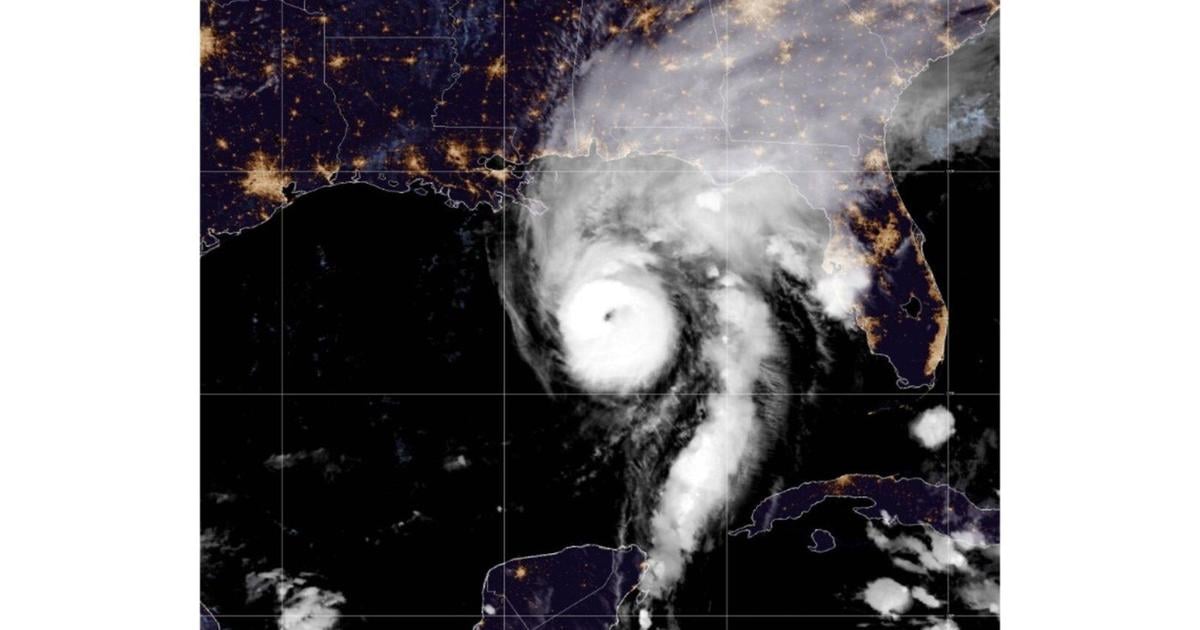
A hurricane’s center is called the eye.
asserted
center → call → hurricane
After awhile, a storm can form a new second eyewall around the first in a process called eyewall replacement that temporarily weakens the storm’s intensity but enables it to grow larger overall.
asserted
it → form → intensity
When an area on the ground is hit by the eyewall, it will be buffeted by intense winds, then get a break before being slammed by the other side of the eye in a second round of the storm’s strongest winds.
asserted
it → hit → winds
Landfall
When the eye of a hurricane or tropical storm goes over land, that point is called landfall.
asserted
point → go → land
But high winds, rain and storm surge can cause all sorts of damage many hours before landfall, and last many hours thereafter.
asserted
winds → cause → landfall
Landfall is not necessarily where the strongest winds are, and the wider swirl of a storm can spread destruction across large areas.
asserted
swirl → spread → areas
Dirty side of a hurricane
The right front quadrant of a hurricane or northeast part of the eyewall tends to cause the most damage as the strongest winds blow counterclockwise around the center, so this at times is called a storm’s dirty side.
asserted
this → tend → times
In the southern hemisphere, it’s the left front quadrant that is the dirty side.
asserted
that → ’ → hemisphere
Forecast and spaghetti models
There are dozens of computer generated models that forecast changes in each storm’s track and intensity.
asserted
that → be → track
They vary because each one uses different assumptions about how storms operate and some prove better during certain storms and worse during others.
asserted
some → vary → others
Forecasters advise to avoid concentrating on one individual model.
asserted
Forecasters → advise → model
When many or all of the models are put on one map, they generally show an overall sense of what will happen.
asserted
what → put → sense
Sometimes they show a lot of lines going in different directions, which can look like cooked spaghetti.
asserted
which → show → spaghetti
The National Hurricane Center’s official forecast is not one specific line, but rather a cone of uncertainty that expands with time, up to five days out.
asserted
that → expand → time
That cone shows the most probable area where the eye of the storm could move over time, but it doesn’t mean the storm will be in the center of that cone.
uncertain
storm → show → cone
It is designed so that 67% of the most likely tracks fall within the cone.
asserted
% → design → cone
Watches and warnings
A hurricane or tropical storm watch means conditions are possible within an area during the time specified by the National Weather Service.
asserted
conditions → mean → Service
A hurricane or tropical storm warning means those conditions are no longer just possible, but expected.
asserted
conditions → mean → ?
…and 5 more, not listed.
 The Aporia