That is 0 articles you have read today.
The Aporia is free and carries no advertising, so readers are the only
thing paying for it. If you are getting this much out of it, a small
donation is what keeps it independent.
Daily limit reached
You have read 0 articles today.
That is more than the 15 a day The Aporia gives away,
and well past what it can carry on nothing. Your allowance resets at
midnight.
There is no advertising here and nothing about you is sold, so readers
are the only thing paying for it. If the site is worth this much of
your day, it is worth a few dollars.
Everything else stays open: the
maps, the
directory and
search do
not count against this, and neither does re-opening something you have
already read today.
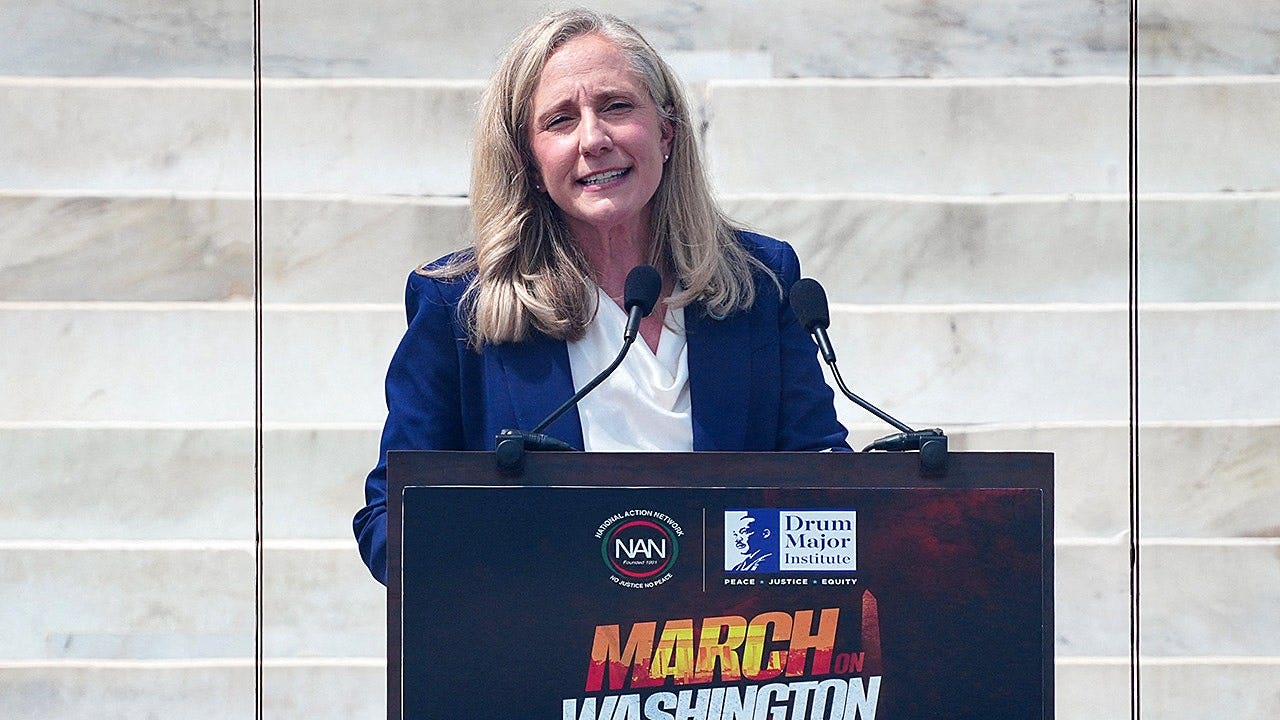
Virginia Governor Abigail Spanberger is investigating reports that her administration may have mistakenly restored voting rights to deceased individuals when she reinstated them for 66,085 former felons in July. The governor acknowledged the possibility but noted that databases tracking individuals with revoked voting rights do not always indicate if a person has died. This issue emerged as Spanberger’s approach contrasts sharply with her predecessor's more restrictive policies; it also precedes a November referendum on automatically restoring voting rights to released felons under state law.
Written locally by qwen2.5:14b on 2026-10-09,
using this article's own text rather than the other coverage of the
same event (that is the story summary below).
Story summary
Gov. Abigail Spanberger, a Democrat in Virginia, announced in July that she had restored voting rights to 66,085 Virginians with felony convictions. However, reports emerged suggesting that some of these letters were sent to families of deceased individuals who had previously been convicted of felonies. Virginia Beach attorney Tim Anderson criticized the vetting process, saying it was either not thorough or non-existent. Spanberger acknowledged the issue and said her office is investigating cases where voting rights might have been restored to dead people. She noted that databases used for tracking disenfranchised individuals do not always update when someone passes away. This comes amid broader efforts in Virginia to reform felony disenfranchisement laws, including a federal court ruling that narrowed the types of convictions leading to loss of voting rights and an upcoming referendum on automatically restoring those rights upon release from incarceration.
Written for “Voting Rights Controversy” on 2026-10-09,
grounded in this article and the 1 other(s) covering the same event.
Why this leaning score
The article's own words the score was based on. Each is quoted
verbatim and was checked against the article text before being
stored, so you can find it in the original.
Leaning: leans left for article 68929 (high confidence, 1 verified quote) · logged 2026-10-09
Claims extracted
14
claim-shaped sentences
Uncertain
14%
2 of 14 hedged
Leaning
Leans left
of the writing, not the subject · beta estimate
Correction & hedging signals
69.4
corrections and hedging in what we collected;
not a measure of accuracy
Outlets on this story
2
Politics
Narrative spread
1
articles carrying this framing
Gov. Abigail Spanberger (D-VA) told reporters Friday that her administration is “looking into” the possibility that it restored the voting rights of deceased individuals when reinstating voting rights for Virginians with prior felony convictions.
asserted
it → tell → convictions
Spanberger announced in July that her office restored voting rights for 66,085 previous felons in Virginia.
asserted
office → announce → Virginia
The commonwealth’s constitution automatically and permanently strips voting rights of all convicted felons, but it leaves the power to restore them individually after a person completes their prison sentence to the sitting governor.
asserted
person → strip → governor
Spanberger was asked about reports that when she did this, she automatically restored voting rights for previous felons who had already died.
asserted
who → ask → felons
Spanberger did not deny the reports and said her office is “digging into” the case to investigate instances where that “appears to be the case.”
asserted
that → deny → instances
“We’re certainly looking into that possibility and recognizing that there has been a focus on a number of cases where that appears to be the case,” Spanberger said.
asserted
Spanberger → look → cases
Spanberger explained that the databases that track which individuals do not have voting rights would “not necessarily” note whether an individual passed away.
asserted
individual → explain → rights
“The reality of the challenge exists in all of the different databases where there might be individuals who have been listed as someone who had their rights taken because of their felony conviction, and those same databases would not necessarily have the reporting that that person had passed away,” Spanberger said.
uncertain
Spanberger → exist → reporting
She emphasized that even if a dead person’s voting rights were restored through her administration, it doesn’t mean they are actually registered to vote.
asserted
they → emphasize → administration
Spanberger also added that it’s a felony to cast a ballot on behalf of someone else, living or dead.
asserted
it → add → someone
Spanberger’s decision to automatically restore, en masse, convicted felons’ voting rights marked a sharp contrast to former Republican Gov. Glenn Youngkin’s approach.
asserted
decision → restore → approach
Youngkin restored the voting rights of fewer than 10,000 felons during his four years as governor and required the felons to individually apply for the restoration of their voting rights once released from prison.
asserted
Youngkin → restore → prison
The news of the dead former felons possibly having their voting rights restored comes less than one month ahead of a November referendum on the matter, in which Virginians will be asked whether they support a constitutional amendment to automatically restore voting rights to felons in the state when they are released from prison.
uncertain
they → have → prison
In a report on the topic, Fox News pointed to a Facebook post from a Virginian named Howard Lambert, who posted that Spanberger sent a letter to his daughter restoring her right to vote in the midterm elections, despite the fact that his daughter, who was a convicted felon, died two years ago.
asserted
who → point → fact
 The Aporia