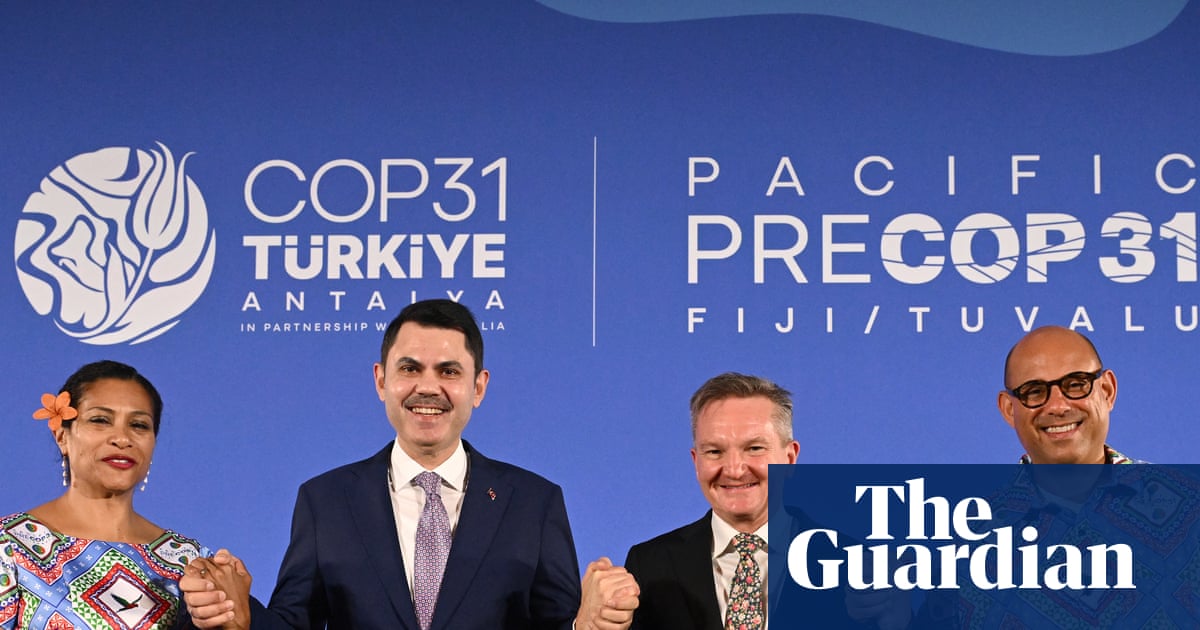
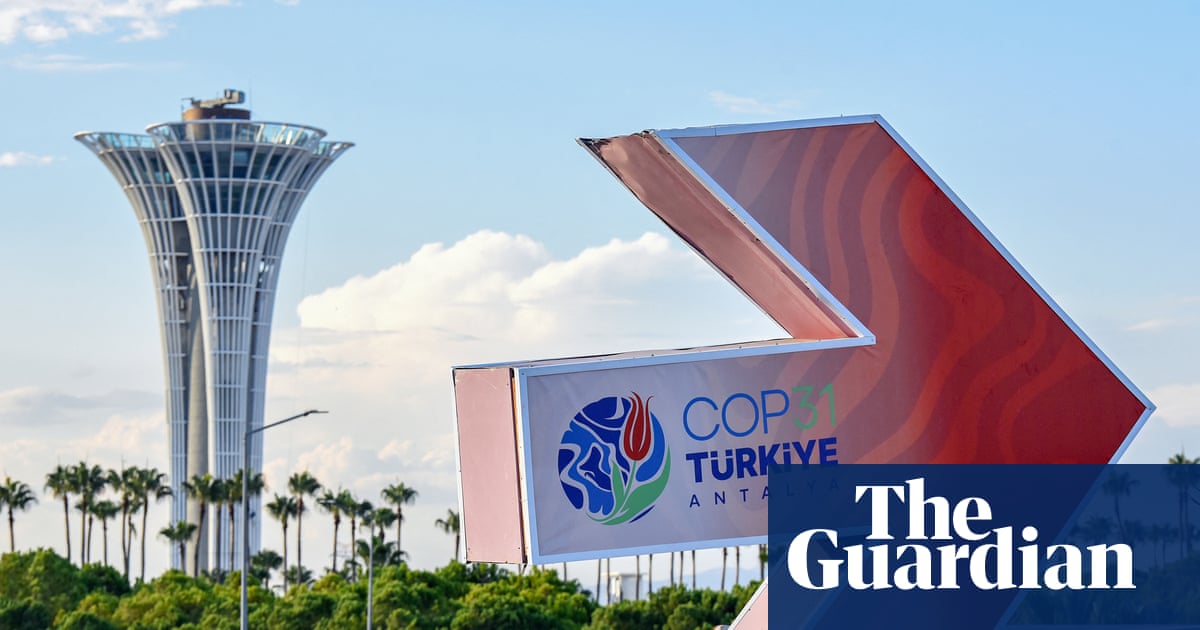
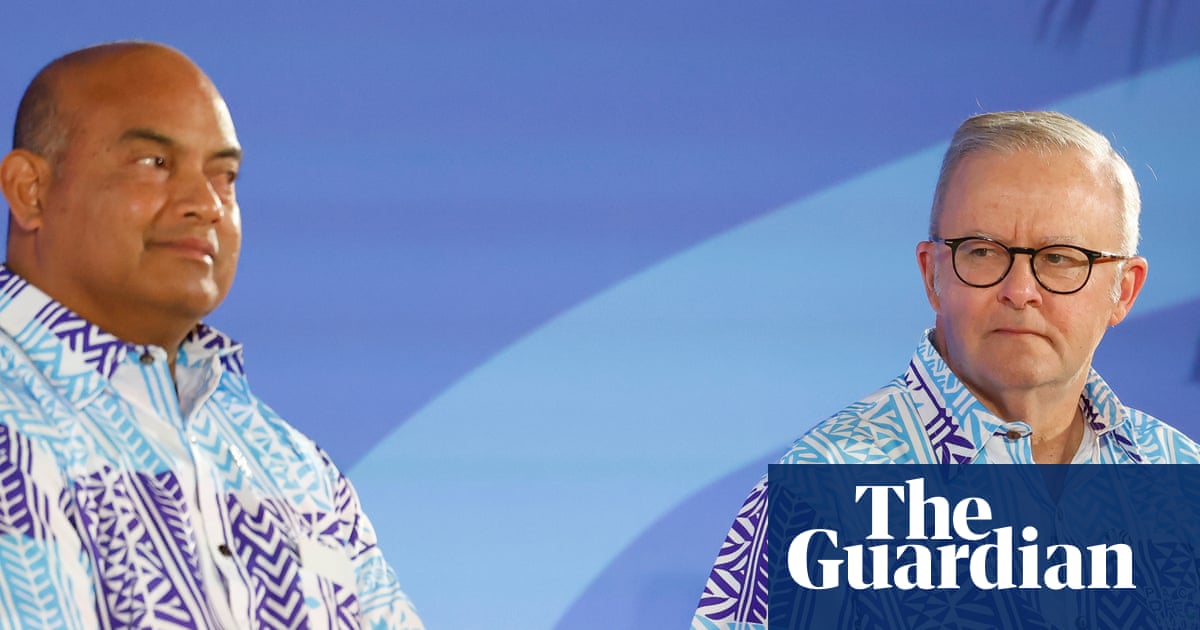
Murat Kurum, Turkey's climate change minister and host of the upcoming UN Climate Change Conference (Cop31) in Antalya, has urged wealthy countries to allocate more funding towards addressing climate issues than what they spend on defense. In an interview with The Guardian, he suggested spending should exceed the 5% of GDP promised by NATO members for military expenditures, arguing that "the climate issue is the security issue." However, Kurum was hesitant about committing to a previous agreement to transition away from fossil fuels, suggesting instead that such issues could be addressed indirectly through other means. The pre-Cop meeting in Fiji this week included approximately 4,000 attenders and saw leaders visit Tuvalu to witness firsthand the impacts of climate change on low-lying island nations.
Written locally by qwen2.5:14b on 2026-10-09,
using this article's own text rather than the other coverage of the
same event (that is the story summary below).
Wealthy countries should spend far more on dealing with the climate crisis than the 5% of GDP promised by Nato members for defence because “the climate issue is the security issue”, the host of the next UN summit has said.
asserted
host → spend → summit
But, in comments that are likely to prove contentious, the Cop31 president-designate, Murat Kurum, hedged on whether the world’s countries should try to repeat a previous agreement to “transition away from fossil fuels” – the primary cause of the climate crisis – when they meet in Turkey next month.
asserted
they → prove → Turkey
Kurum, the Turkish climate change minister, told the Guardian the world was “already in a transition” and suggested fossil fuel use could be addressed indirectly through other steps.
uncertain
use → tell → steps
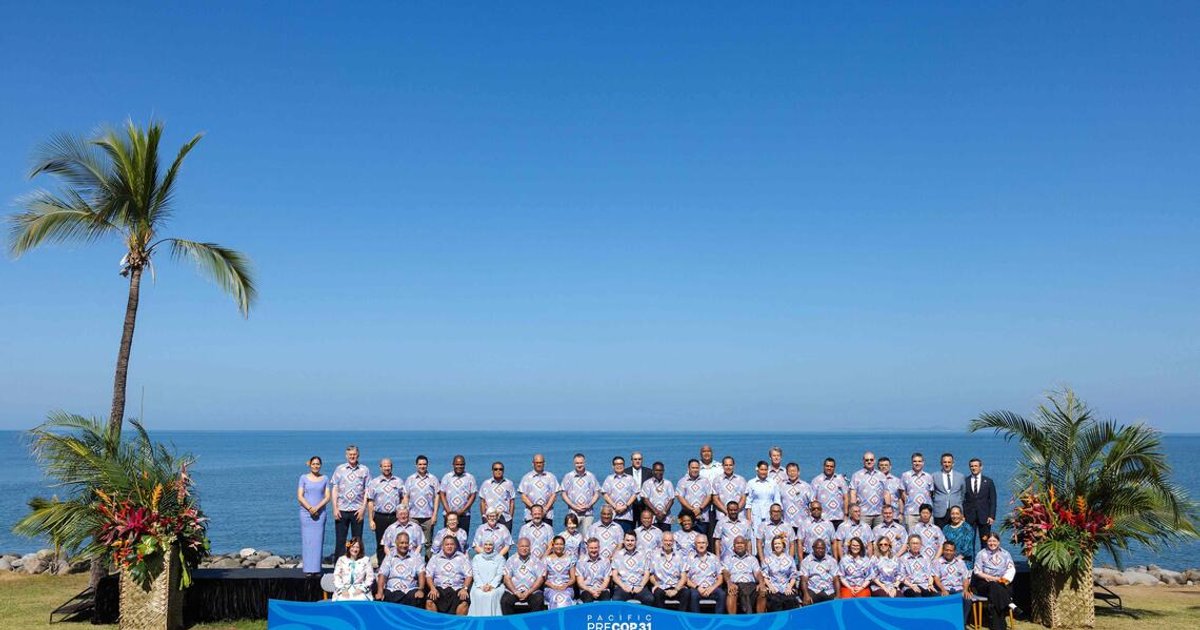
Kurum was among national leaders and ministers, officials and civil society members in Fiji this week to prepare for Cop31, which will take place in the Turkish city of Antalya in November.
asserted
which → prepare → November
Australia – which has the new role of “president of negotiations” at Cop31 – pushed to hold the pre-Cop meeting in the Pacific to bring attention to island nations.
asserted
which → have → nations
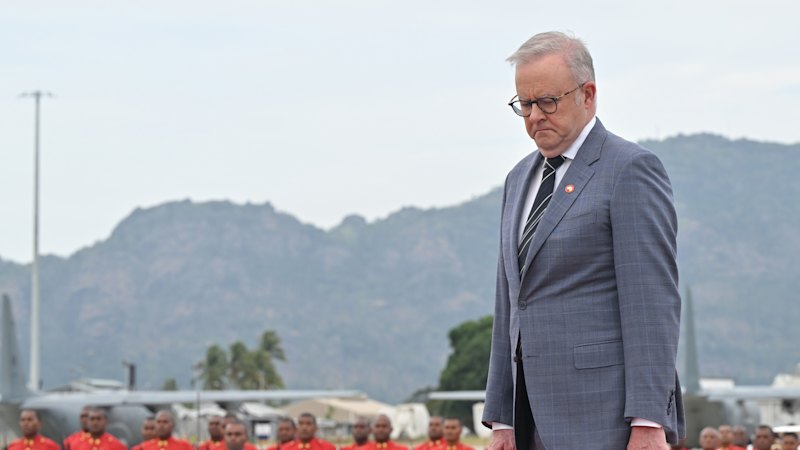
Geopolitical turmoil from war, a historic energy crisis and an unpredictable and climate-denying US administration – combined with the knowledge that many would be attending the main climate summit in a few weeks – meant only 13 national leaders joined Australia’s prime minister, Anthony Albanese, in the Fijian city of Nadi, and most were from the Pacific.
asserted
most → deny → Pacific
On Tuesday, a delegation flew north to see Tuvalu, a low-lying atoll country of about 10,000 people that is among the most at risk from the climate crisis.
asserted
that → fly → crisis
They were shown a 20-hectare (49-acre) land reclamation project and heard stories of life in a country that is mostly only about 2 metres above sea level, and where rising waters, storm surges and intensifying extreme weather pose an accelerating threat to survival.
asserted
waters → show → survival
In a powerful speech, the 13-year-old Melelusi Sokotia told the visitors her friends’ dreams to be “teachers, doctors, builders” were being subsumed by the question of whether they could “grow safely here in Tuvalu”.
uncertain
they → tell → Tuvalu
Back in Nadi, Fiji’s climate minister, Lynda Tabuya, was moved to tears and received a standing ovation during her closing address.
asserted
minister → move → address
She urged delegates to “remember the people you met” and “carry something of the Pacific with you”.
asserted
you → urge → you
“This pre-Cop draws to a close tonight,” Tabuya said.
asserted
Tabuya → draw → close
“Our responsibility does not.”
asserted
responsibility → do → ?
The governments of about 190 countries will head to Antalya with clear evidence that responsibility is not being met.
asserted
responsibility → head → evidence
A recent report by the UN environment programme warned that under the most optimistic future, global heating would reach at least 1.8C, well beyond the 1.5C goal of the Paris climate agreement.
asserted
heating → warn → agreement
It called for immediate and sustained emissions cuts and said every fraction of a degree of heating avoided would save lives and reduce economic losses.
asserted
fraction → call → losses
Through the pre-Cop, Pacific leaders repeated their demands: that countries must act to “keep 1.5C alive”, that climate finance must be easily accessible for the poor and vulnerable who have not caused the problem but are most at risk, and that the health of oceans must be prioritised.
asserted
health → repeat → oceans
Australia’s climate change minister, Chris Bowen, said only 0.2% of global climate finance was spent helping small island developing countries adapt, and that the countries that needed it the most, such as Tuvalu, “get it the least”.
asserted
that → say → it
“That has got to change,” he said.
asserted
he → get → ?
“It’s a key priority of Cop31.”
asserted
It → ’ → Cop31
Kurum said Nato countries should be much more focused on climate spending.
asserted
countries → say → spending
He said they had promised to increase their defence budgets to 5% of GDP by 2035 as a result of “concerns for their own safety and security”, but had committed much less to addressing the climate crisis despite expressing concerns and it posing an even greater risk.
asserted
it → say → risk
Asked if he thought as much should be spent on climate as defence, he said: “Much more.”
asserted
he → ask → more
“The climate issue is the security issue itself,” Kurum told the Guardian through an interpreter.
asserted
Kurum → tell → interpreter
“If you don’t spend one unit of money prior to the disasters, then you are left in a position where you have to spend 10 units of money after the disaster.
asserted
you → spend → disaster
It’s cheaper pre-disaster.”
asserted
It → ’ → ?
Kurum and Bowen reiterated they would focus in Antalya on winning support for a global goal of 35% of the energy needed to run homes, businesses, factories and vehicles coming from electricity by 2035.
asserted
they → reiterate → 2035
But the question of what direct action the global community should agree to take to phase out fossil fuels remains far more vexed.
asserted
community → agree → fuels
Both host countries backed a multi-country statement in Fiji that supported a global “transition away from fossil fuels”, echoing language adopted by the global community at Cop28 in Dubai three years ago.
asserted
that → back → Dubai
But both faced criticism, and accusations of hypocrisy, for continuing to back new coal and gas developments and being largely silent before the pre-Cop on the need to phase out fossil fuels.
asserted
both → face → fuels
Bowen said the way to stop using fossil fuels was not to cut supply of the dirty fuel, but to build enough renewable energy so there would be no need for fossil fuel power plants.
asserted
way → say → plants
Kurum said the world was “already in a transition” and suggested the focus at climate talks on wording about transitioning away from fossil fuels might not be productive as he did not think further progress could be made.
uncertain
progress → say → fuels
Delegates from some countries, including Saudi Arabia, Russia and other oil-producing states, strongly opposed naming fossil fuels at Cop30 in Brazil.
asserted
Delegates → include → Brazil
Dozens of countries frustrated with what they see as a UN stalemate on the issue met separately in Colombia this year to discuss a path away from fossil fuels.
asserted
they → frustrate → fuels
They are due to meet again next July in Tuvalu, and want the issue to be in an agreement in Antalya.
asserted
issue → meet → Antalya
Tzeporah Berman, the chair of the Fossil Fuel Non-Proliferation Treaty Initiative, said Pacific leaders had been clear in Nadi that there should be an urgent fossil fuel phaseout.
asserted
leaders → say → Nadi
“This means no new projects,” she said.
asserted
she → mean → projects
“You can’t phase something out by building more of it.”
asserted
You → phase → it
 The Aporia