Chinese researchers make Arctic-to-Antarctic call using rival to Musk’s Starlink

Read the original at South China Morning Post ↗
South China Morning Post · collected 2026-10-09 · by Liu Zhen

Quick Summary

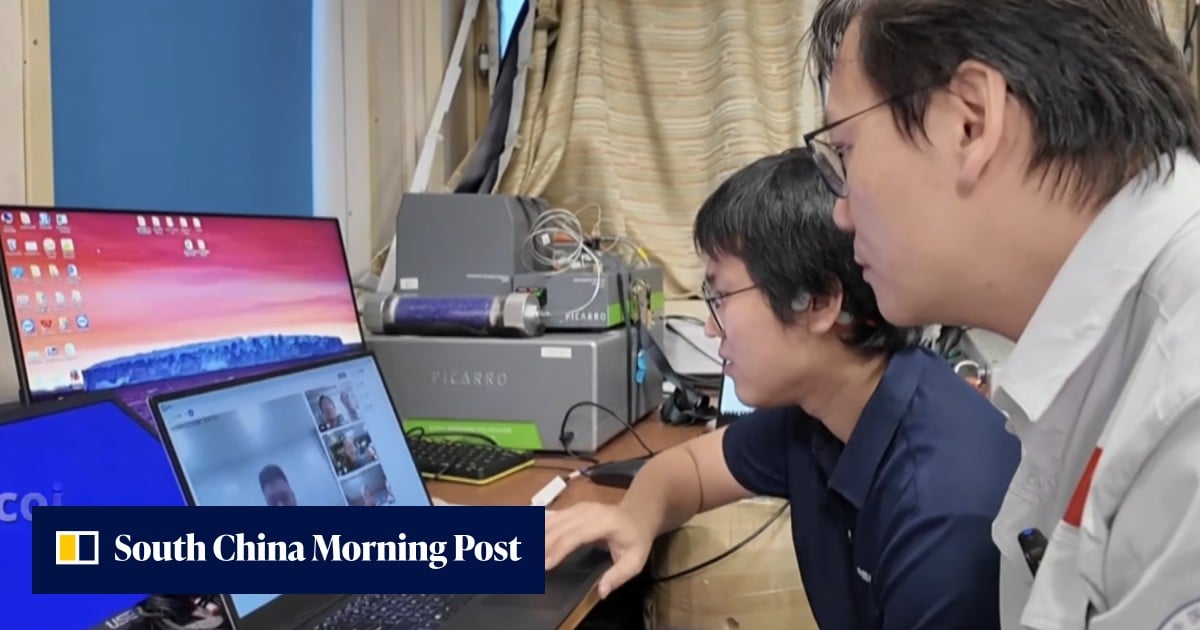
Chinese researchers successfully made a video call from the Arctic to Antarctica using satellites from the Guowang network, a competitor to Elon Musk’s Starlink. This test, which occurred in late September, showcased the growing capabilities of China's satellite constellations with around 180 satellites currently in orbit compared to Starlink’s 11,000. The call had a near-real-time connection with delays below one second and involved researchers on Chinese Arctic expedition ships and personnel at an Antarctic station.
Written locally by qwen2.5:14b on 2026-10-09, using this article's own text rather than the other coverage of the same event (that is the story summary below).

AI analysis runs on qwen2.5:14b, locally

Story summary

Chinese researchers successfully made a satellite video call between the Arctic and Antarctica using the Guowang constellation, which is seen as a rival to Elon Musk's Starlink network. This test marks the first public demonstration of Guowang’s capabilities and underscores China’s growing presence in low-Earth orbit communications. With only around 180 satellites currently in orbit compared to Starlink’s 11,000, the deployment of Guowang is still at an early stage. Beijing has been ramping up its satellite constellation development following the strategic use of Starlink by Ukraine during the Russian invasion. China also restricts foreign satellite services due to data security concerns.

Written for “Chinese Satellite Internet Advances” on 2026-10-09, grounded in this article and the 0 other(s) covering the same event.

Signals How these are calculated →

Claims extracted
4
claim-shaped sentences
Uncertain
50%
2 of 4 hedged
Leaning
not political
takes no side on a contested political question
Correction & hedging signals
66.7
corrections and hedging in what we collected; not a measure of accuracy
Outlets on this story
1
Technology
Narrative spread
1
articles carrying this framing
Analyzed 2026-10-09 · how these are computed

Story

📰 Chinese Satellite Internet Advances
Technology · 1 article(s) covering the same event.

How this is being covered How these are calculated →

Article leaning vs. publisher reliability
Source leaning vs. consistency

Compared with similar articles

Nothing to compare against. No article is close enough to this one for the pipeline to have linked or judged the pair.

Publisher

South China Morning Post · 1950 article(s) · 4 correction(s) detected
Running correction rate · 4 correction(s)
2026-10-04
Flight to Okinawa diverts back to Hong Kong after suspected landing gear fault
2026-10-04
Tennessee prisons chief resigning after botched execution of Christa Pike
2026-09-29
Indonesian prison chief suspended over secret VIP compound for inmates
2026-09-28
Trump ‘arms offer’ to China jolts Washington into moves to contain the fallout

Who wrote this

Liu Zhen
11 article(s) here · 1 carrying a prediction
🔮 Chinese researchers make Arctic-to-Antarctic call using rival to Musk’s Starlink The Guowang network’s deployment is at an early stage, with around 180 satellites in orbit compared to Starlink’s 11,000 2-MIN READ2-MIN Listen Polar researchers have used a would-be Chinese rival to Elon Musk’s Starlink to make a satellite video call between the Arctic and Antarctic – the first publicly reported test of the Guowang constellation. The call highlights the growing capabilities of the country’s satellite constellations, according to state media.
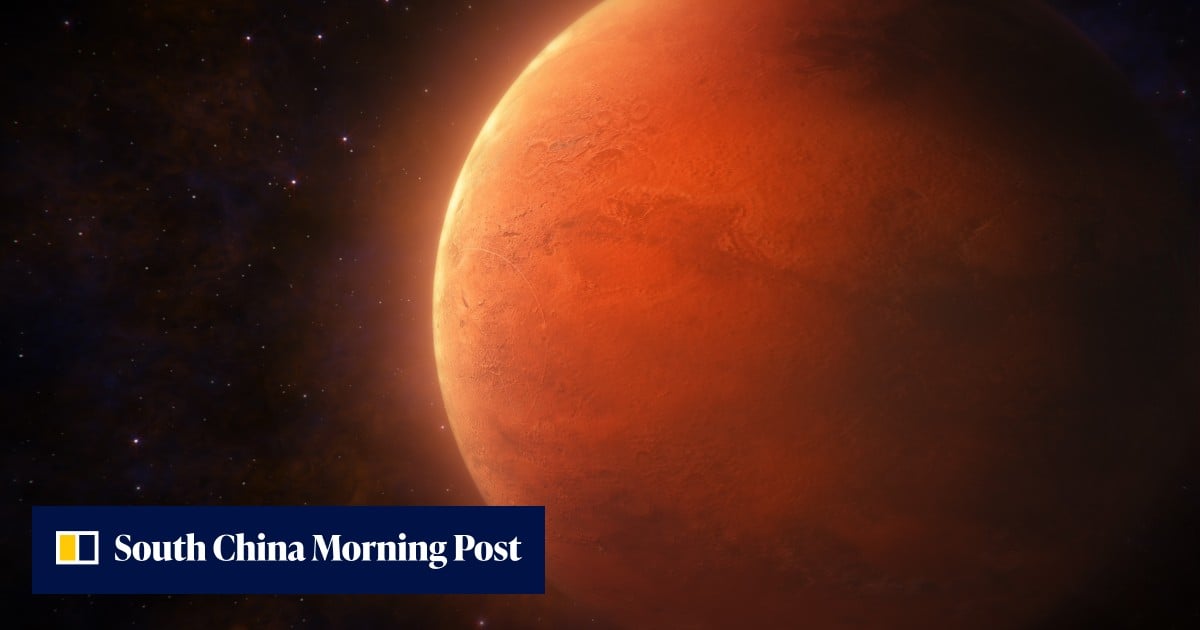
🔮 It will be the first AI-driven geological map of the planet and aims to be the global standard, chief scientist on Tianwen-3 mission says China plans to complete a geological map of Mars by the end of 2028, as the red planet increasingly features in its space rivalry with the United States. State news agency Xinhua reported that the map would be the first AI-driven geological map of Mars and would be an important part of preparations for the Tianwen-3 mission.
🔮 The Chinese roots of ‘gung-ho’ as Trump and Xi look to shared history Trump’s mention of a ‘Chinese phrase’ may have puzzled some, but the US Marine Corps adopted gung-ho from the name of wartime cooperatives Chinese viewers watching Donald Trump welcome Xi Jinping to the White House on Thursday may have been puzzled by the US president’s reference to the “Chinese phrase” gung-ho.
🔮 So, as Chinese President Xi Jinping is about to arrive in Washington on Wednesday, local time, there is one object that may offer a small moment of entertaining comparison between the two American leaders: Xi’s car.
🔮 China names new Tibet party chief as Communist Party reshuffles regional leadership Hu Changsheng takes top Tibet post as regional transfers offer clues about broader political line-up ahead of national party congress Meanwhile, Luo Dongchuan, 60, Qinghai’s governor, will succeed Wu as party secretary of the province.
🔮 The Japanese Nikkei newspaper reported last week that the planned AI-equipped satellites would be capable of analysing surveillance intelligence in space.
🔮 Naval vessels homeported outside the United States are not strictly prohibited from receiving foreign MRO services and deployed US-homeported ships may also be serviced by foreign workers under specific conditions.
Also by Liu Zhen
Nothing else under this byline is closely related to this article, so these are simply their most recent.

All 11 articles by Liu Zhen →

Topics

11,000 2-MIN China Chinese Guowang Starlink

Subjects

Chinese NORP · 3× Starlink ORG · 3× China GPE · 2× Guowang GPE · 2× Beijing GPE · 1× CCTV ORG · 1× Elon Musk’s PERSON · 1× Musk PERSON · 1× Russian NORP · 1× Ukraine GPE · 1×

Narrative

Beijing has been accelerating the development of its low-Earth-orbit constellations in recent years, particularly as the US-based Starlink showed its wartime value by helping Ukraine resist the full-scale Russian invasion.
framing: mixed · carried by 1 article(s) · first seen 2026-10-09
🔮 Chinese researchers make Arctic-to-Antarctic call using rival to Musk’s Starlink The Guowang network’s deployment is at an early stage, with around 180 satellites in orbit compared to Starlink’s 11,000 2-MIN READ2-MIN Listen Polar researchers have used a would-be Chinese rival to Elon Musk’s Starlink to make a satellite video call between the Arctic and Antarctic – the first publicly reported test of the Guowang constellation. The call highlights the growing capabilities of the country’s satellite constellations, according to state media.
2026-10-09 · South China Morning Post
Chinese researchers make Arctic-to-Antarctic call using rival to Musk’s Starlink · mixed framing

Claims (4 extracted, 2 hedged)

Chinese researchers make Arctic-to-Antarctic call using rival to Musk’s Starlink The Guowang network’s deployment is at an early stage, with around 180 satellites in orbit compared to Starlink’s 11,000 2-MIN READ2-MIN Listen Polar researchers have used a would-be Chinese rival to Elon Musk’s Starlink to make a satellite video call between the Arctic and Antarctic – the first publicly reported test of the Guowang constellation. The call highlights the growing capabilities of the country’s satellite constellations, according to state media. uncertain
call → make → media
Beijing has been accelerating the development of its low-Earth-orbit constellations in recent years, particularly as the US-based Starlink showed its wartime value by helping Ukraine resist the full-scale Russian invasion. asserted
Ukraine → accelerate → invasion
China has barred foreign satellite communications services from its territory over data security concerns. asserted
China → bar → concerns
The near-real-time call took place in late September between researchers on three Chinese Arctic expedition ships – the Xuelong, the Jidi and the Tansuo-3 – and personnel at China’s Qinling Station in Antarctica, according to state broadcaster CCTV. uncertain
call → take → CCTV
💬Give feedback
🕘History 🎫Support