- Published
The news the company that owns Raleigh has begun insolvency proceedings means one of Nottingham's most prestigious manufacturing names may have reached the end of its journey.
uncertain
one → publish → journey
From being one of the city's big three employers - along with Boots and Players cigarettes - with 8,000 staff, it may have finished its days being little more than a logo.
But during the decades of its existence, it touched the lives of countless people, both those who worked there and those who enjoyed its bicycles.
uncertain
who → finish → bicycles
Some of those tell their stories about what Raleigh meant to them.
asserted
Raleigh → tell → them
Mark Hallam grew up being able to see the Raleigh factory from his backyard.
asserted
Hallam → grow → backyard
He said: "Raleigh - Players and Boots too - came to the school offering careers and since it was so close I went for Raleigh.
asserted
I → say → Raleigh
I started in 1978, starting with how to build brakes and put spokes in wheels.
"
asserted
I → start → wheels
It had such a great atmosphere, though you had to be able to take having the mickey taken out of you!
"
asserted
mickey → have → you
"One weird thing was you could smell if someone worked for Raleigh.
uncertain
someone → smell → Raleigh
I think it was the metal mixed with grease and oil.
asserted
it → think → grease
I once walked past the gate just before four o'clock and everyone was pressed up against it, ready to run.
asserted
everyone → walk → it
"People would say, 'get the bus before Raleigh chucks out'.
asserted
Raleigh → say → bus
"But here's the thing, I never rode a Raleigh as I couldn't afford one," he said.
asserted
he → ride → one
David Marsland reluctantly followed his father into the company.
asserted
Marsland → follow → company
He said: "I wanted to be a surveyor but couldn't get a job.
"
asserted
I → say → job
I had grown up with Raleigh and joined in 1973, and I gained new friends at every stage of my 47 years and met my wife there, so it was very much the background to my life.
asserted
it → grow → life
"There used to be so many people working there we not only had a football team, we had our own league.
asserted
we → use → league
"But then the redundancies started coming - I don't know how many times I walked into an office not knowing whether I would have a job when I came out.
asserted
I → come → job
"One time we had all these plans for a new factory in Bulwell but when it became clear that our steel bicycles couldn't match the prices of aluminium bicycles from the Far East, it all got binned.
asserted
it → have → East
I think that was the moment Raleigh changed."
asserted
Raleigh → think → ?
Sarah Nixon, from Daybrook in Nottinghamshire, said her parents met at the company.
asserted
parents → say → company
She said: "My mum worked in the offices and my dad was a work study engineer, this was in the 1950s.
"
asserted
this → say → 1950s
They described it as a really great place to work, it was very social, more of a community than a workplace.
asserted
it → describe → workplace
The other thing they would talk about was the size of the place, which is something I don't think we appreciate these days.
asserted
we → talk → place
"My dad told me they used to ride bikes between the departments because it was just that huge."
asserted
it → tell → departments
"We lived near Faraday Road, opposite the White Horse pub," she said.
asserted
she → live → pub
"Most of my uncles worked at Raleigh, my aunts worked at Players, but I remember the road being full of people on bikes.
asserted
road → work → bikes
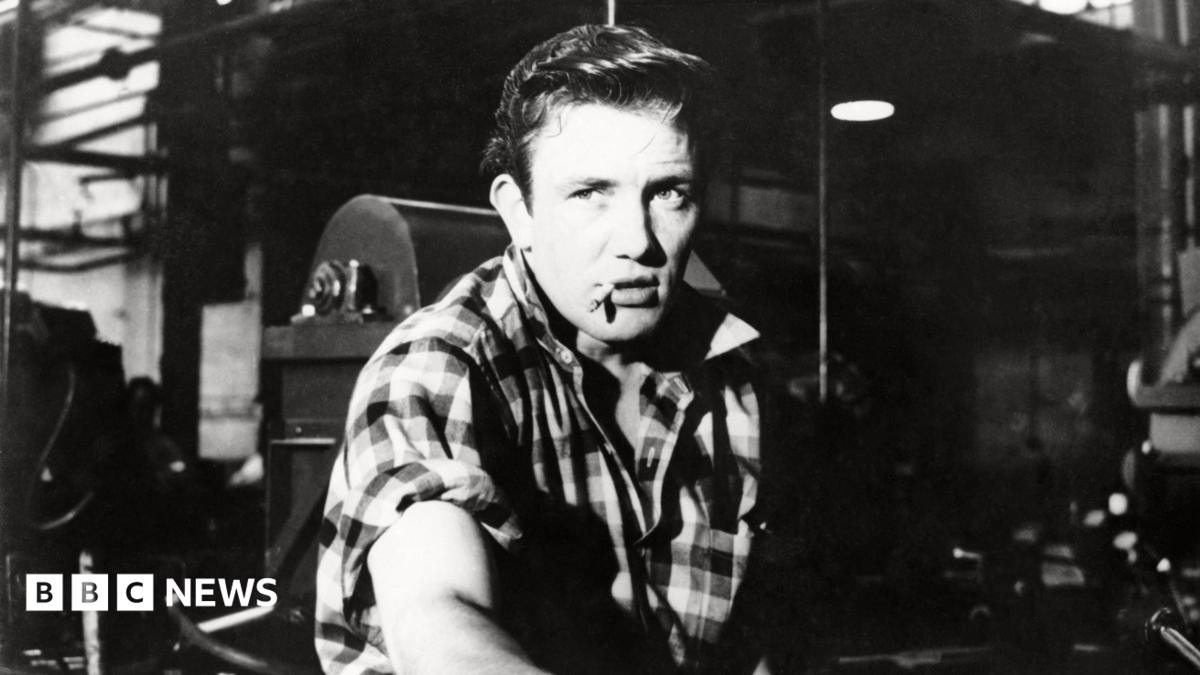
"When they filmed Saturday Night and Sunday Morning - the main chap in that works at Raleigh - they filmed it in the road outside.
asserted
they → film → road
"One of my uncles, Charlie, he rode his bike for that and you can still see him in the background, in the film, riding down the street.
asserted
you → ride → street
It's one of the firms which built Nottingham."
asserted
which → build → Nottingham
Helen Crowder's family is linked with Raleigh in a slightly different way.
asserted
family → link → way
"We lived in Grantham in the 50s and I was promised a Raleigh bicycle if I passed my 11+ [the exam to get into grammar school]," she said.
asserted
she → live → school
"Luckily I did that and my parents said, 'right, we'll have to go to Nottingham' which was quite an adventure because we had to get the train.
asserted
we → do → train
"But I had that bike for a long, long time.
asserted
I → have → time
I was tall, so I got a full-sized bike and I used it through school and my teens and used it when I started work.
asserted
I → get → work
I moved away when I married and I left it with my mother, but when we came back I got it again and rode with each of my three children in turn on the back.
"
asserted
I → move → back
It was a super-strong, well-made bike, really excellent and I only had to give it up when it was really worn out.
asserted
it → make → it
I must have ridden it for the best part of 50 years."
asserted
I → ride → years
Andrew Dutton, from Silverdale, was loyal to the brand, even if he could not keep the same bike.
"
uncertain
he → keep → bike
I got my first one aged about six and I had a Grifter, then a Sprinter Racing bike and a Raleigh Super Burner BMX," he said.
asserted
he → get → Grifter
You'd give your parents a decent idea of what you wanted but it would still be a nice surprise on the day.
asserted
it → give → day
…and 4 more, not listed.
 The Aporia