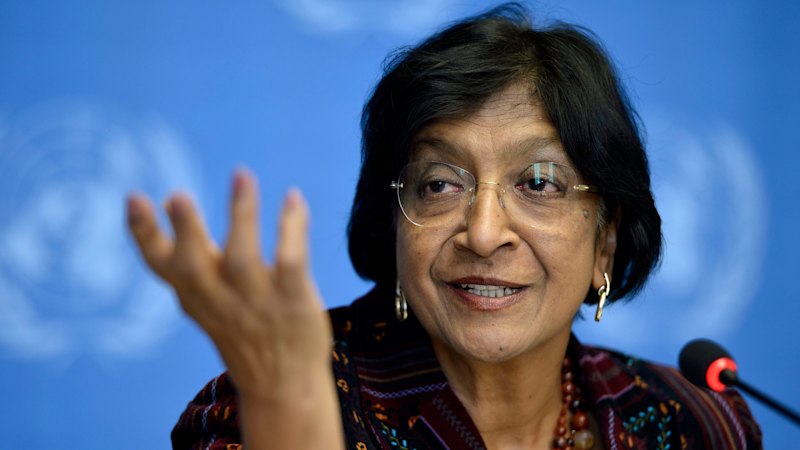
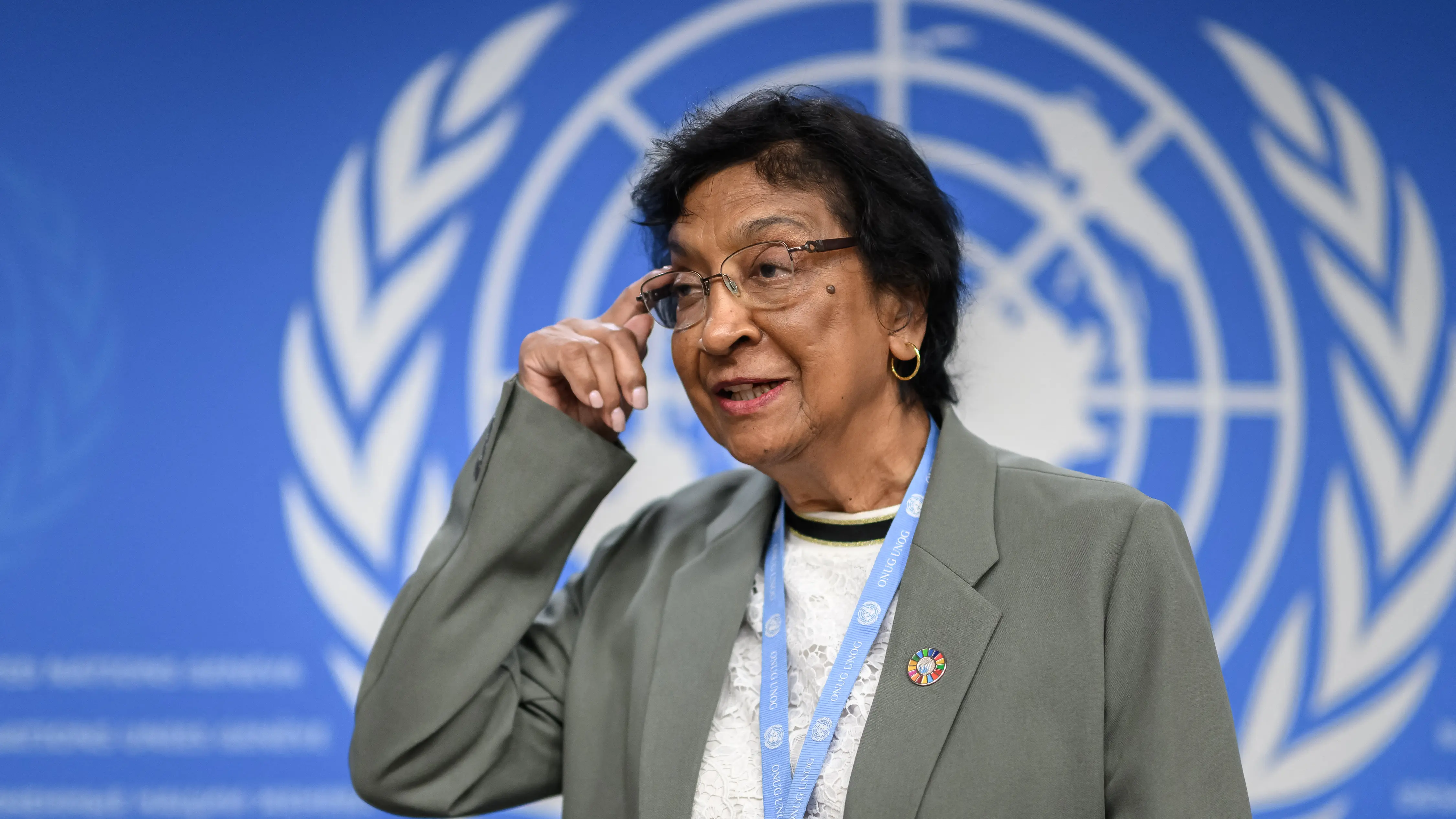
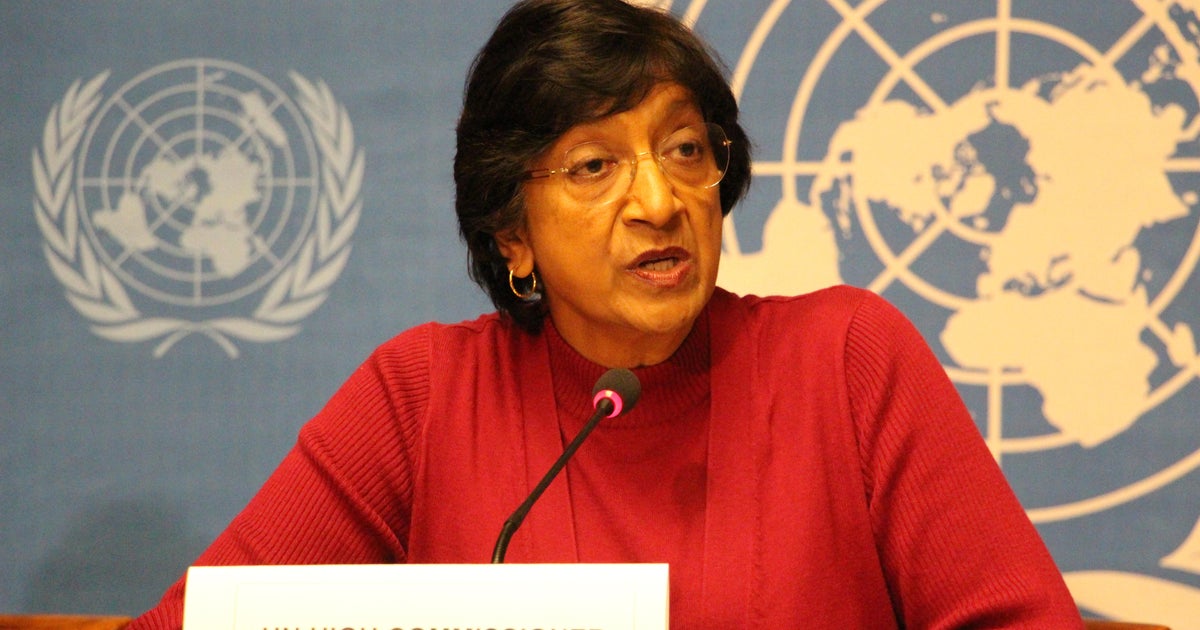
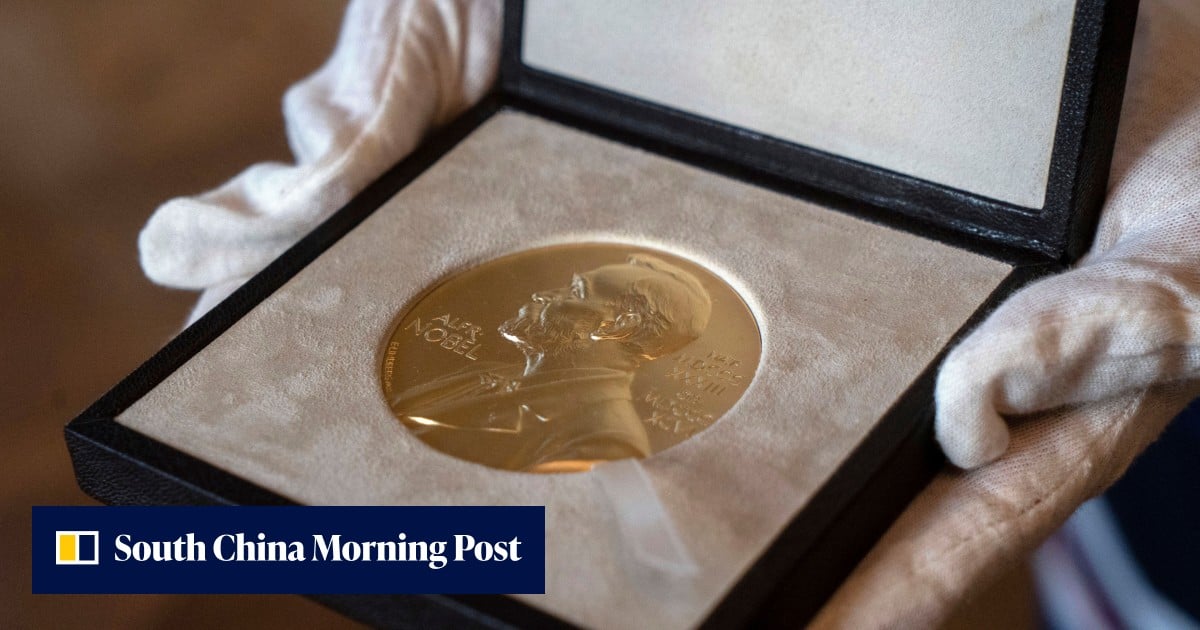
Navanethem ‘Navi’ Pillay, former UN human rights chief and judge on the International Court of Justice, received the Nobel Peace Prize in Oslo, Norway, on October 9, 2026. At 85 years old, she was honored for her advocacy of peace and international law. The Norwegian Nobel Committee highlighted her role in promoting justice and accountability, stating that such efforts are crucial for a peaceful world amid increasing conflicts.
Written locally by qwen2.5:14b on 2026-10-09,
using this article's own text rather than the other coverage of the
same event (that is the story summary below).
Story summary
Navanethem "Navi" Pillay, a former UN human rights chief and judge on the International Court of Justice, won the 2026 Nobel Peace Prize in Oslo on October 9, 2026. The Norwegian Nobel Committee honored her for promoting peace and international law at a time when the global legal system is under attack. Pillay, born in South Africa, was recognized for her work defending Nelson Mandela and other anti-apartheid activists, as well as her service in key international court cases.
The committee noted that this decision came amid rising conflicts and political attacks on institutions of international law. This year’s Nobel Peace Prize announcement followed previous awards to laureates in medicine, physics, chemistry, and literature. The prize is often considered the most prestigious honor globally, with Pillay becoming one of its distinguished recipients.
Written for “Navi Pillay Nobel Peace Prize” on 2026-10-09,
grounded in this article and the 21 other(s) covering the same event.
Why this leaning score
This article does not take a side on a contested political
question, so it has no leaning score. That is an
answer rather than a gap: a match report or a rescue can be warmly
or critically written without being left or right, and scoring it
anyway is how approval of a subject gets recorded as a political
position.
No political leaning scored for article 67868 · logged 2026-10-09
Former UN human rights chief Navanethem ‘Navi’ Pillay wins Nobel Peace Prize
asserted
chief → win → Prize
Former UN human rights chief Navanethem “Navi” Pillay, a judge on the International Court of Justice, won the Nobel Peace Prize on Friday in Oslo, Norway.
asserted
Pillay → win → Oslo
The South Africa-born Pillay, 85 years old, was recognized for her efforts to promote peace and international law, said Jørgen Watne Frydnes, Chair of the Norwegian Nobel Committee.
asserted
Frydnes → bear → Committee
“At a time when the number of wars and conflicts is rising, and when judges and institutions of international law are under political attack, the Nobel Committee wishes to issue a reminder that the ability to resolve conflicts without force or violence is dependent on the international rule of law,” the committee wrote in a news release.
asserted
committee → rise → release
“An international legal system in which war criminals are held to account and the victims of abuse see justice served is a precondition for a peaceful world.
asserted
justice → hold → world
The award is often considered the most prestigious honor on the planet.
asserted
award → consider → planet
The Norwegian Nobel Committee in Oslo received nominations for 287 candidates for this year’s prize, and just over a quarter of them are organizations.
asserted
quarter → receive → them
Experts say the committee typically focuses on the durability of peace, the promotion of international fraternity and the quiet work of institutions that strengthen those goals.
asserted
that → say → goals
Last year, Venezuelan opposition leader María Corina Machado won the Nobel Peace Prize for her struggle to achieve a democratic transition in the South American nation, winning recognition as a woman “who keeps the flame of democracy burning amid a growing darkness.”
But it was largely a symbolic gesture: the Nobel Committee has said the honor itself cannot be transferred.
asserted
honor → win → darkness
Nominations can be made by a select group of people and organizations, including heads of state or politicians serving at a national level, university professors, directors of foreign policy institutes, past Nobel Prize recipients and members of the Norwegian Nobel Committee itself.
asserted
Nominations → make → Committee
Four of this year’s Nobels were announced earlier this week.
asserted
Four → announce → Nobels
The Nobel for medicine went to three scientists whose work led to a tool that uses light to help unravel how the brain works.
asserted
brain → go → light
The physics award recognized a scientist’s efforts to demystify a rare group of neutrinos.
asserted
award → recognize → neutrinos
The chemistry prize recognized two scientists for untangling mysterious mirror images in molecules, a discovery that has been used to develop countless drugs.
asserted
that → recognize → drugs
Canadian poet, essayist and translator Anne Carson won the literature prize Thursday for “bold and inventive” works that fuse the classical and the modern and blur the boundaries of poetry and prose.
asserted
that → win → poetry
The Nobel Memorial Prize in Economic Sciences will be announced Monday.
asserted
Prize → announce → Sciences
Peace prize hits its 125th anniversary
asserted
prize → hit → anniversary
This year marks the 125th anniversary of the peace prize, which so far has gone to 112 individuals and 28 separate institutions since its inception in 1901.
asserted
which → mark → 1901
The Red Cross has won three times and the U.N. refugee agency twice.
asserted
Cross → win → ?
The prize has gone unawarded on 19 occasions, most of them during the world wars.
asserted
prize → go → wars
In 1948, the year Mahatma Gandhi was assassinated, no prize was awarded; he had been nominated 12 times and never won.
asserted
he → assassinate → 1948
In 1939, a Swedish member of parliament nominated Adolf Hitler, then withdrew the nomination, saying it was never meant seriously.
asserted
it → nominate → nomination
This is a developing story.
asserted
This → develop → ?
 The Aporia