That is 0 articles you have read today.
The Aporia is free and carries no advertising, so readers are the only
thing paying for it. If you are getting this much out of it, a small
donation is what keeps it independent.
Daily limit reached
You have read 0 articles today.
That is more than the 15 a day The Aporia gives away,
and well past what it can carry on nothing. Your allowance resets at
midnight.
There is no advertising here and nothing about you is sold, so readers
are the only thing paying for it. If the site is worth this much of
your day, it is worth a few dollars.
Everything else stays open: the
maps, the
directory and
search do
not count against this, and neither does re-opening something you have
already read today.
Prime Minister Mark Carney responded to Elon Musk’s comments supporting separatism in Quebec, Alberta, and Saskatchewan by stating that Canada's future should be decided by Canadians themselves. On Thursday, October 8, 2026, Carney emphasized the importance of allowing people to live freely according to their cultures without external interference from foreign entities like large tech firms. Meanwhile, the election results in Quebec showed only about 28% of the popular vote for the separatist Parti Québécois, which did not secure a majority in the legislature, and Professor Daniel Béland noted that support for independence remains at around 30%.
Written locally by qwen2.5:14b on 2026-10-09,
using this article's own text rather than the other coverage of the
same event (that is the story summary below).
Story summary
Elon Musk sparked controversy on X, formerly Twitter, by advocating for the separation of Quebec, Alberta, and Saskatchewan from Canada. In response, Canadian Prime Minister Mark Carney stated on October 8, 2026, that Canadians would decide their country's future without interference from "large tech firms or foreign governments." Musk’s comments came after the separatist Parti Québécois (PQ) won a provincial election in Quebec but fell short of a majority. The PQ received about 28% of the popular vote, with support for Quebec independence hovering around 30%, according to McGill University political science professor Daniel Béland. Premier-designate of Quebec, Paul St-Pierre Plamondon, has yet to receive a mandate for immediate independence despite the party's victory.
Written for “Canadian Tech Independence Debate” on 2026-10-09,
grounded in this article and the 1 other(s) covering the same event.
Why this leaning score
The model judged this article politically coded and scored it +0.45, but 3 quote(s) could not be found in the article and the other 1 are attributed speech rather than the article's own narration, so the score is not published.
Written under an earlier scoring contract, which gave a paragraph
rather than checkable quotes. Re-analysing this article replaces it.
Leaning score withheld for article 67643: no verified evidence · logged 2026-10-09
Canadian Prime Minister Mark Carney said on Thursday (October 8, 2026) that Canada's future will be decided by Canadians, pushing back on Elon Musk's call for Quebec, Alberta and Saskatchewan to separate from Canada.
asserted
Quebec → say → Canada
“The future of Canada will be decided by Canadians and the priorities of Canadians, the priorities of the people of Quebec,” PM Carney said when asked about Mr. Musk's comments.
asserted
Carney → decide → comments
Mr. Carney said Canadians should be free to live according to their languages and cultures, without interference "from foreign governments and large tech firms that think they can tell us what to do."
uncertain
they → say → what
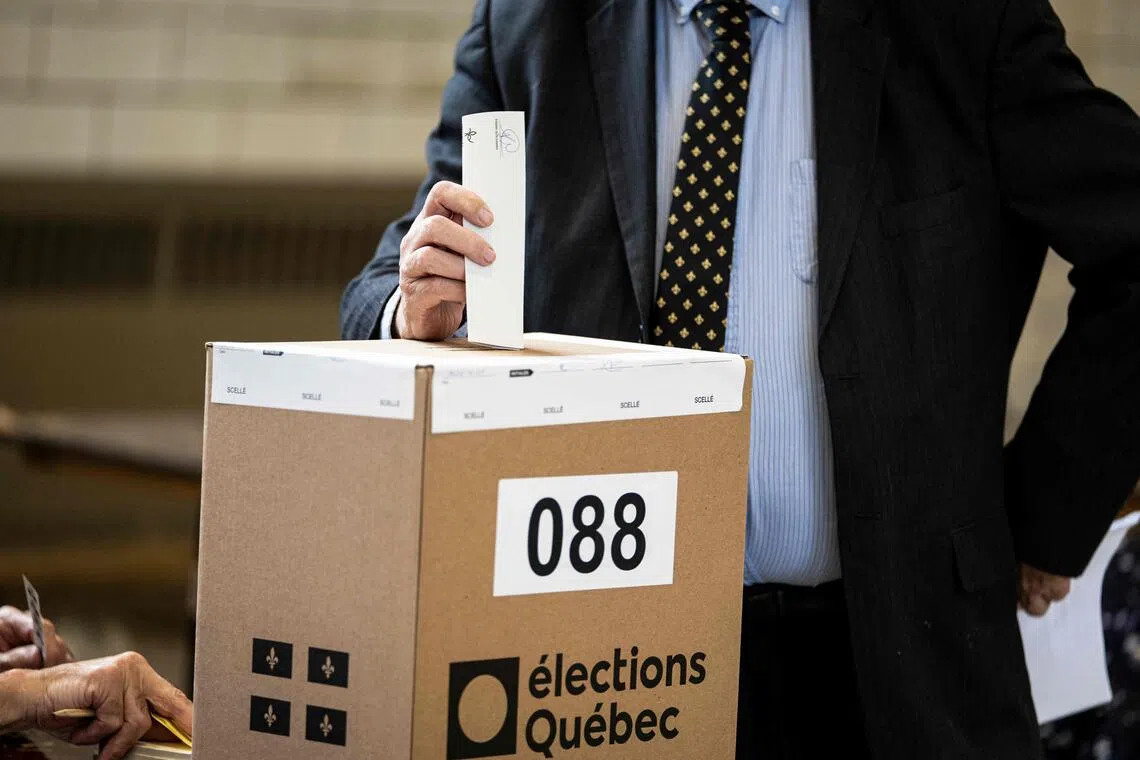
Mr. Musk weighed in on Canada's separatist debates on Wednesday (October 7, 2026) in a post on X about Quebec Premier-designate Paul St-Pierre Plamondon, whose separatist Parti Québécois won Monday's provincial election.
asserted
Québécois → weigh → election
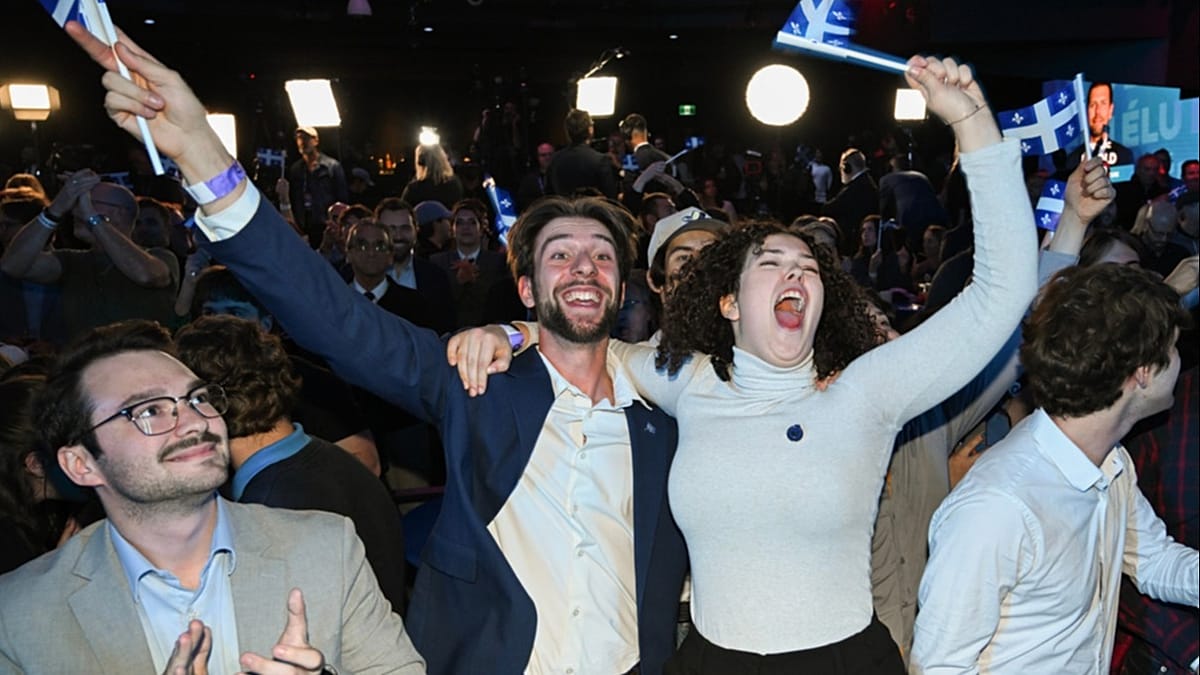
The party won about 28% of the popular vote and fell short of a majority of the seats in the Quebec legislature.
asserted
party → win → legislature
Support for Quebec independence remains at about 30%, said Daniel Béland, a political science professor at McGill University in Montreal.
asserted
Béland → remain → Montreal
He said the election was driven more by a desire to oust the Coalition Avenir Québec government than by support for separation.
asserted
election → say → separation
Quebec should separate,” Mr. Musk wrote, adding that “They would be better off.
asserted
They → separate → ?
Alberta and Saskatchewan should separate too.”
asserted
Alberta → separate → ?
Alberta is scheduled to hold a vote October 19 on whether the province should remain in Canada or move toward a future referendum on separation.
asserted
province → schedule → separation
Alberta Premier Danielle Smith has said she will vote to remain in Canada.
asserted
she → say → Canada
Mr. Smith said that separatist sentiment in her province has weakened as her government and Mr. Carney's have worked to address Albertans' concerns.
“
asserted
government → say → concerns
The federal government has changed.
asserted
government → change → ?
Their approach to us has changed and they're willing to work together on addressing those issues,” Mr. Smith said in Edmonton.
asserted
Smith → change → Edmonton
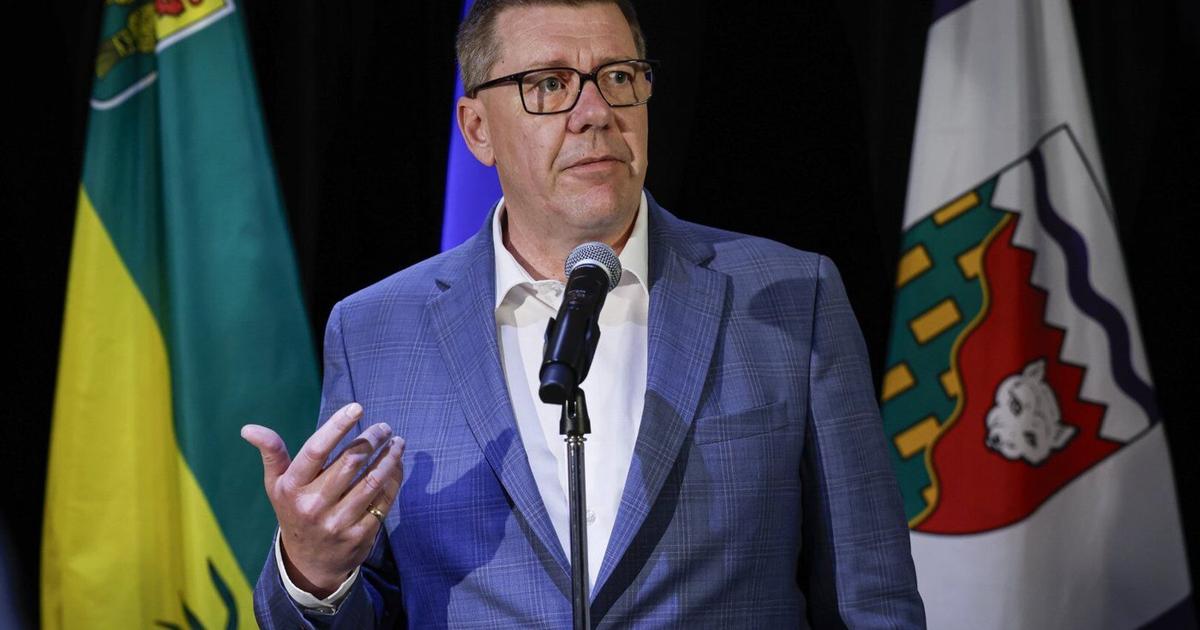
Saskatchewan Premier Scott Moe responded to Mr. Musk on X with a single word: “No.”
asserted
Moe → respond → word
MMr. musk, the world's richest man and first-ever trillionaire, is a South African-born Canadian-American.
asserted
musk → bear → ?
 The Aporia