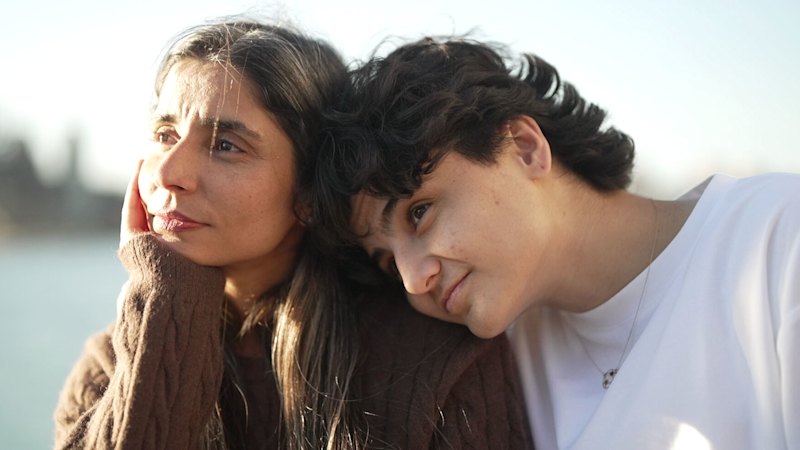
Two members of the Iranian women's football team who claimed asylum in Australia have confirmed that their pivotal refusal to sing the national anthem during the Women's Asian Cup in March was a protest against Tehran.
asserted
refusal → claim → Tehran
The first media interview with Atefeh Ramezanisadeh, 34, and Fatemeh Pasandideh, 22, since they abandoned their team to become refugees was broadcast Sunday on Australia's "60 Minutes" current affairs program.
asserted
they → abandon → program
"We just wanted to stand with our people.
asserted
We → want → people
I was scared at times, but I just tried to do what was right and say that no one should be killed just for protesting," Ramezanisadeh told Nine Network through an interpreter.
asserted
Ramezanisadeh → try → interpreter
The team was criticised in Iran and branded as traitors in the media there for remaining silent when the Iranian national anthem was played ahead of their opening loss against South Korea on March 2.
asserted
anthem → criticise → March
Some saw it as an act of resistance, while others interpreted it as a show of mourning following the U.S. and Israeli attacks on their homeland which began on February 28.
asserted
which → see → February
The team offered no public explanation.
asserted
team → offer → explanation
The gesture led to demonstrators demanding the team be offered asylum in Australia before leaving Sydney on March 10.
asserted
team → lead → March
Ramezanisadeh and Pasandideh said they were protesting Tehran's brutal crackdown on nationwide demonstrations against Iran's theocratic rule.
asserted
they → say → rule
Ramezanisadeh said her silence "could have meant any form of torture" for her.
uncertain
silence → say → her
"But at that moment, the only thing that gave me peace and a clear conscience was not singing it.
asserted
that → give → peace
I wanted to sing the anthem with pride and from my heart.
asserted
I → want → heart
But because of the situation in Iran, I really couldn't do it," she said.
asserted
she → do → it
Pasandideh said through an interpreter of her own silence: "My people put their lives on the line and they were killed.
asserted
they → say → line
Doing that was the absolute least we could do for them."
uncertain
we → do → them
Australian Immigration Minister Tony Burke said none of the team had been offered asylum at that time.
asserted
none → say → time
"At that point, they had absolutely no information from us about the possibility of being able to stay," Burke said.
asserted
Burke → have → possibility
"The silence of itself was deeply significant," he said.
asserted
he → say → itself
The stakes were raised when U.S. President Donald Trump used social media to call for the team to be granted asylum and telephoned Australian Prime Minister Anthony Albanese on the issue.
asserted
team → raise → issue
Albanese told Trump that four players and a team manager had at that stage accepted offers of humanitarian visas.
asserted
players → tell → visas
Seven members of the team eventually accepted Australia's offer of asylum, but all soon changed their minds except for Ramezanisadeh and Pasandideh.
asserted
all → accept → Ramezanisadeh
They both now play for the Wynnum Wolves semi-professional football team in the city of Brisbane and were made Australian citizens in August.
asserted
They → play → August
Ramezanisadeh said her parents had asked her to return under the instructions of Iranian authorities.
asserted
parents → say → authorities
"They tried to reassure me, saying: Nothing will happen to you.
asserted
Nothing → try → you
You must return home.'
asserted
You → return → ?
But I told them my mind was made up and I was not coming back," Ramezanisadeh said.
asserted
Ramezanisadeh → tell → them
"Thinking that I might never be able to see my family again was heartbreaking, but I couldn't allow myself to be indifferent while so many young people were being killed by this regime.
uncertain
people → think → regime
I couldn't stay silent, even though I miss my family so much," she added.
asserted
she → stay → family
Both women said they had not been in contact with their families in recent months, but understood relatives had not been punished.
asserted
relatives → say → months
Pasandideh said she had never asked her teammates whether they had wanted to return to Iran or had been forced to.
asserted
they → say → Iran
"We decided not to talk because I don't want to put their lives in danger," Pasandideh said.
asserted
Pasandideh → decide → danger
"One of my biggest dreams is to be able to go back to Iran, but in different circumstances when the situation in Iran has changed and the people of Iran are happy and thriving.
asserted
people → go → Iran
Then I will go back and see my family," she added.
asserted
she → go → family
 The Aporia