That is 0 articles you have read today.
The Aporia is free and carries no advertising, so readers are the only
thing paying for it. If you are getting this much out of it, a small
donation is what keeps it independent.
Daily limit reached
You have read 0 articles today.
That is more than the 15 a day The Aporia gives away,
and well past what it can carry on nothing. Your allowance resets at
midnight.
There is no advertising here and nothing about you is sold, so readers
are the only thing paying for it. If the site is worth this much of
your day, it is worth a few dollars.
Everything else stays open: the
maps, the
directory and
search do
not count against this, and neither does re-opening something you have
already read today.
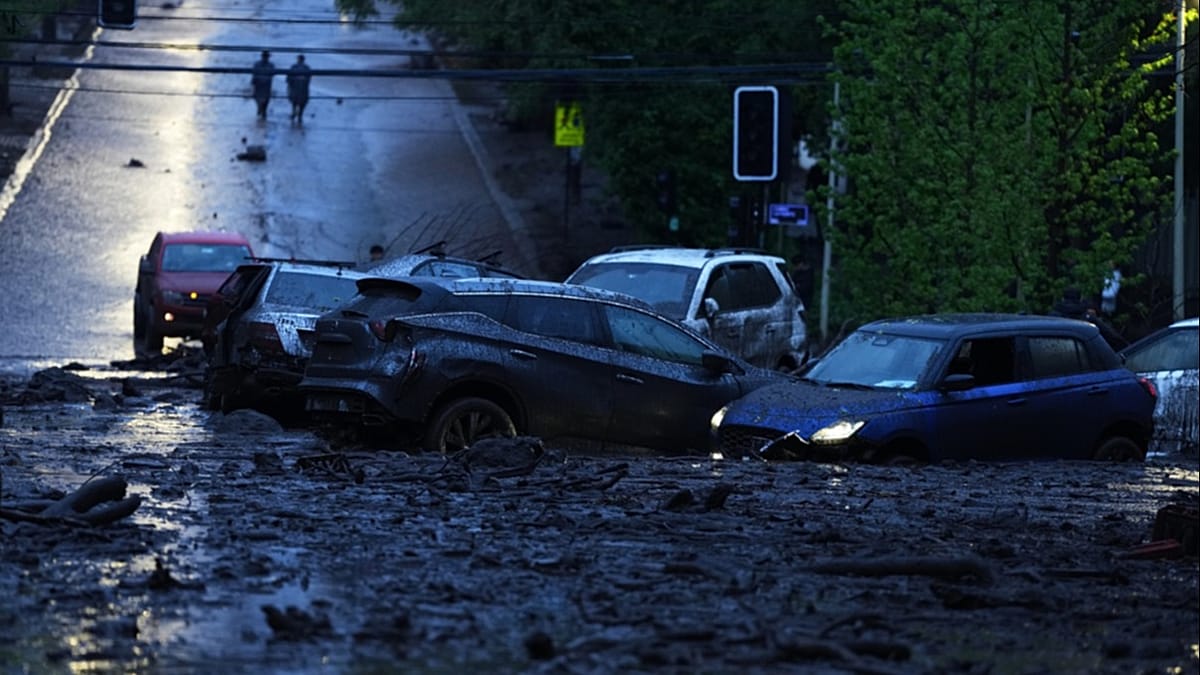
Heavy rains hit Santiago, Chile's capital, on Thursday, causing mudslides that swept cars through streets, flooded homes, and injured six people including a one-year-old child with broken bones. The Mapocho River overflowed, leading to evacuations in the wealthy suburb of Las Condes where 14.4 centimeters of rain fell—nine times the average October rainfall. Chile’s President José Antonio Kast declared a state of emergency in Las Condes, and authorities put ten other districts on high alert for potential mudslides and flooding.
Written locally by qwen2.5:14b on 2026-10-09,
using this article's own text rather than the other coverage of the
same event (that is the story summary below).
Story summary
Torrential rains battered Santiago, the capital of Chile, causing flash floods that swept away vehicles and damaged buildings near the Andes mountain range. In Las Condes, a wealthy suburb east of Santiago, at least six people were injured due to the flooding. The district received 14.4 centimeters of rain, nearly nine times the average October rainfall, turning roads into impassable waterways. On Thursday, Chilean President José Antonio Kast declared a state of emergency in Las Condes, giving government agencies more power to respond effectively. Additionally, the Mapocho River overflowed, prompting evacuation orders and putting ten other districts on high alert for potential landslides. Schools were closed across several regions as part of these safety measures.
Written for “Chile Flood Disaster” on 2026-10-09,
grounded in this article and the 1 other(s) covering the same event.
Why this leaning score
This article does not take a side on a contested political
question, so it has no leaning score. That is an
answer rather than a gap: a match report or a rescue can be warmly
or critically written without being left or right, and scoring it
anyway is how approval of a subject gets recorded as a political
position.
No political leaning scored for article 67618 · logged 2026-10-09
Authorities have placed 10 other Chilean districts on high alert as risks of potential mudslides and rain-related emergencies threaten to batter the region.
asserted
risks → place → region
Heavy rains battered Chile’s capital Santiago and its surrounding regions on Thursday, triggering mudslides that swept cars through streets, flooded homes, forced residents to evacuate and injured at least six people, according to authorities.
uncertain
that → batter → authorities
Chilean President José Antonio Kast declared a state of emergency in Las Condes, a wealthy suburb east of Santiago, giving government agencies more power to respond as torrential rains turned key roads into impassable waterways.
The district's mayor, Catalina San Martín, said 14.4 centimetres of rain had fallen in recent days — about nine times the average October rainfall — leaving the area “totally drenched.”
The Mapocho River, which runs through Santiago, overflowed, prompting evacuation orders.
Chile’s disaster-response agency put 10 other districts on high alert for more landslides and ordered schools to close on Friday.
asserted
agency → declare → Friday
Rain storms earlier this week had already damaged a few dozen homes across central Chile and left nearly 12,000 customers in Santiago without power, officials said.
asserted
officials → damage → power
The downpours were expected to ease on Friday.
asserted
downpours → expect → Friday
No deaths were reported on Thursday as a result of the heavy rains.
asserted
deaths → report → rains
The injured however included a one-year-old child, who suffered broken bones.
asserted
who → injure → bones
Firefighters said they'd rescued or evacuated more than 1,000 people.
asserted
they → say → people
The floods come as a powerful El Niño gains strength.
asserted
Niño → come → strength
The naturally recurring warming of tropical Pacific waters scrambles rainfall patterns worldwide and often brings wetter springs to the Southern Hemisphere.
asserted
warming → recur → Hemisphere
The World Meteorological Organization said on Thursday that this year’s El Niño was expected to peak in December and could be among the most intense since at least 1950.
uncertain
Niño → say → 1950
 The Aporia