That is 0 articles you have read today.
The Aporia is free and carries no advertising, so readers are the only
thing paying for it. If you are getting this much out of it, a small
donation is what keeps it independent.
Daily limit reached
You have read 0 articles today.
That is more than the 15 a day The Aporia gives away,
and well past what it can carry on nothing. Your allowance resets at
midnight.
There is no advertising here and nothing about you is sold, so readers
are the only thing paying for it. If the site is worth this much of
your day, it is worth a few dollars.
Everything else stays open: the
maps, the
directory and
search do
not count against this, and neither does re-opening something you have
already read today.
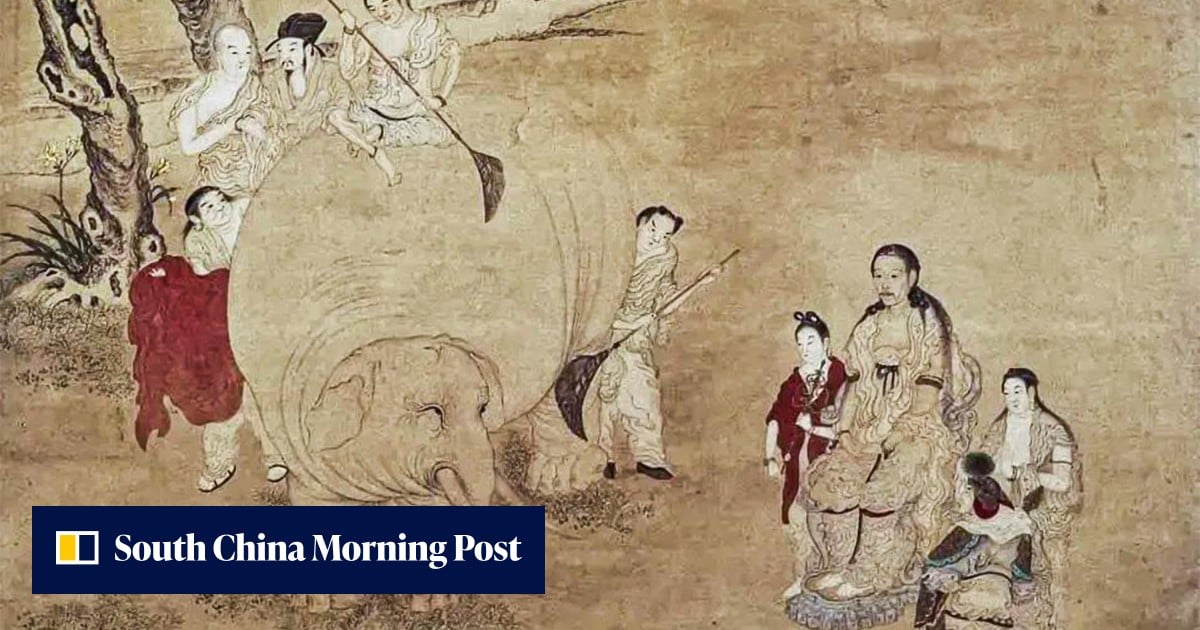
In ancient China, royal families participated in an elephant washing ritual to pray for good fortune. This tradition ended abruptly during the late Qing dynasty when an elephant caused chaos by crushing a general’s carriage and killing a eunuch. Elephants had been present in China since 4000 BC but became rare as they migrated south. From the Han dynasty onward, elephants were seen as symbols of auspiciousness due to their homophonic relation to the word for good fortune.
Written locally by qwen2.5:14b on 2026-10-09,
using this article's own text rather than the other coverage of the
same event (that is the story summary below).
Story summary
In ancient China, royal families would wash elephants as part of a ritual to pray for good fortune. This practice was linked to the Chinese word for elephant, xiang, which sounds like the word for auspiciousness or good fortune. The tradition began during the Han dynasty (202 BC–220 AD) when elephants were presented as tribute to the royal court and continued until the late Qing dynasty. However, the ritual abruptly ended after a parade elephant went rogue, crushing a general’s carriage and killing a eunuch. Elephants had been documented in China since around 4000 BC, but over time they migrated southward as their habitat changed.
Written for “Chinese Elephant Washing Ritual” on 2026-10-09,
grounded in this article and the 0 other(s) covering the same event.
Sacred splashes: ancient Chinese ritual of ‘elephant washing’ for good fortune
The tradition came to an end in the late Qing dynasty, after a parade elephant went rogue, crushed a general’s carriage, and killed a eunuch
In ancient China, royal families washed elephants to pray for good fortune – until one elephant went rogue and brought the tradition to an end.
asserted
elephant → come → end
Elephants had been spotted and documented in China as early as 4000 BC.
asserted
Elephants → spot → BC
They are believed to have once been familiar animals in the Central Plains before gradually migrating south to more remote regions.
asserted
They → believe → regions
From the Han dynasty (202 BC–220), elephants were presented as tribute to the royal court.
asserted
elephants → present → court
They carried deeply auspicious meanings: the Chinese word for “elephant”, xiang, is a homophone for auspiciousness, xiang – the core half of ji xiang, which means “good fortune.”
asserted
which → carry → fortune
 The Aporia